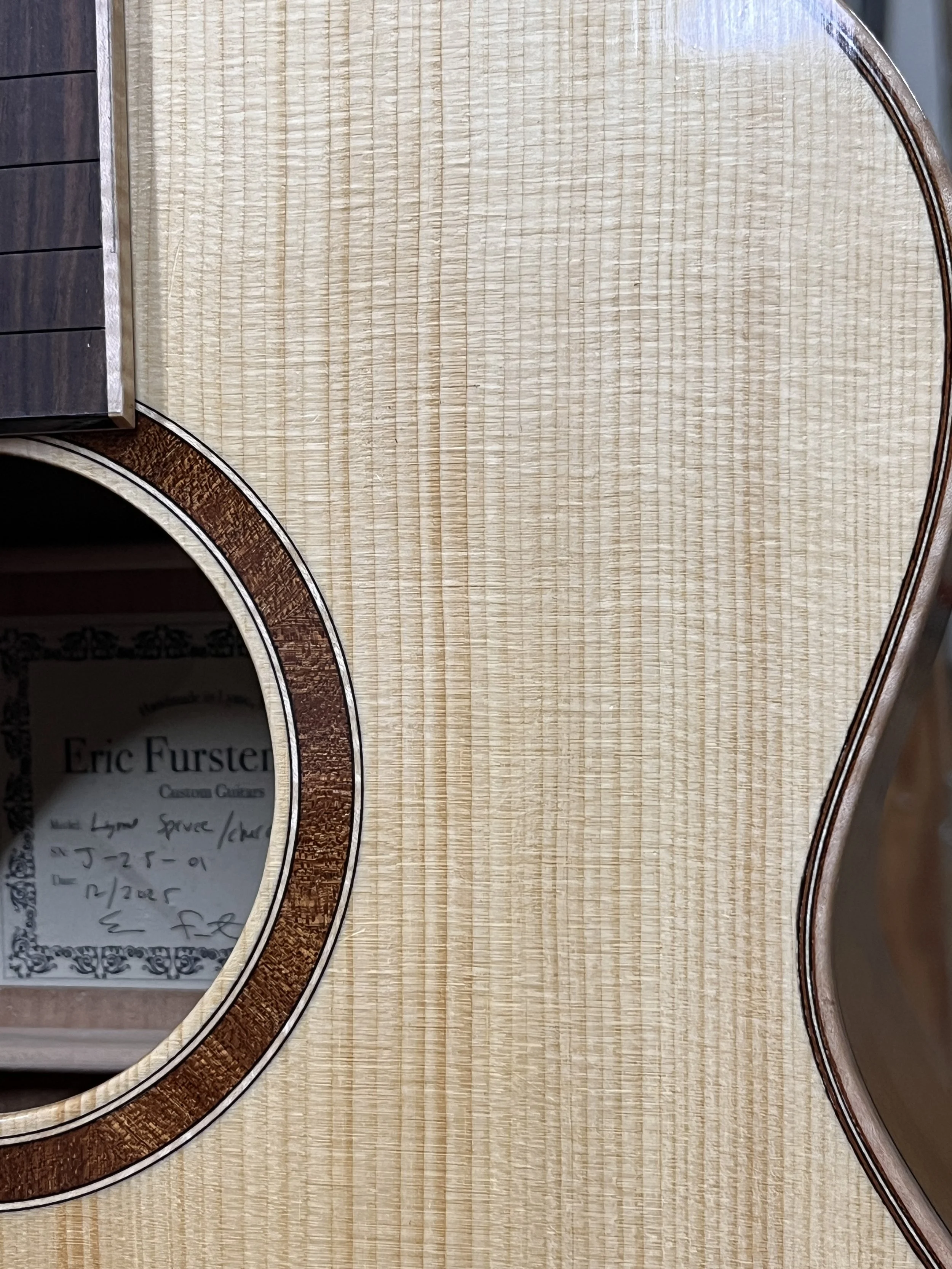
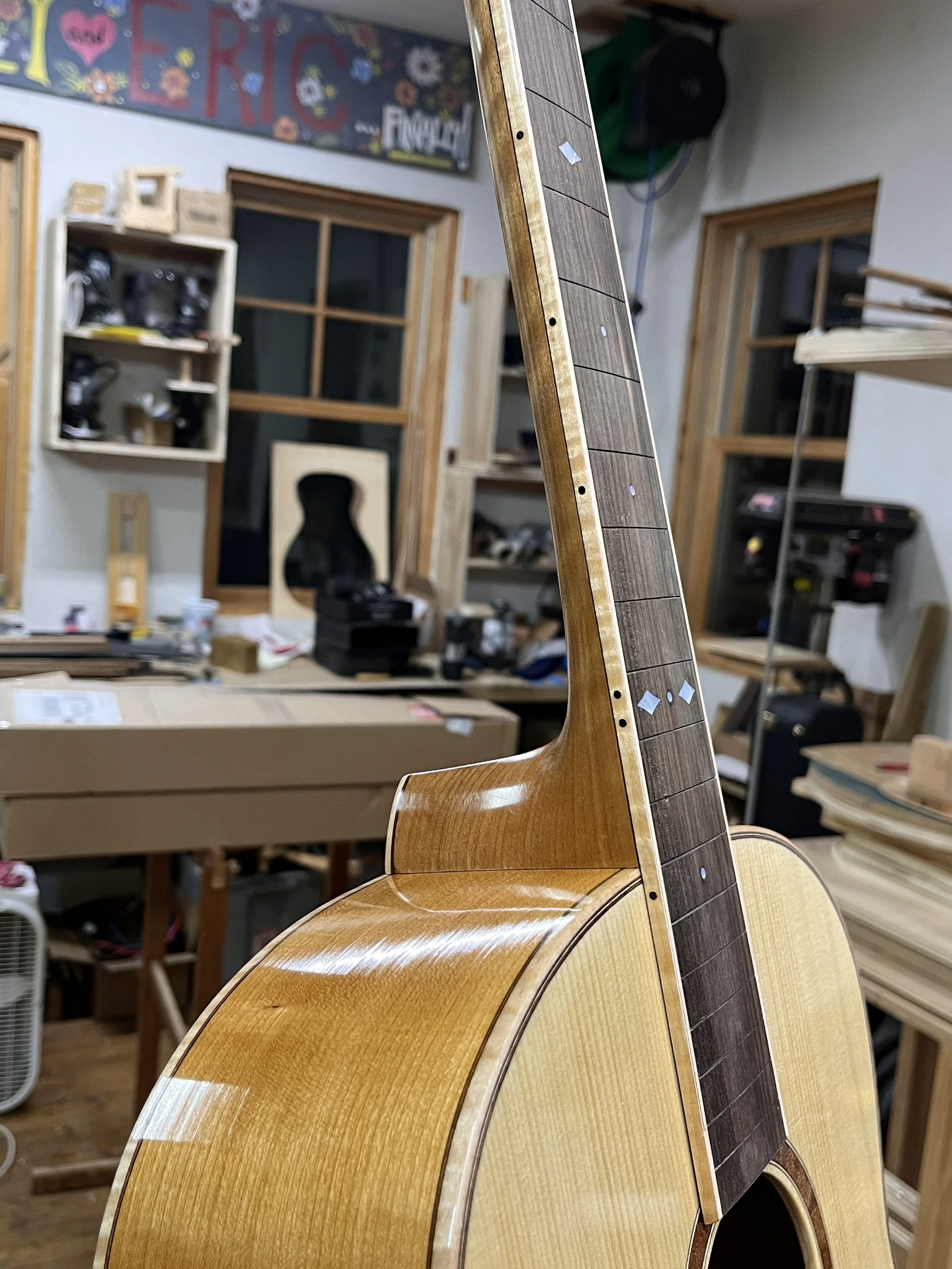
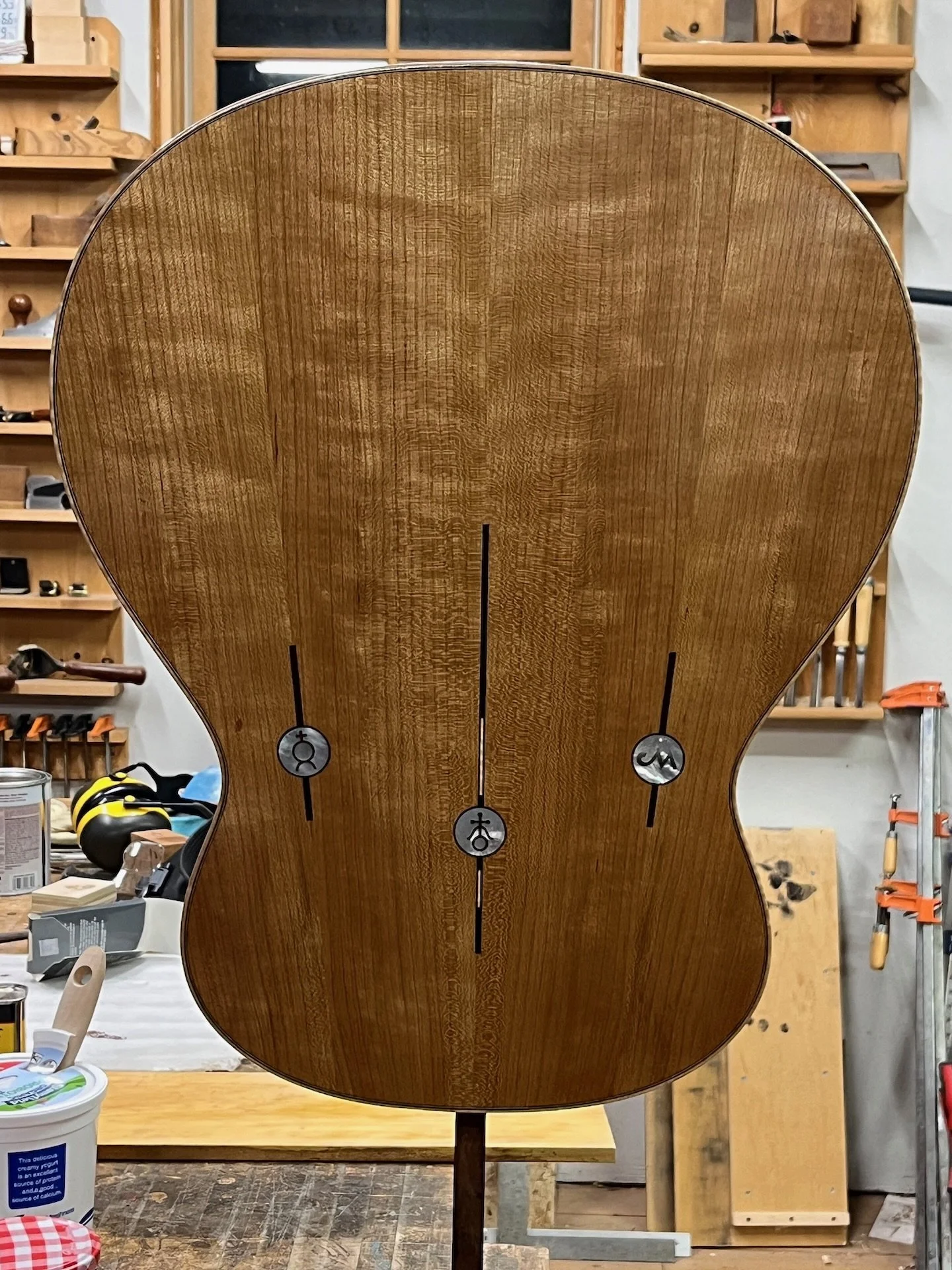
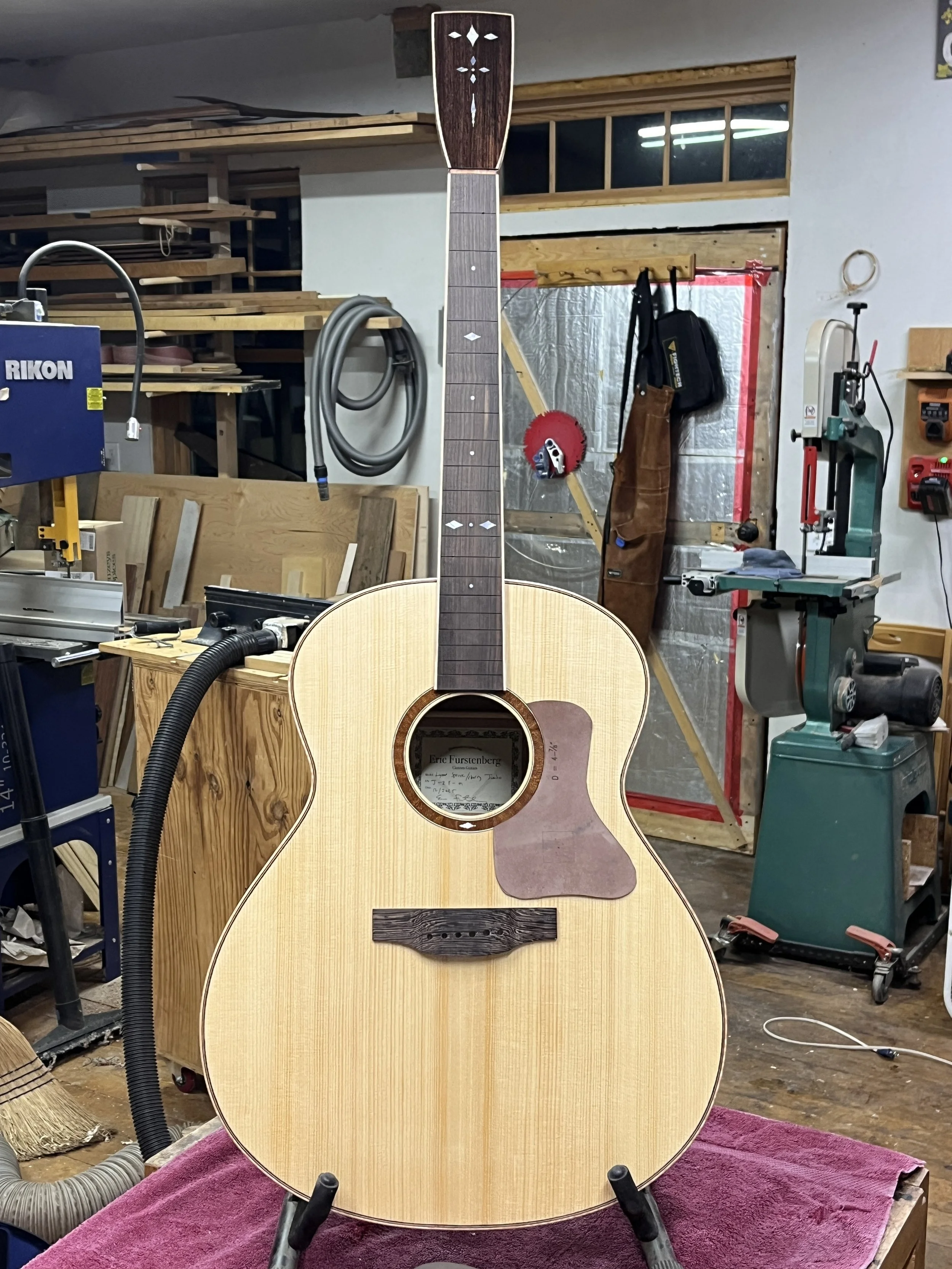
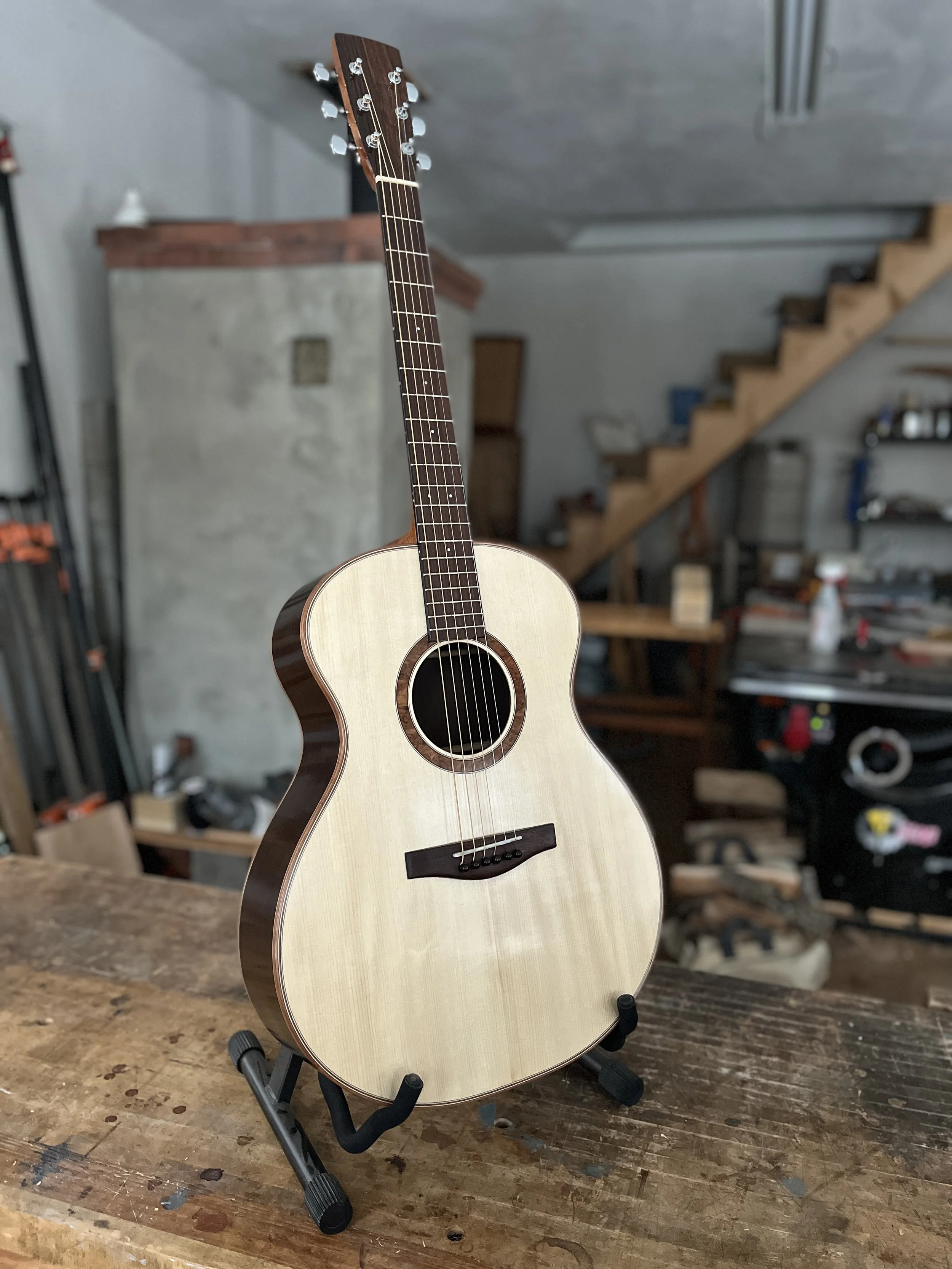
In broad terms I follow the standard naming conventions for acoustic guitar models, based on size of the body (see below). However, I build without the rigid forms used by most builders, so I am free to explore unique shapes and sizes, which is why there are so many listed below. Some customers choose based on tonal goals, some choose based on ergonomics.
0: The smallest guitar I’ve built, with a 13.75” lower bout, 19” body length, and usually with a 24.9” scale. A very intimate guitar, with refined tone and excellent note separation and clarity.
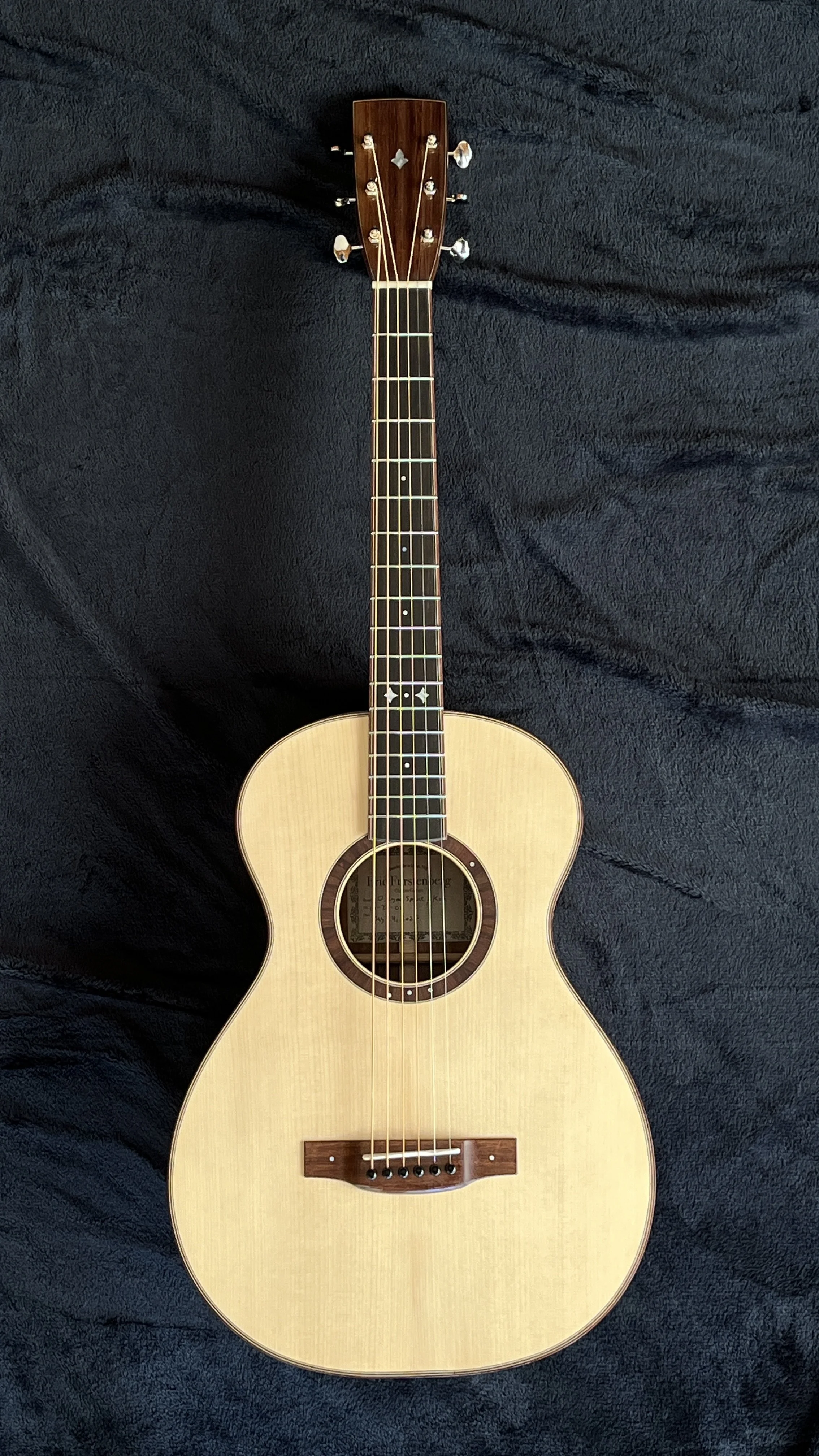
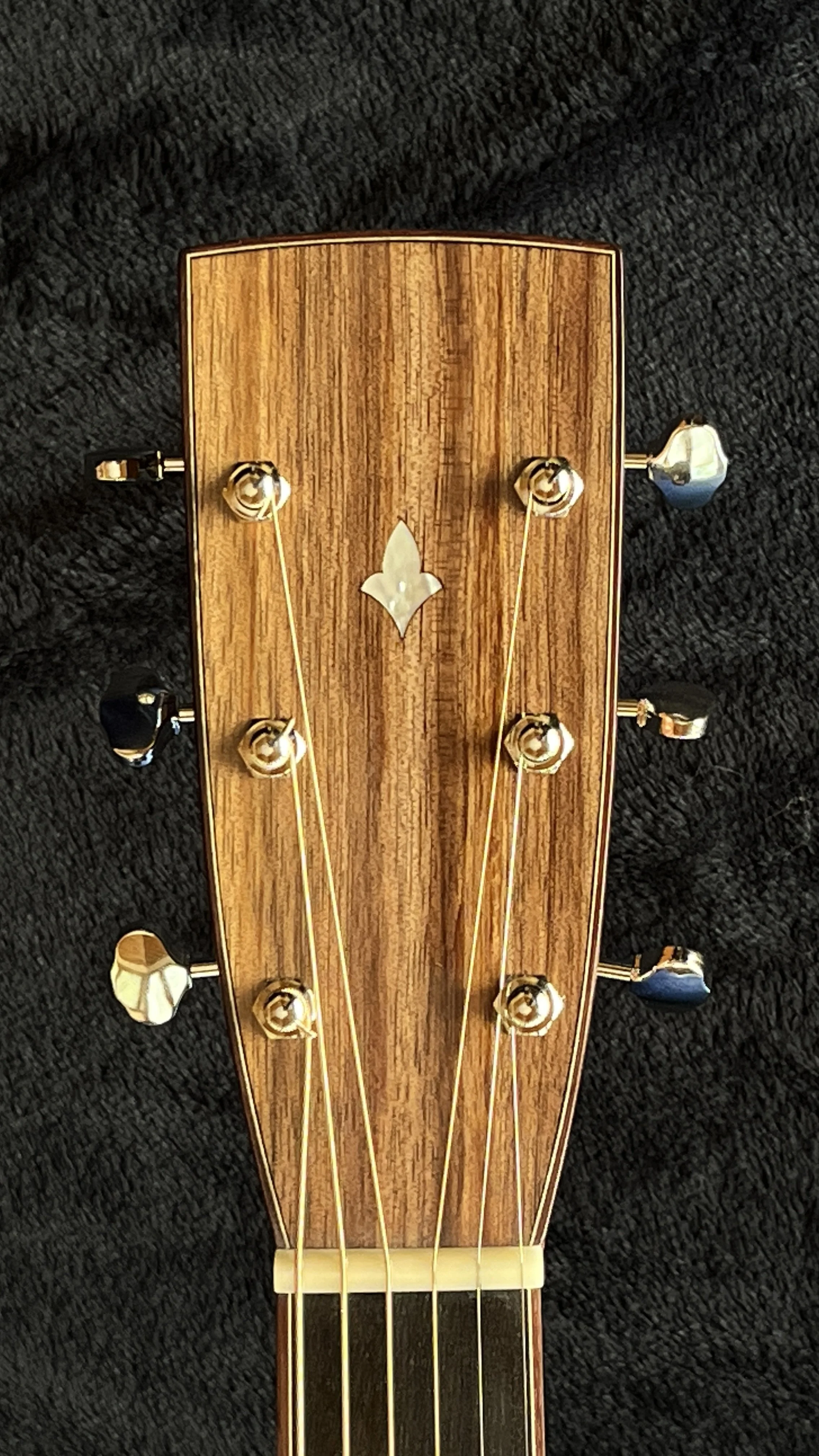
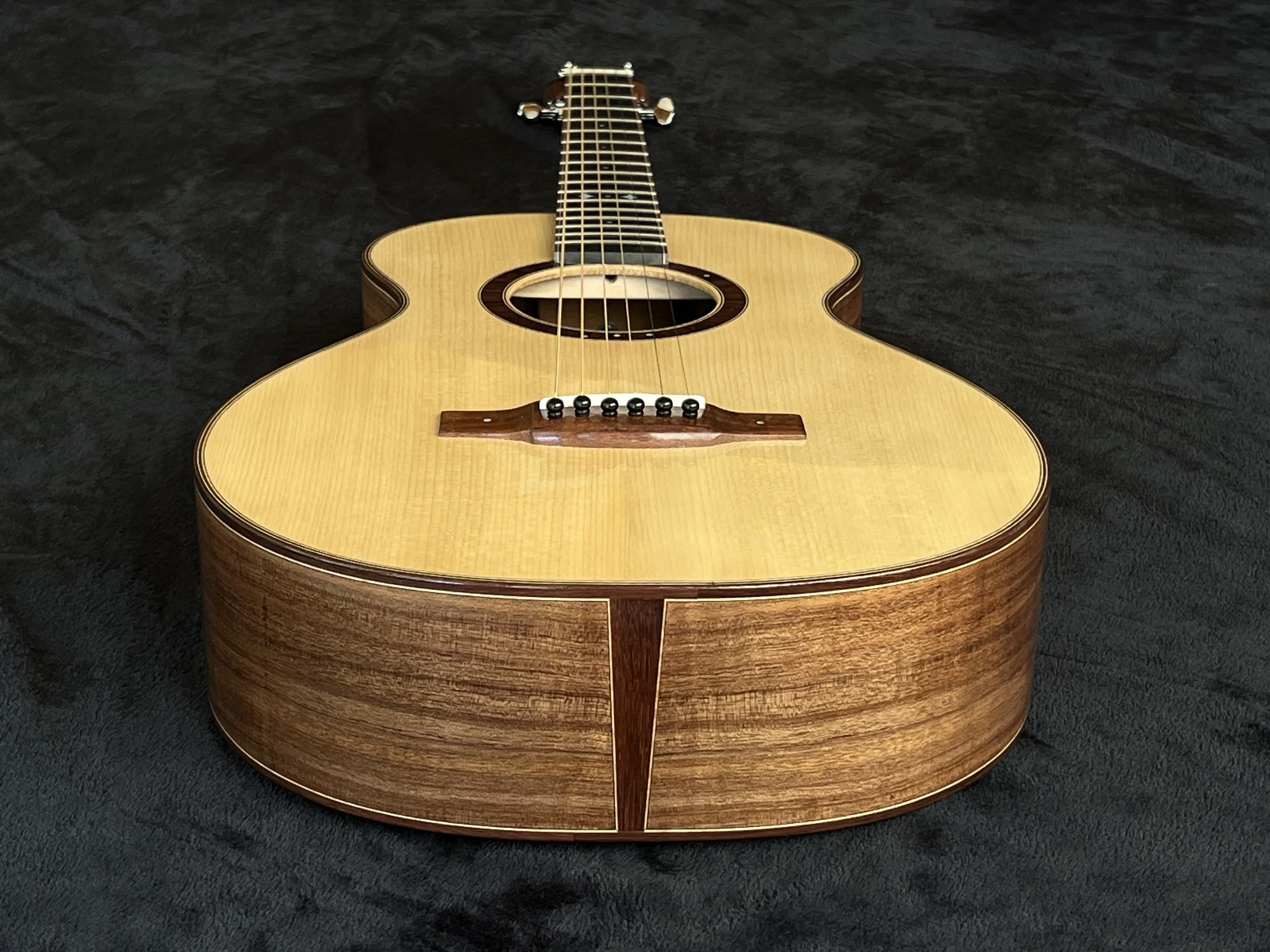
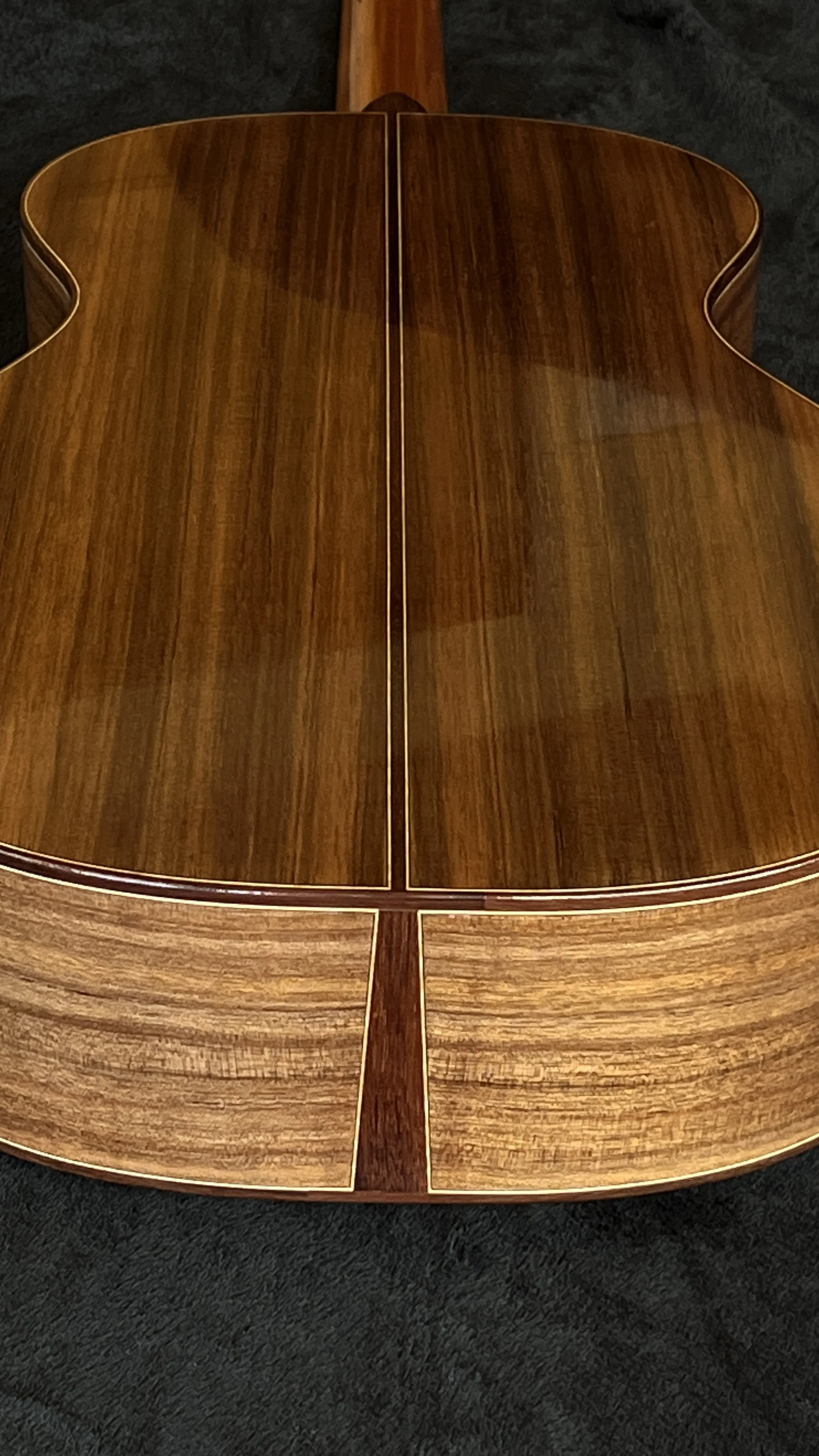
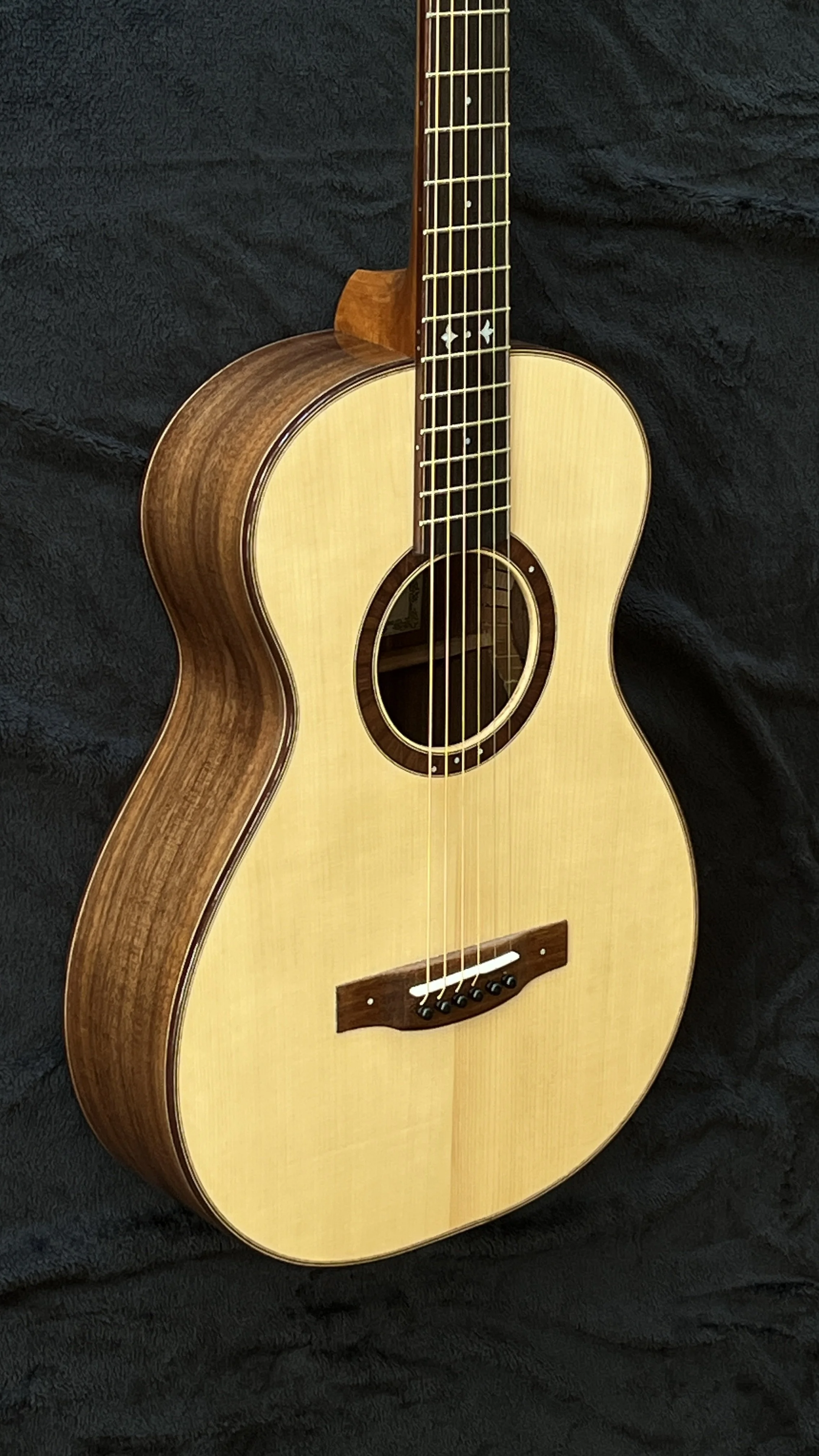
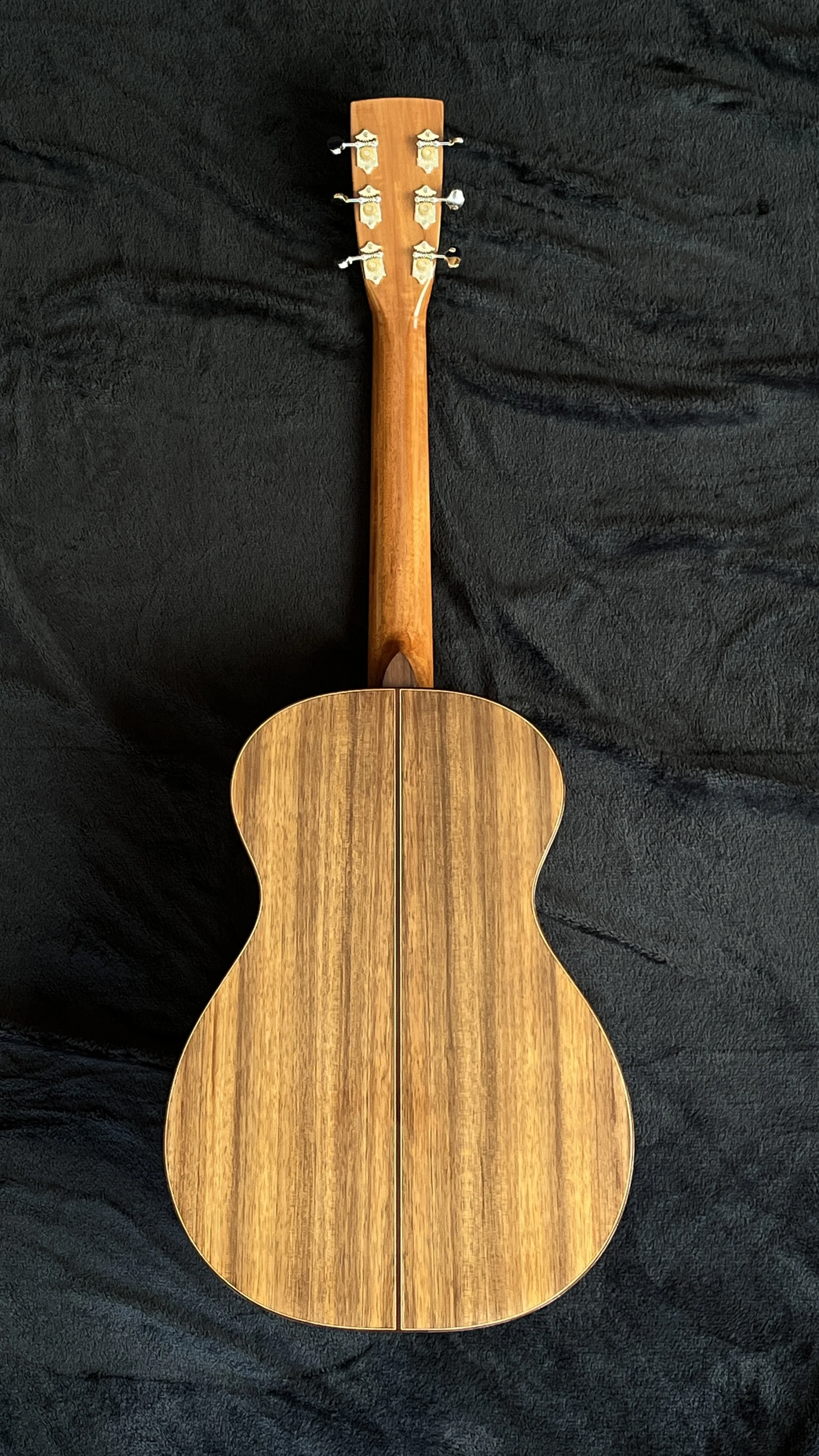
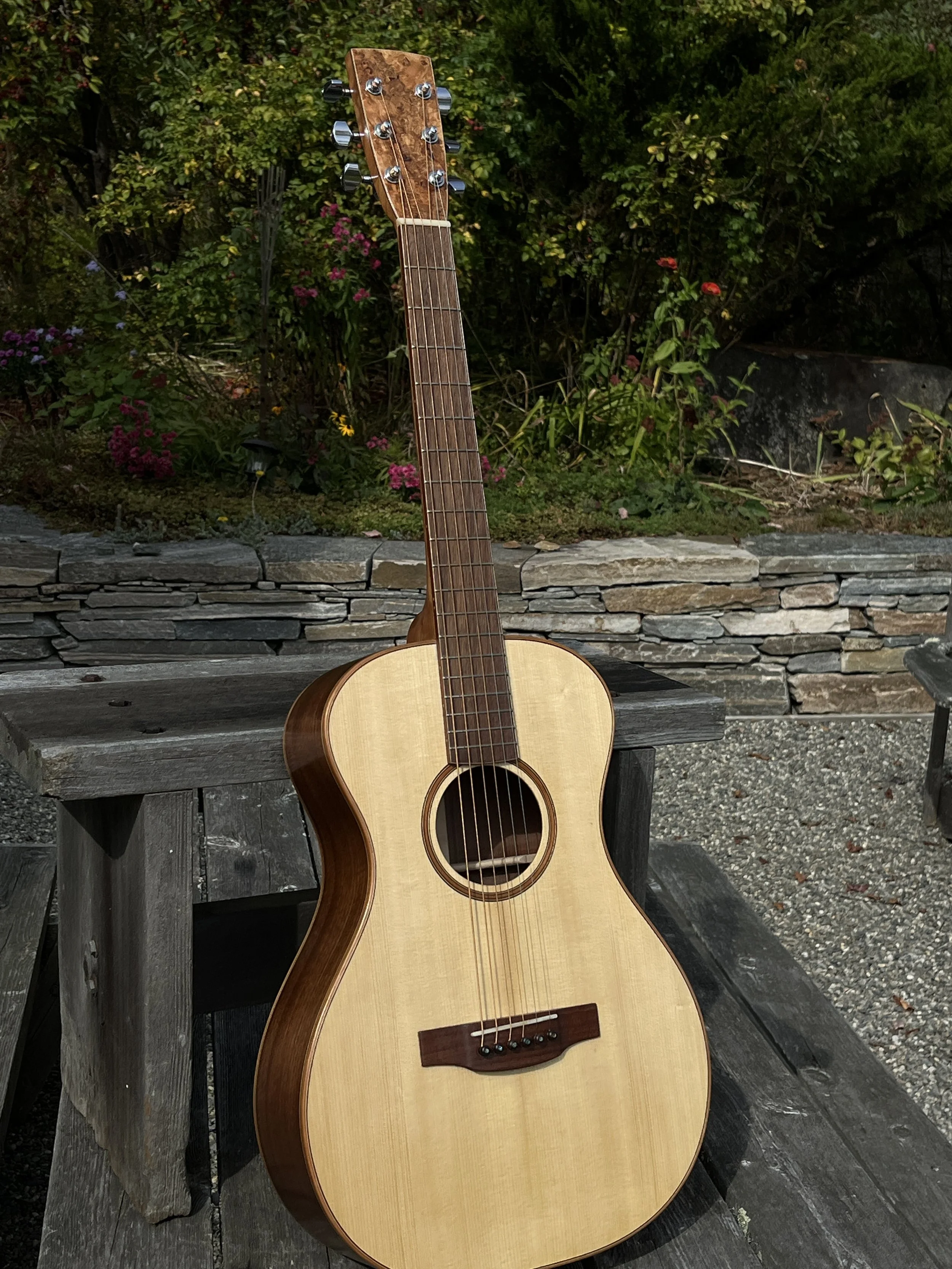
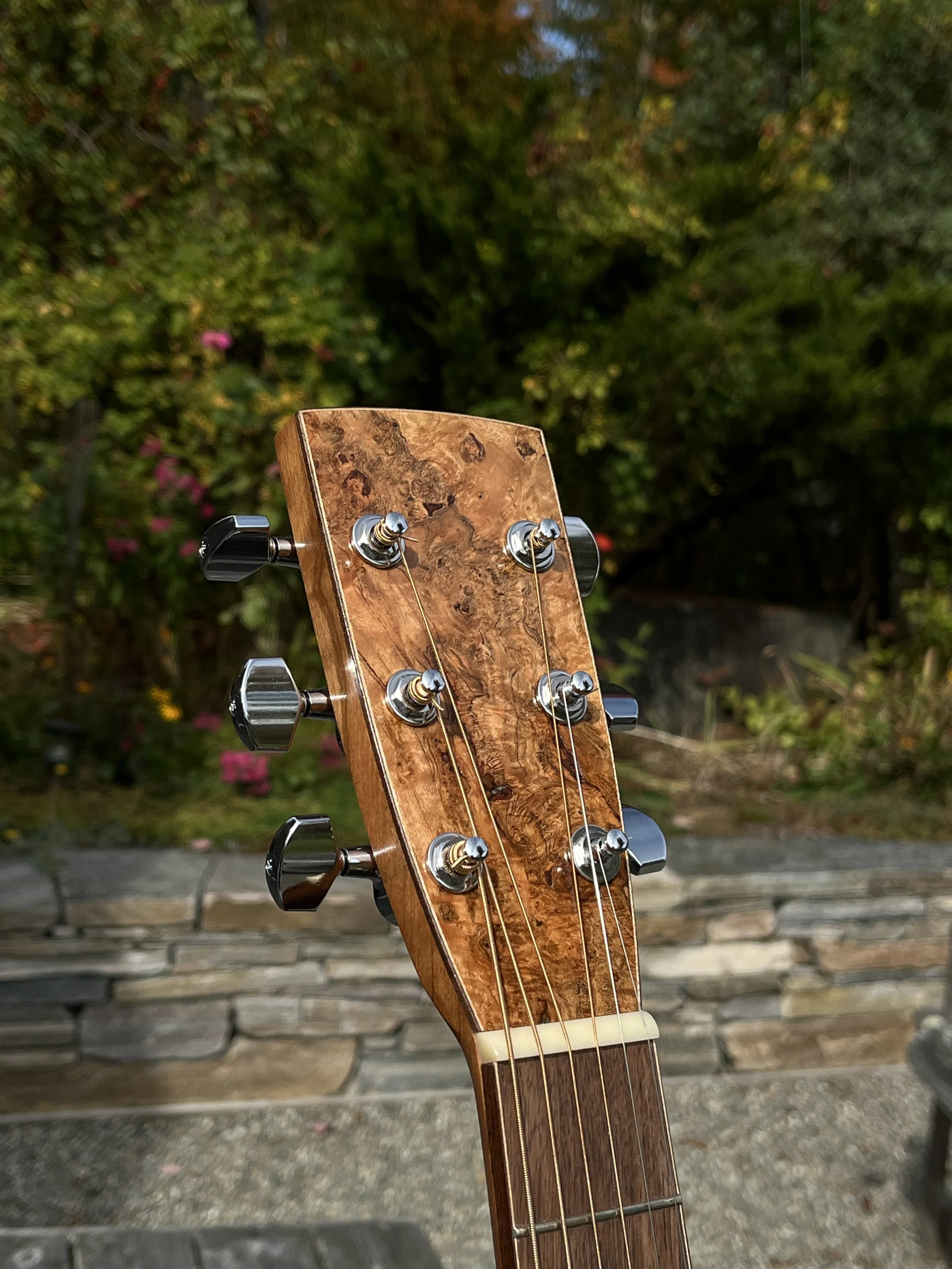
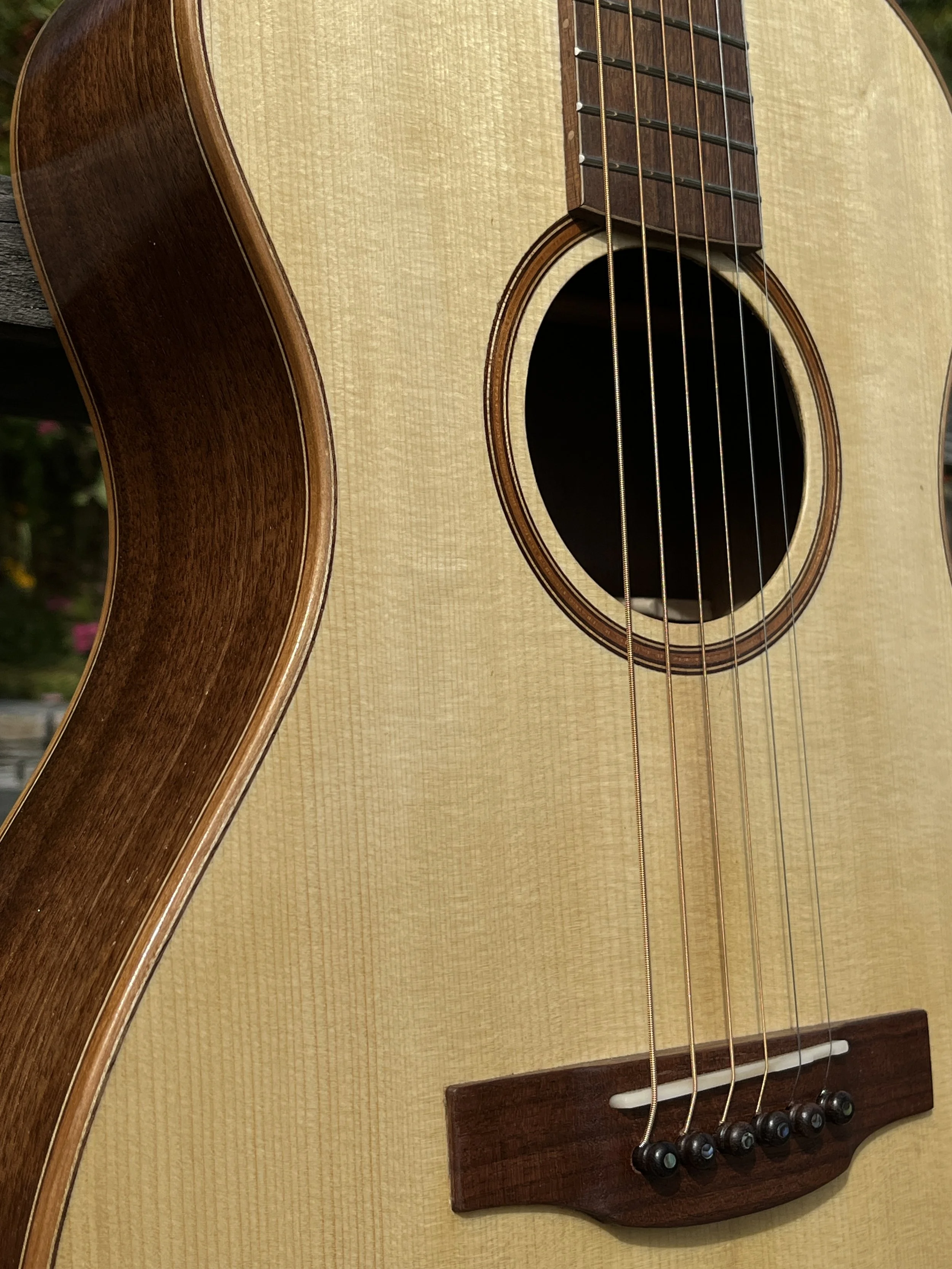
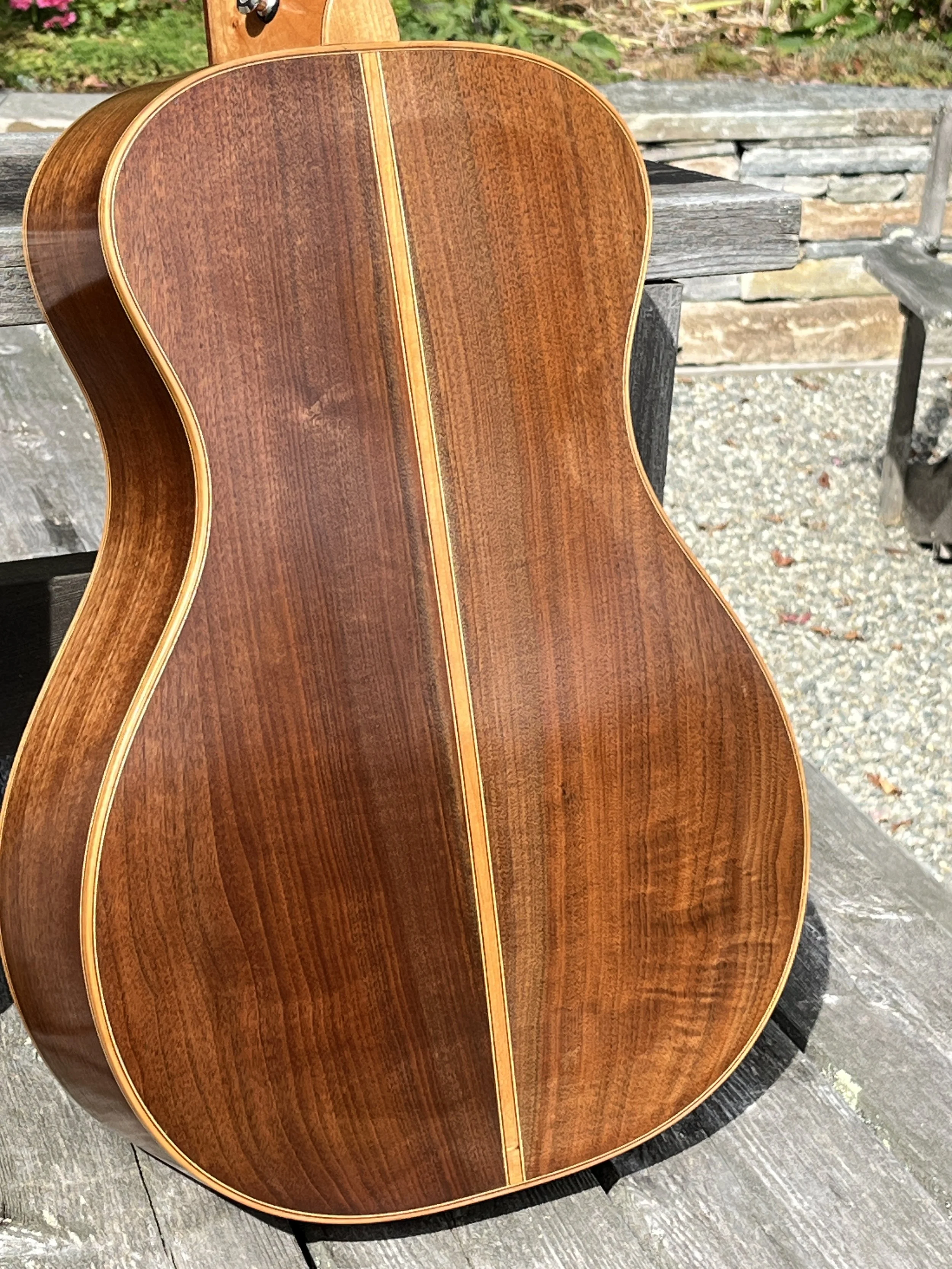
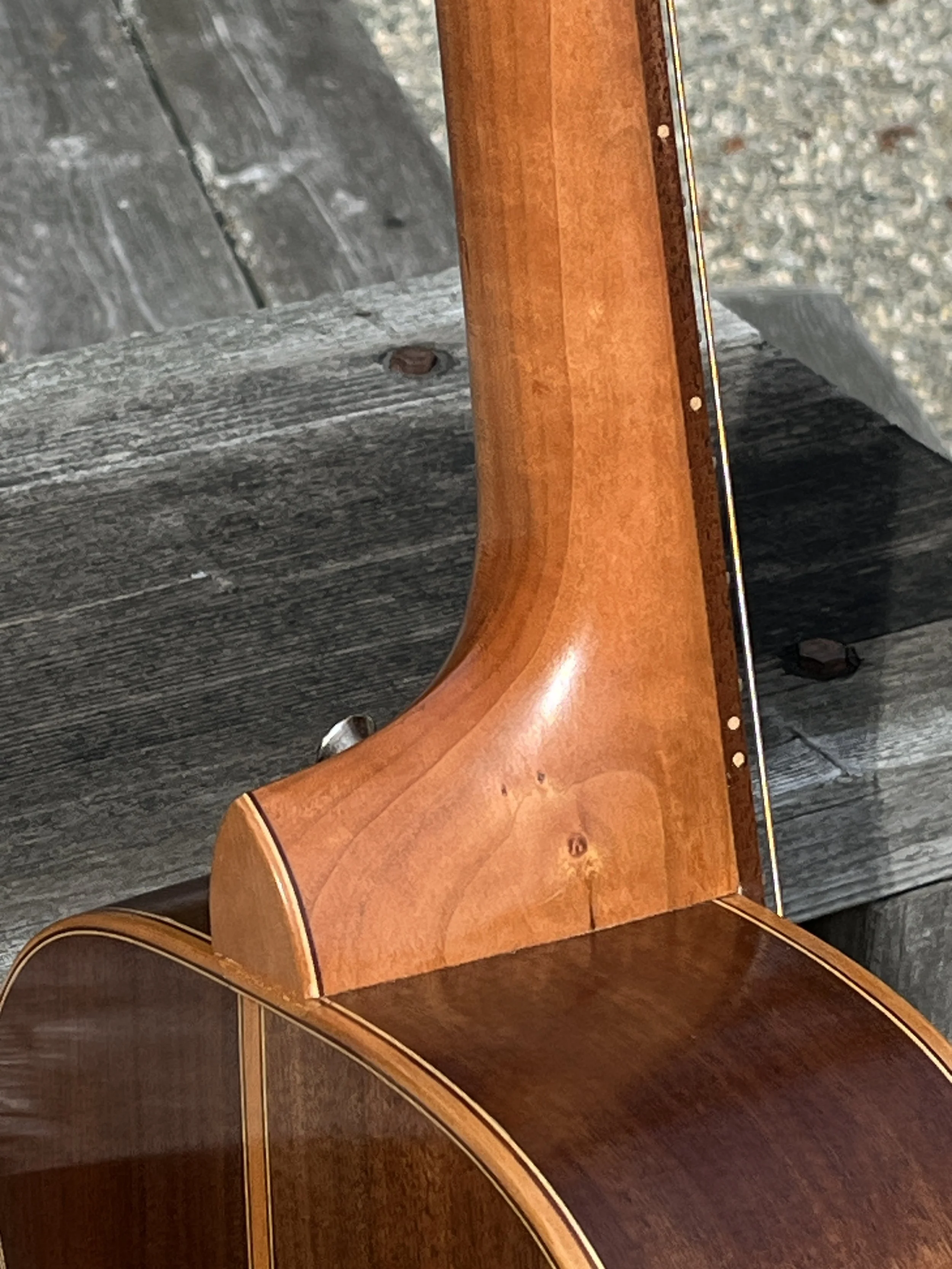
00: This guitar typically has a 14.25” lower bout. Clarity and note separation define this guitar. Versatile.
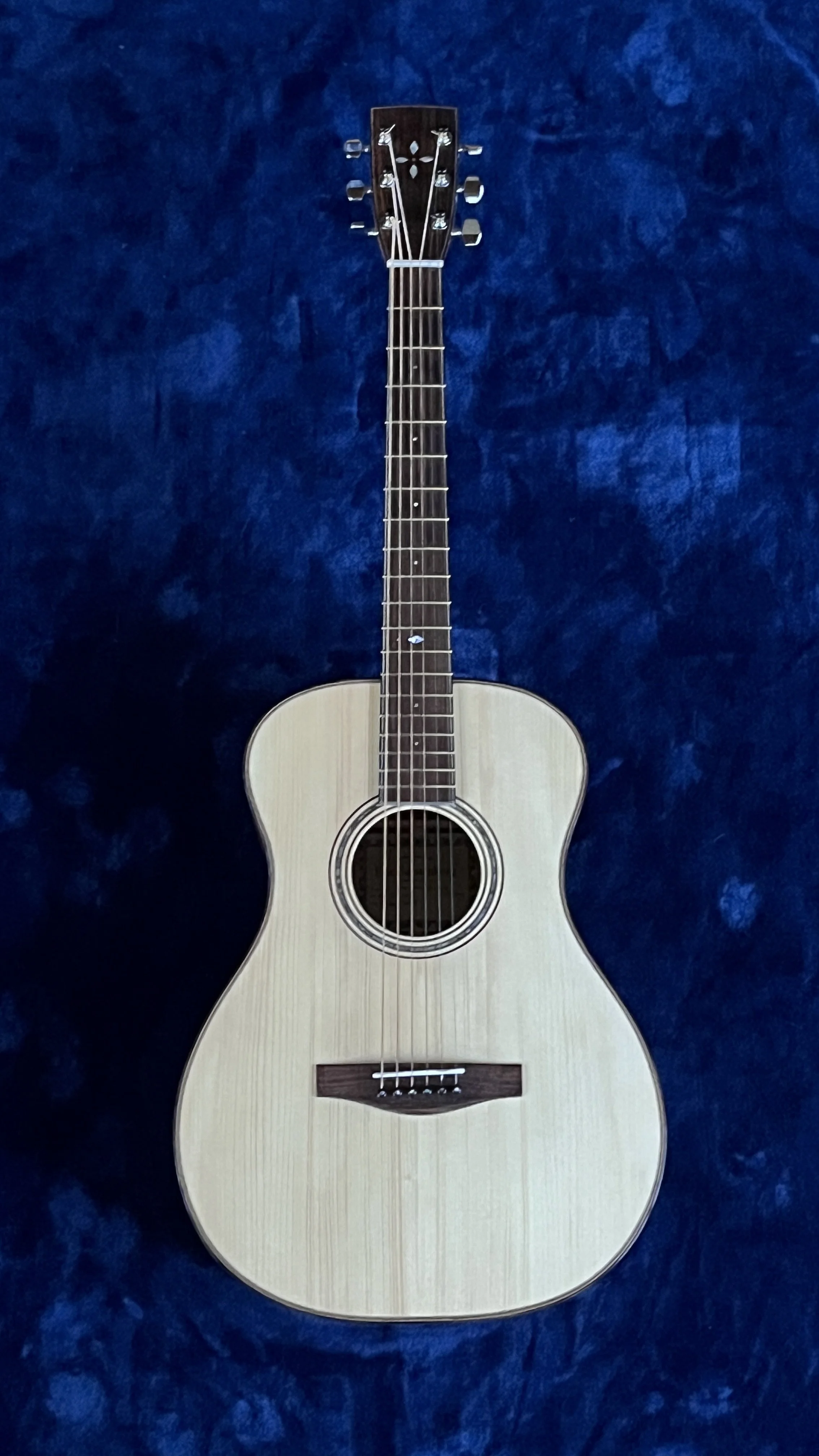
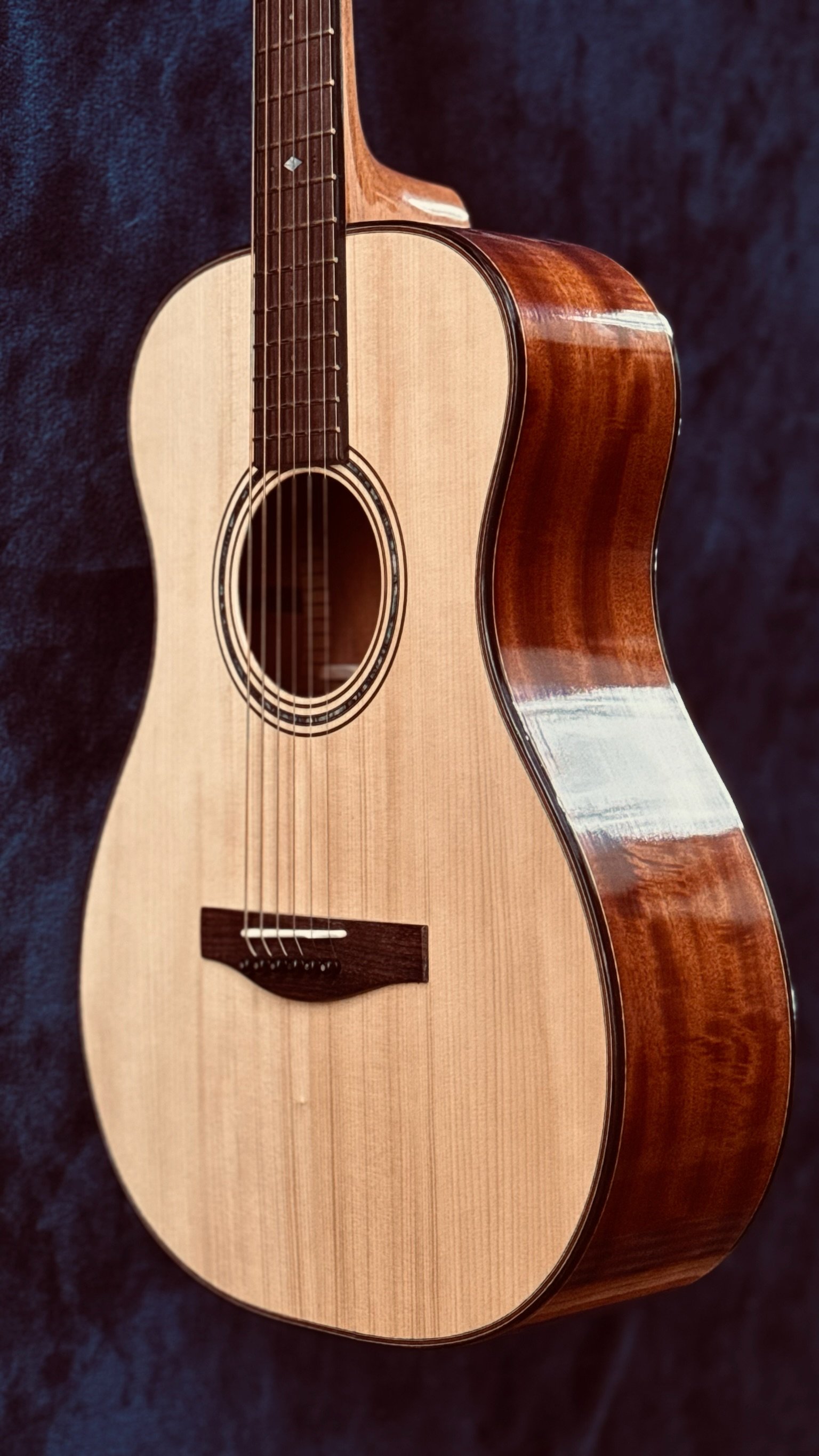
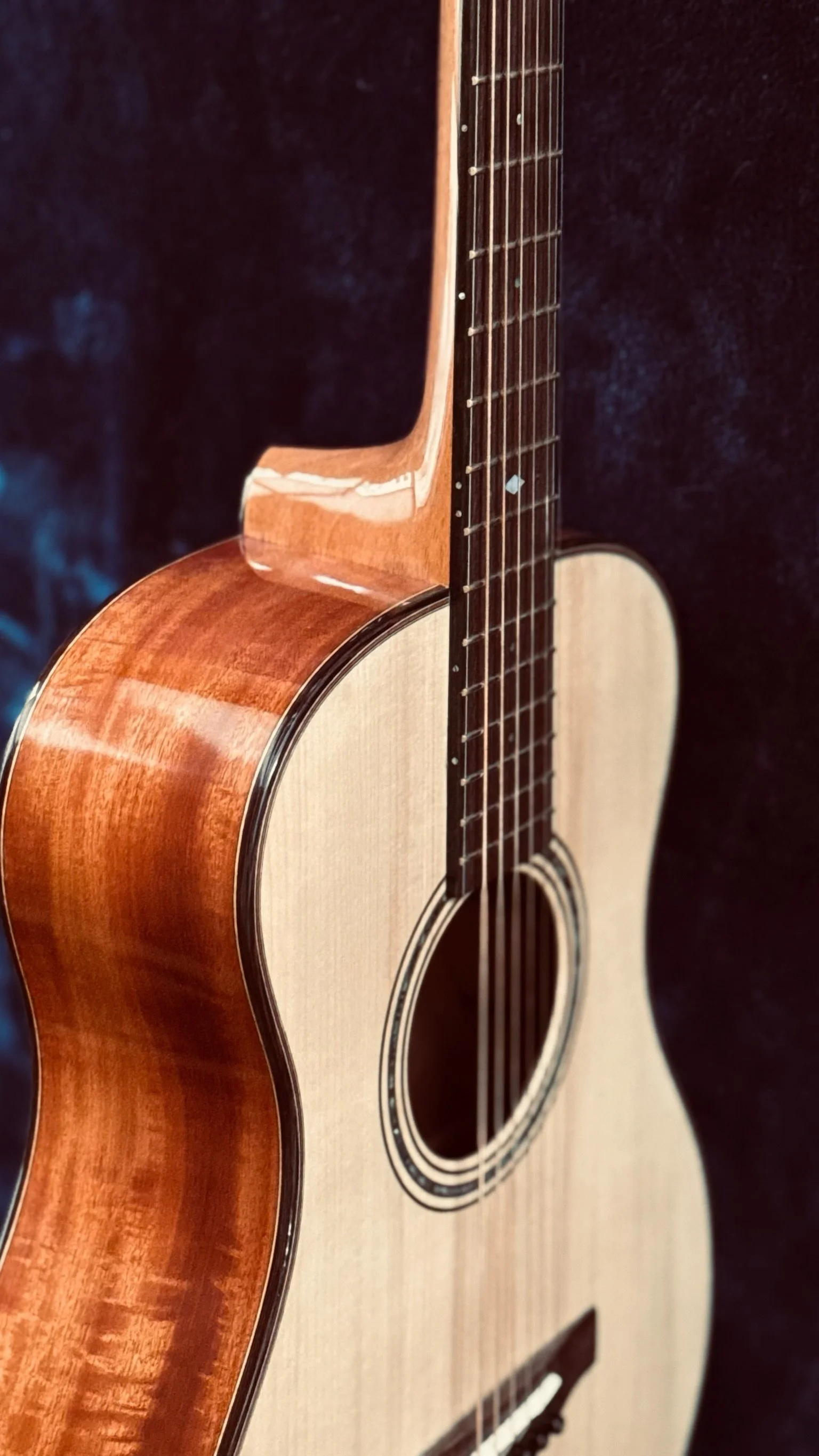
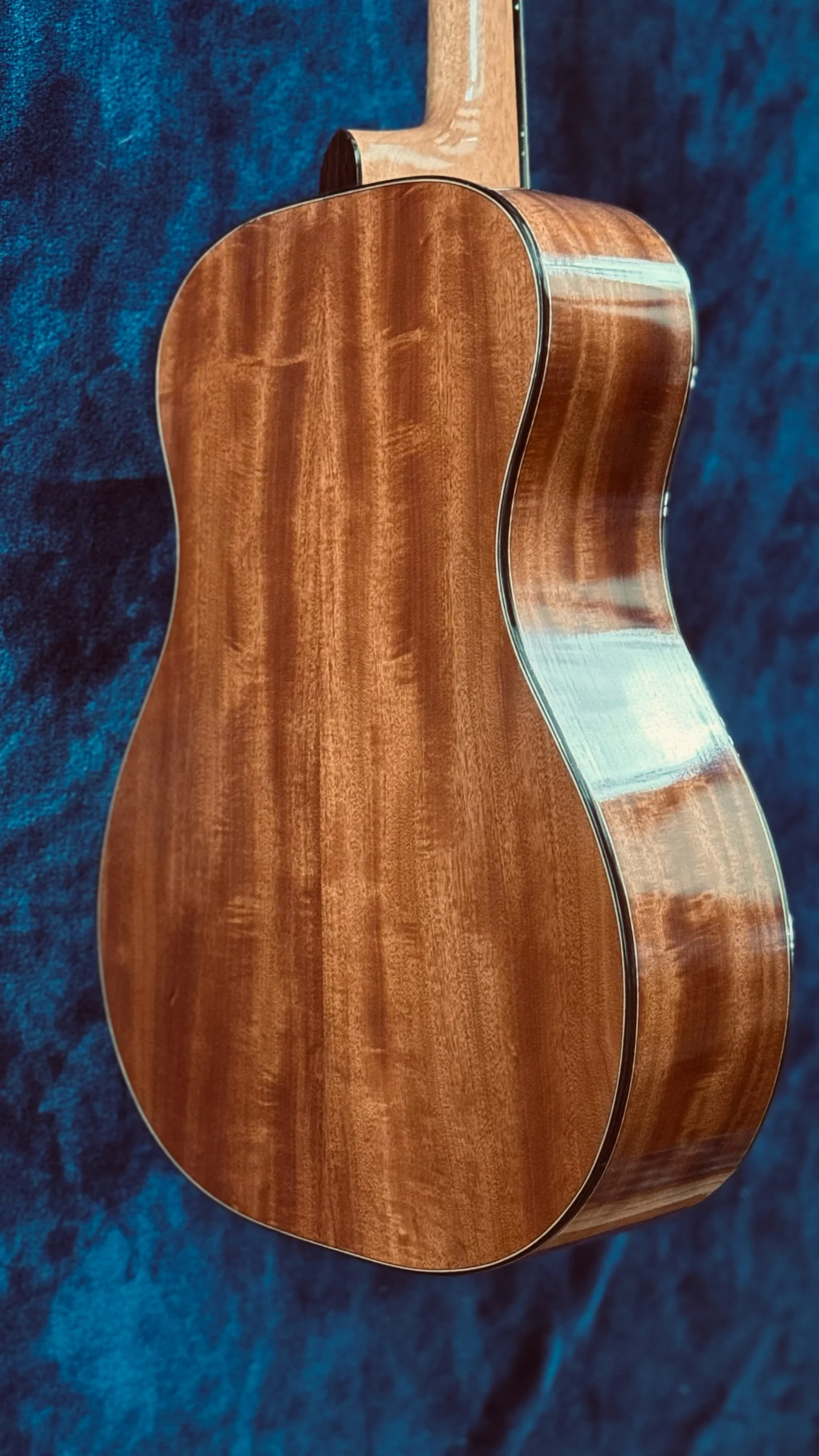
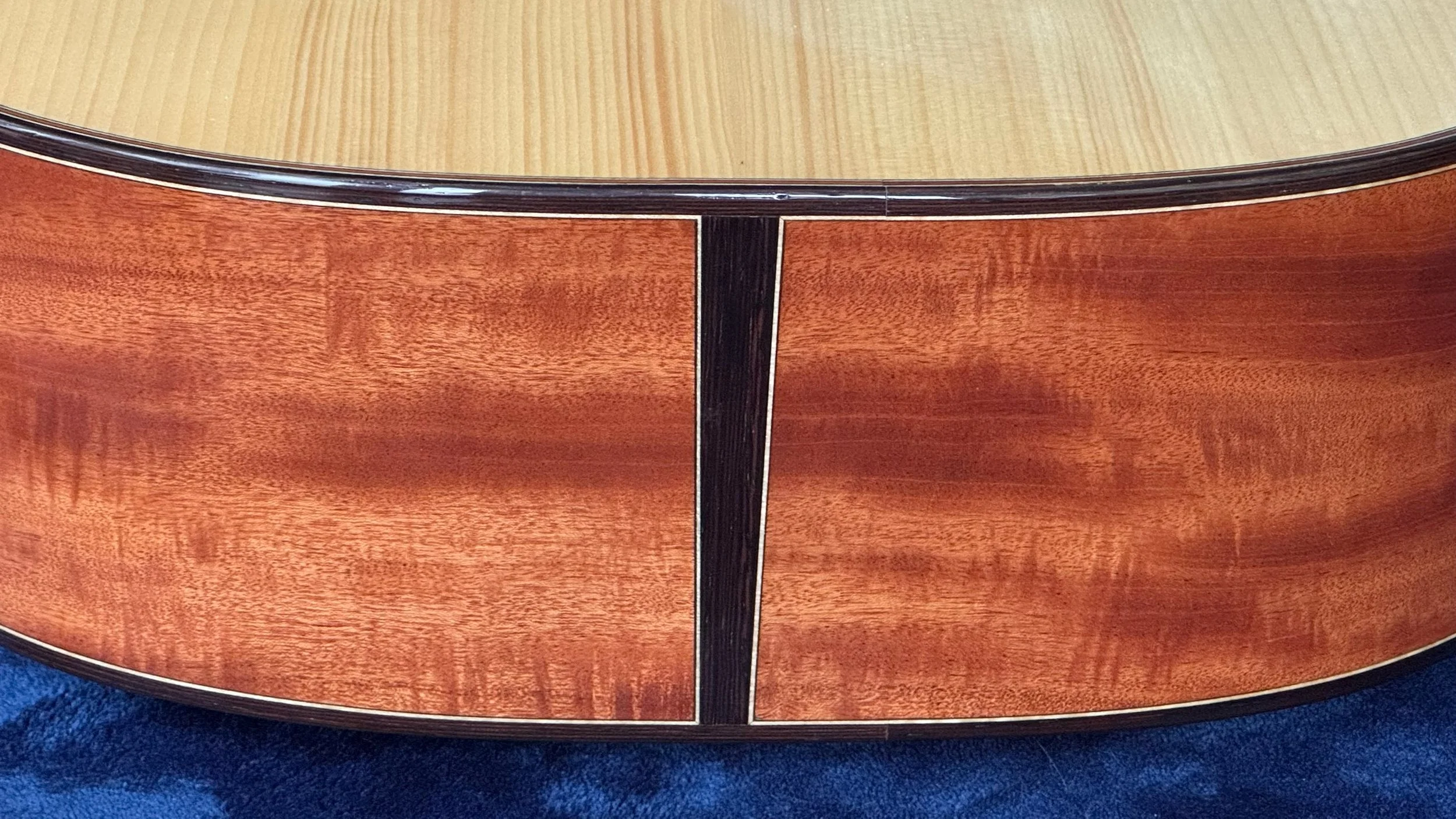
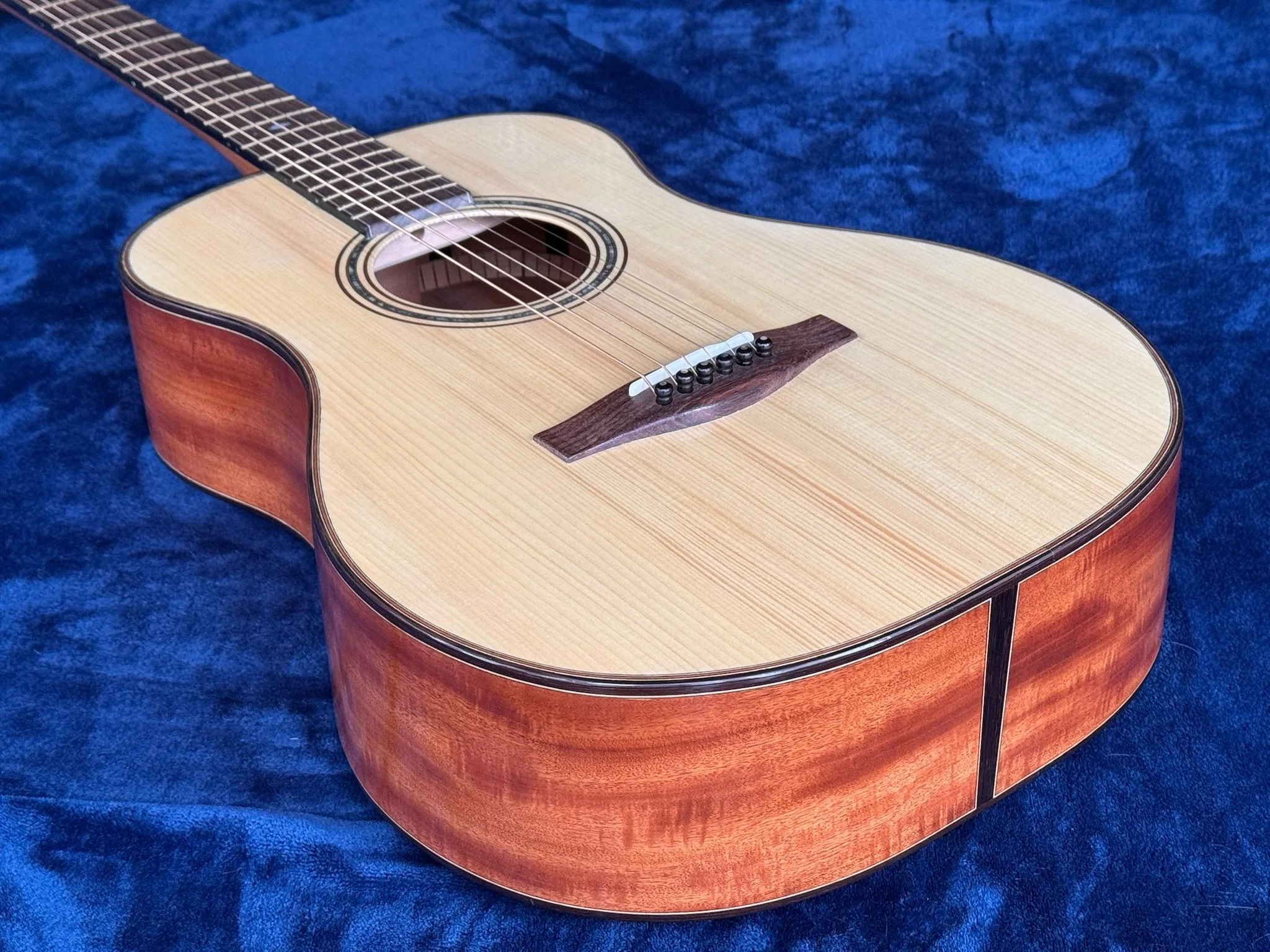
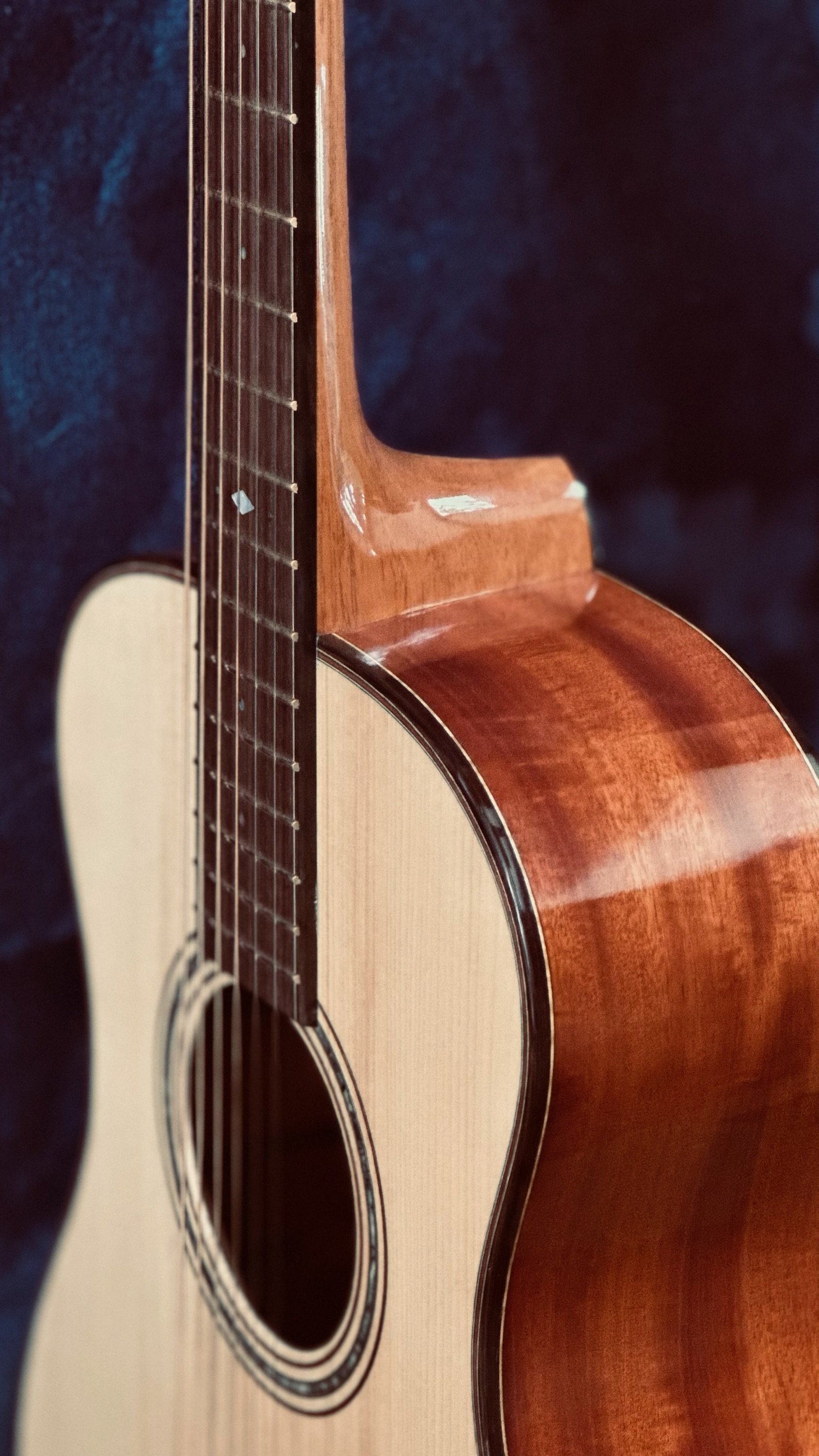
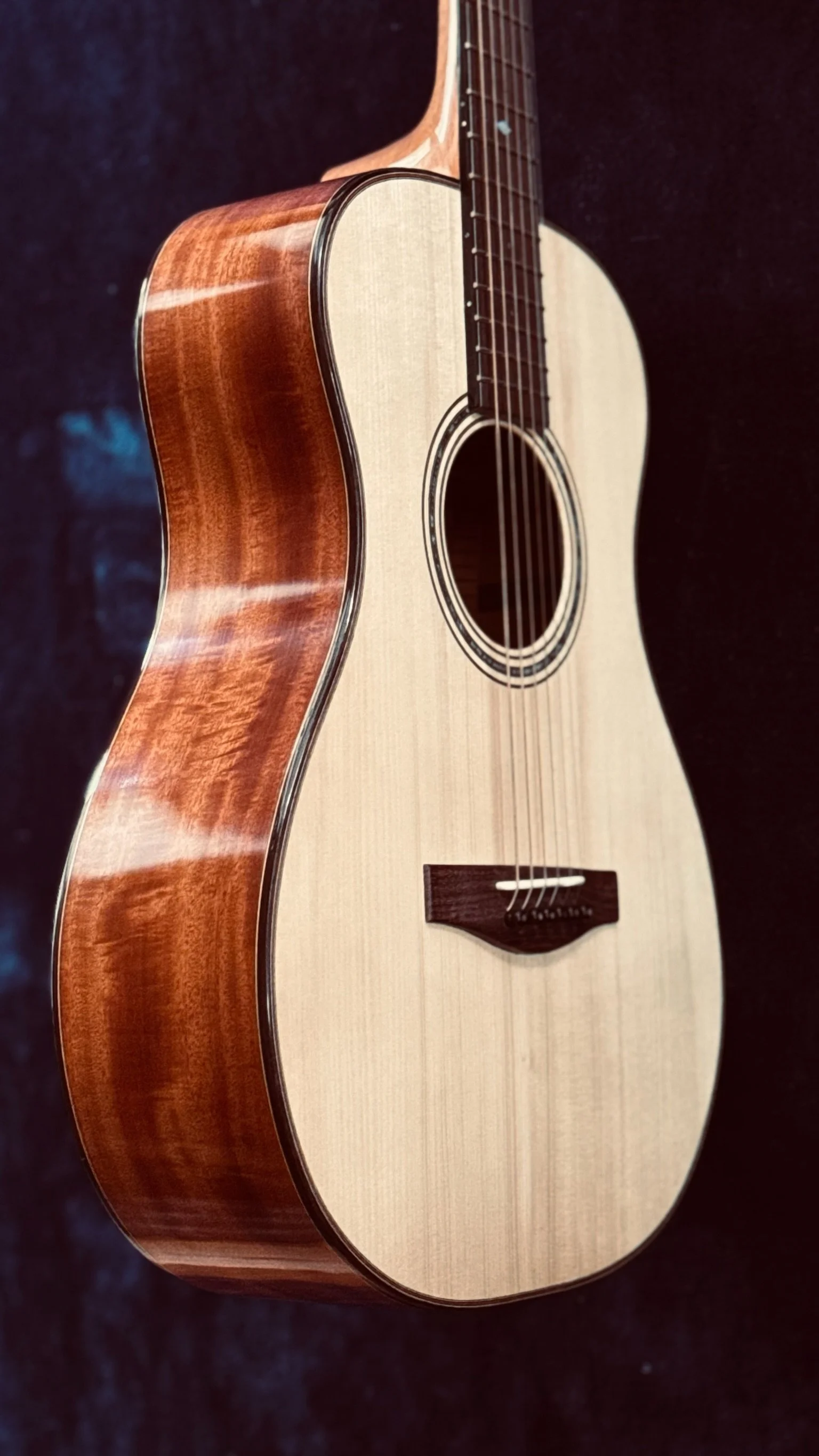
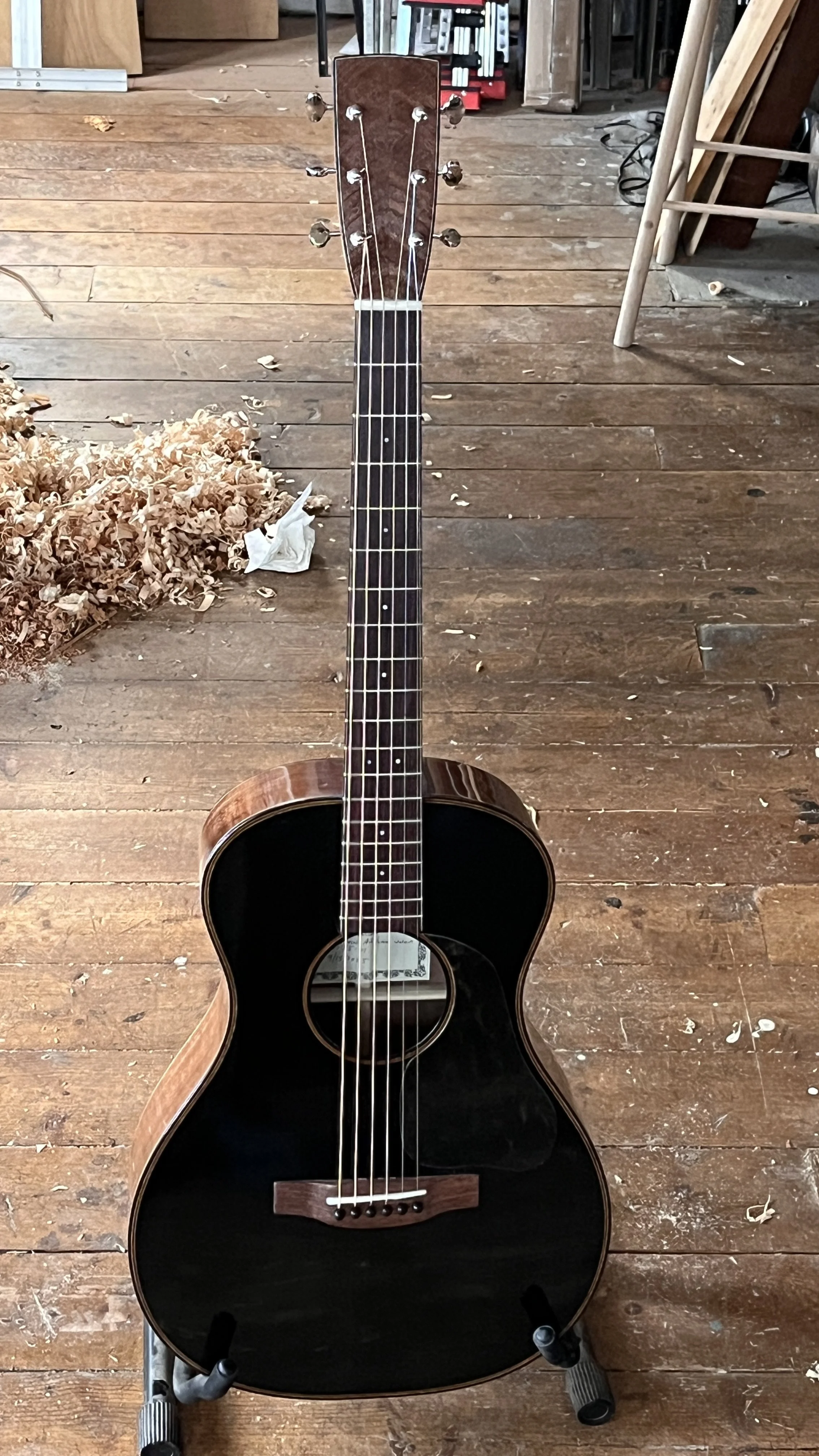
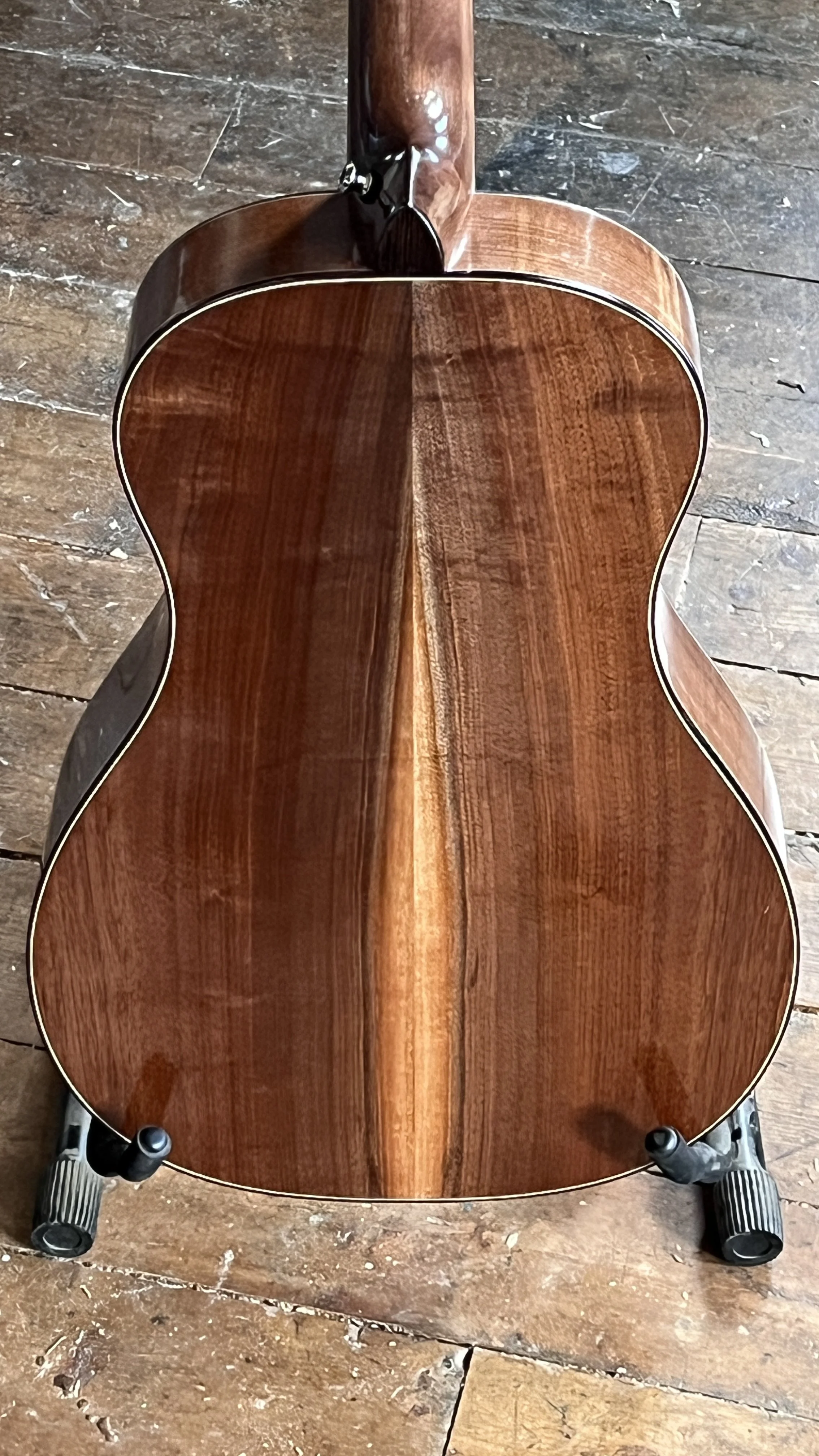
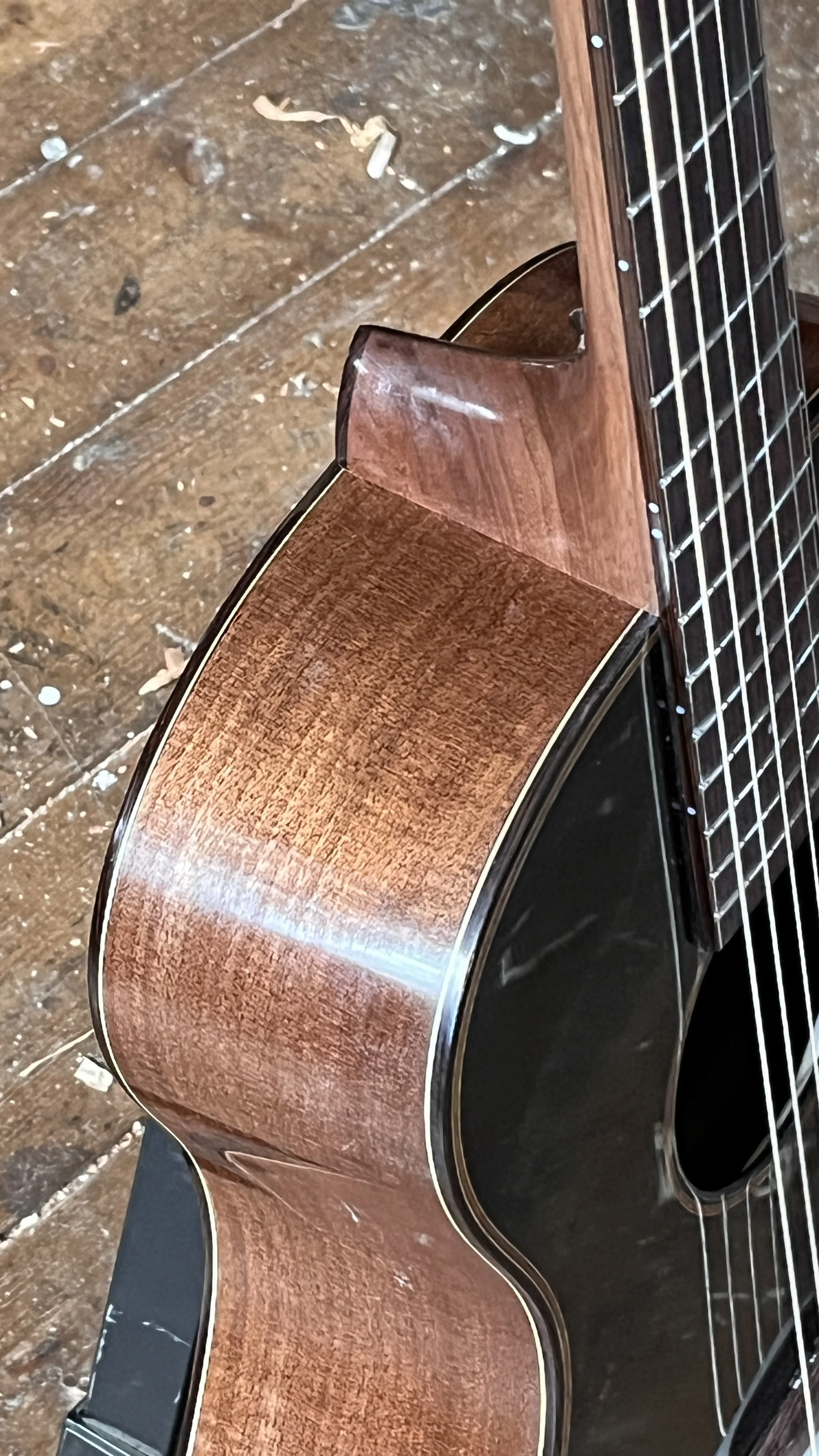
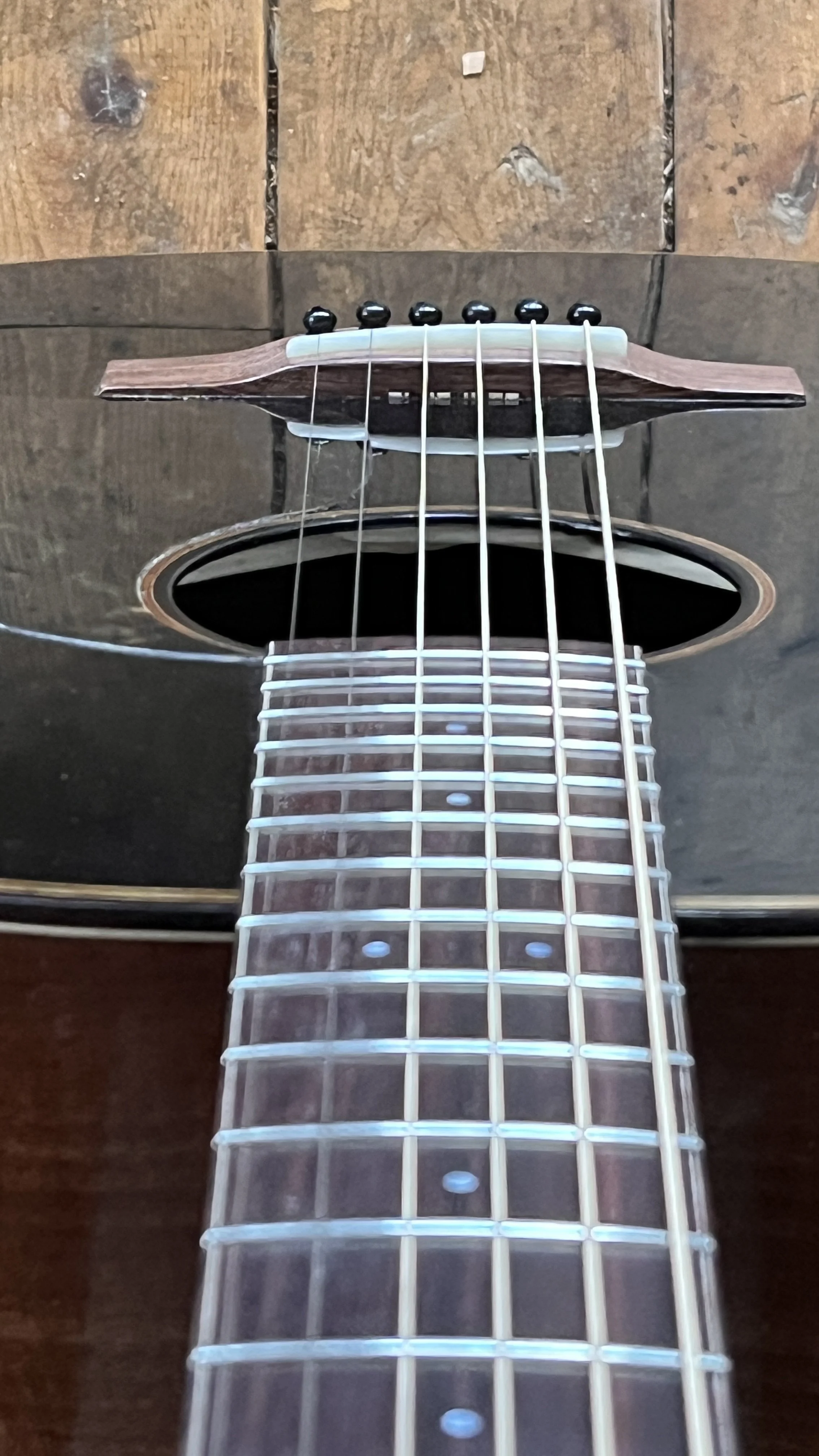
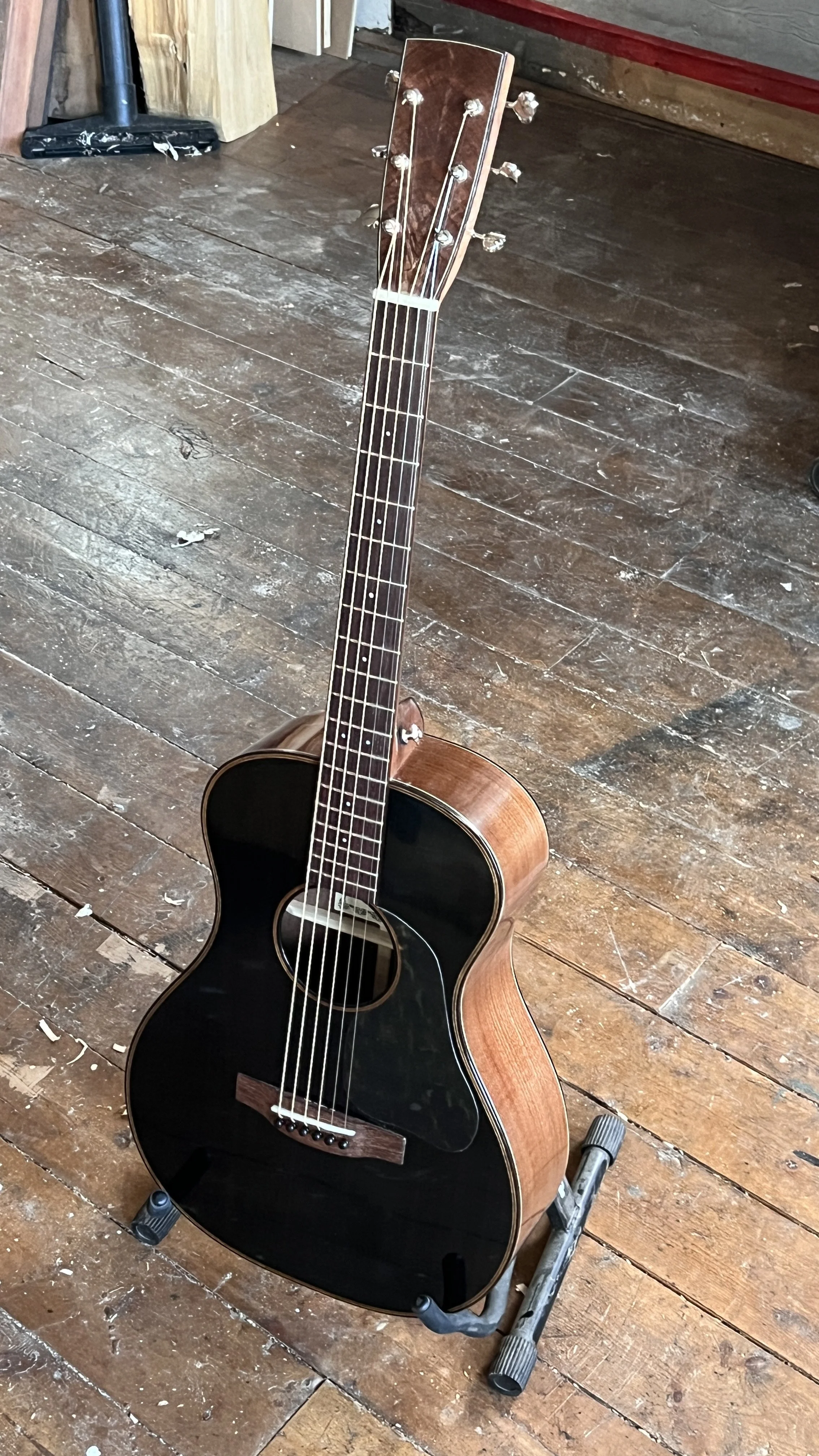
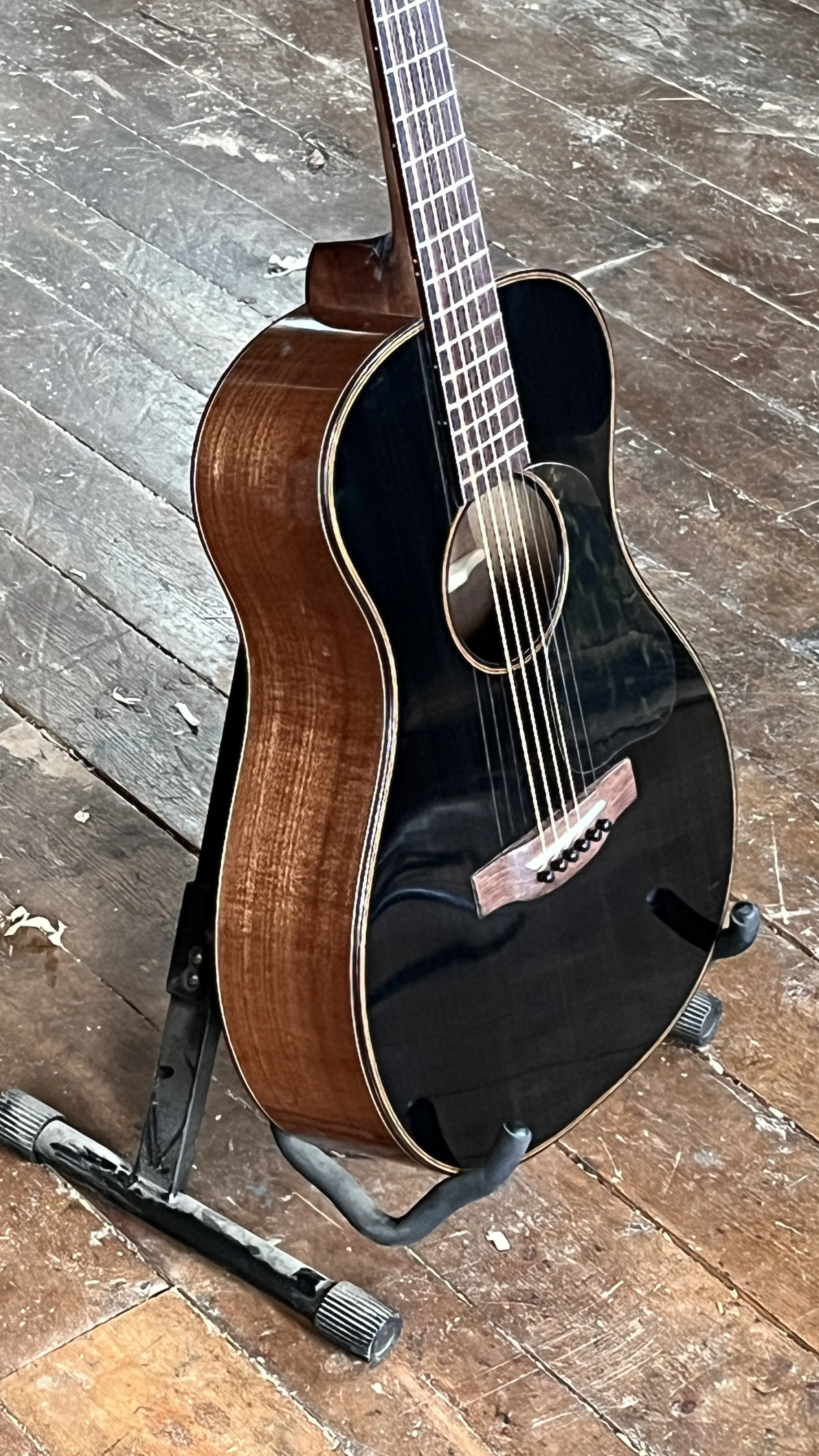
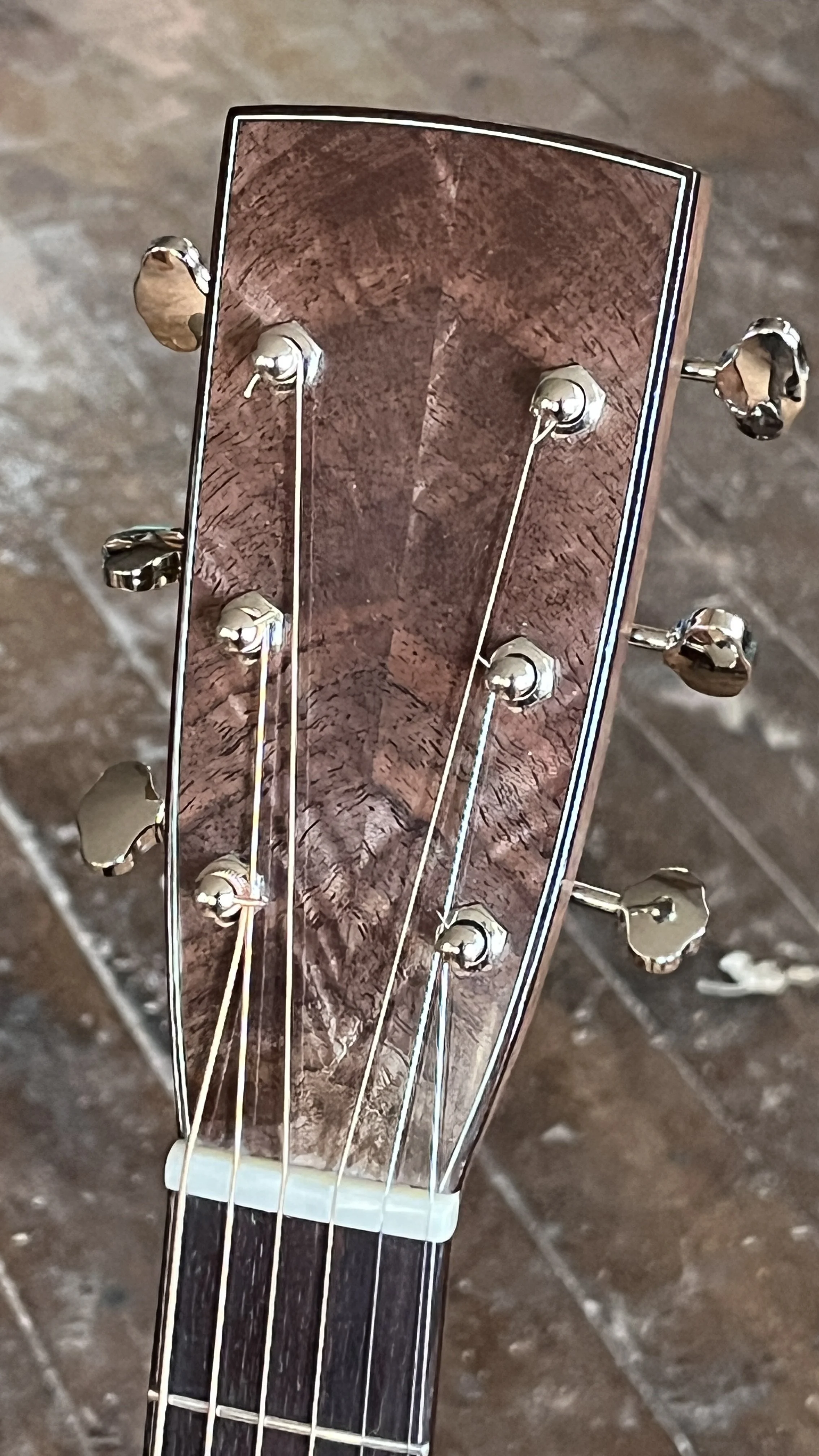
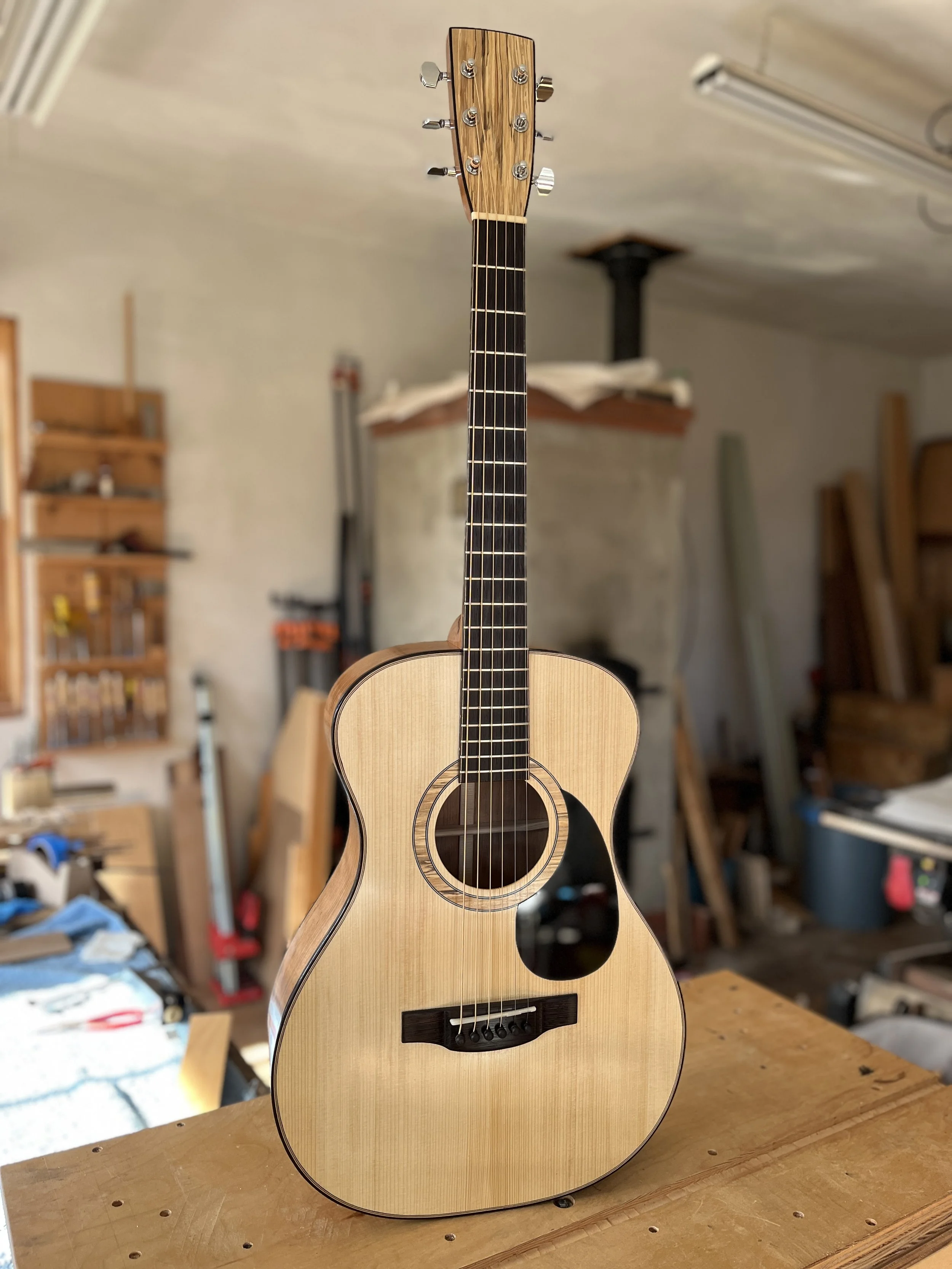
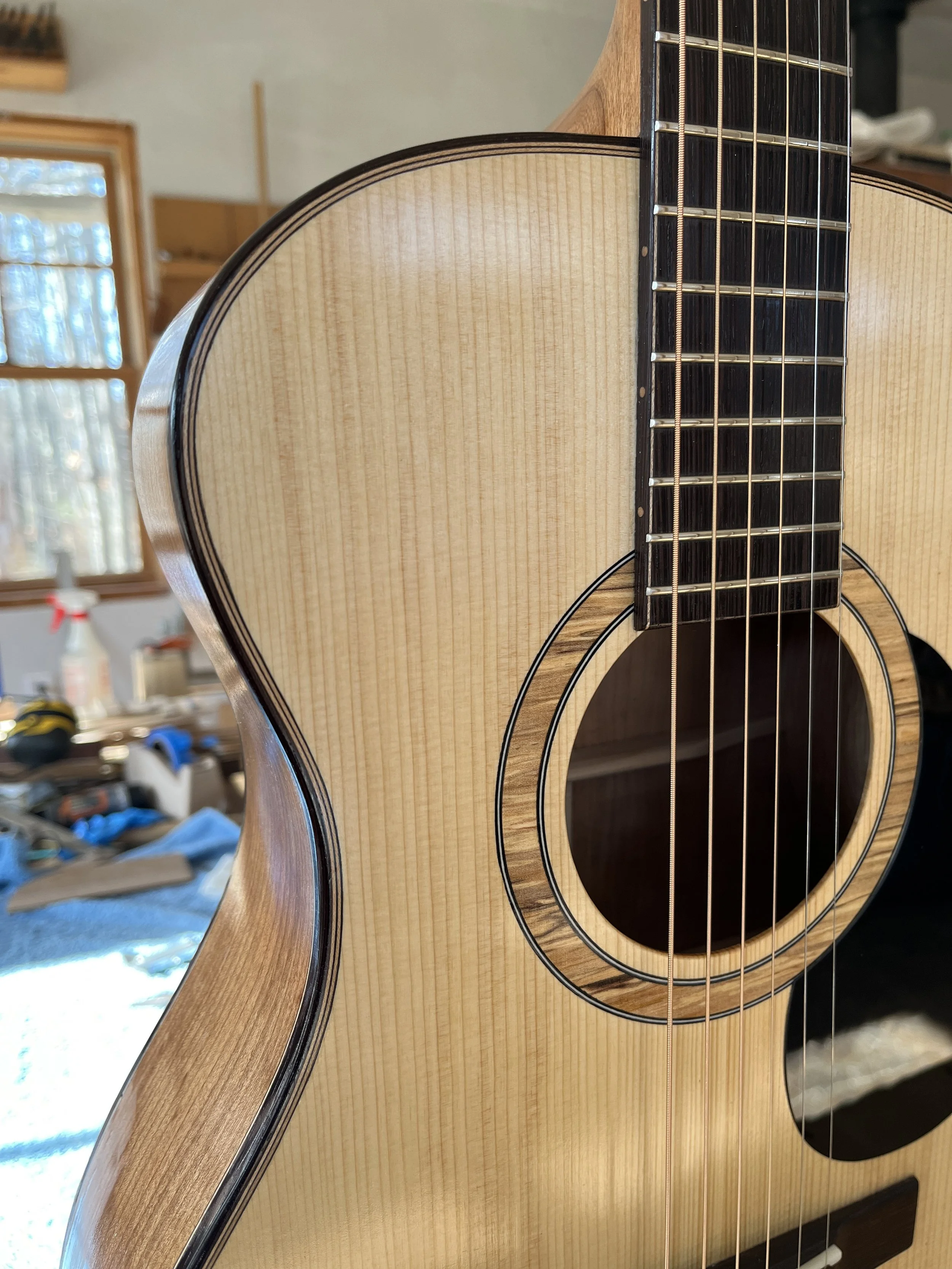
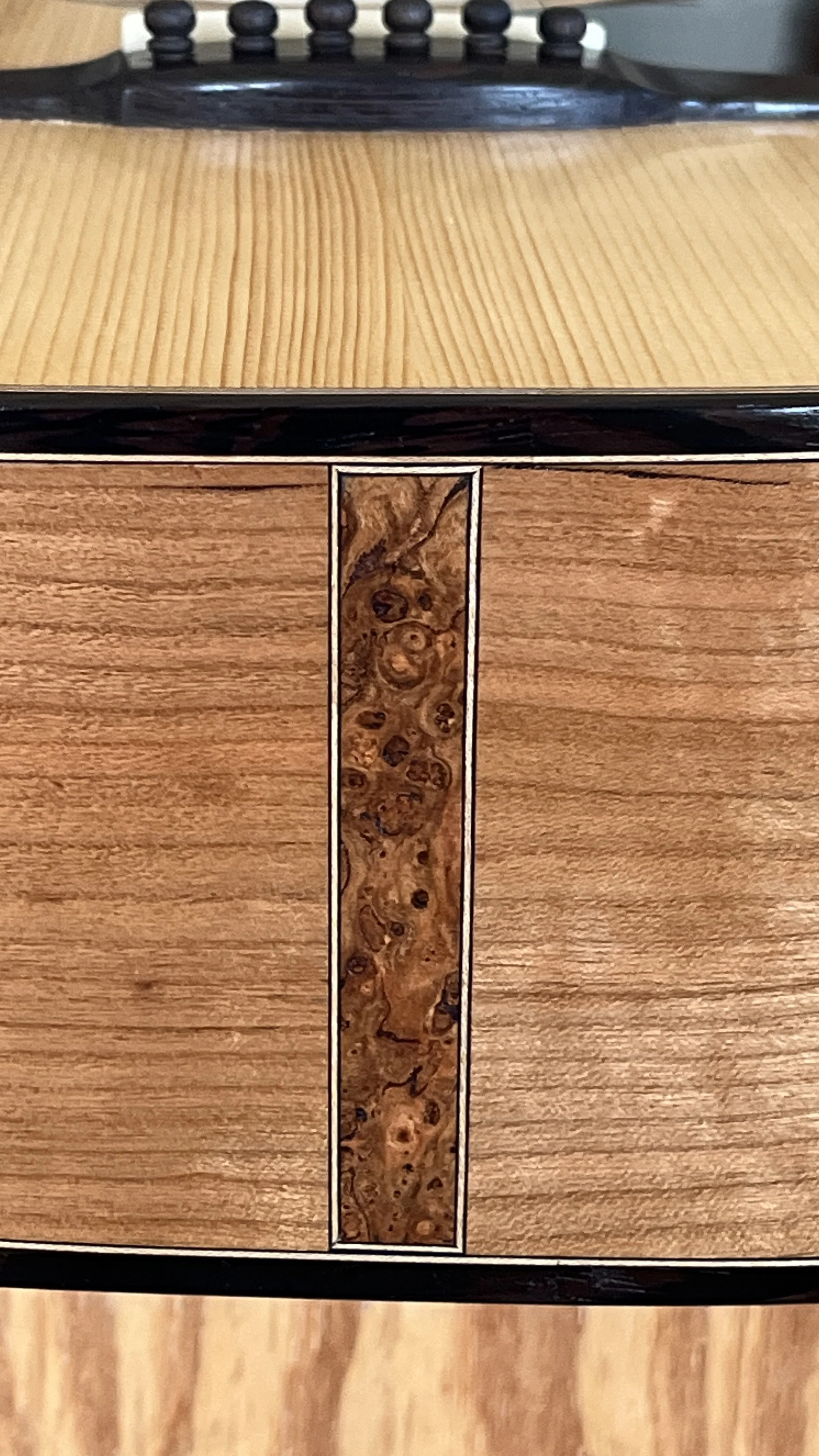
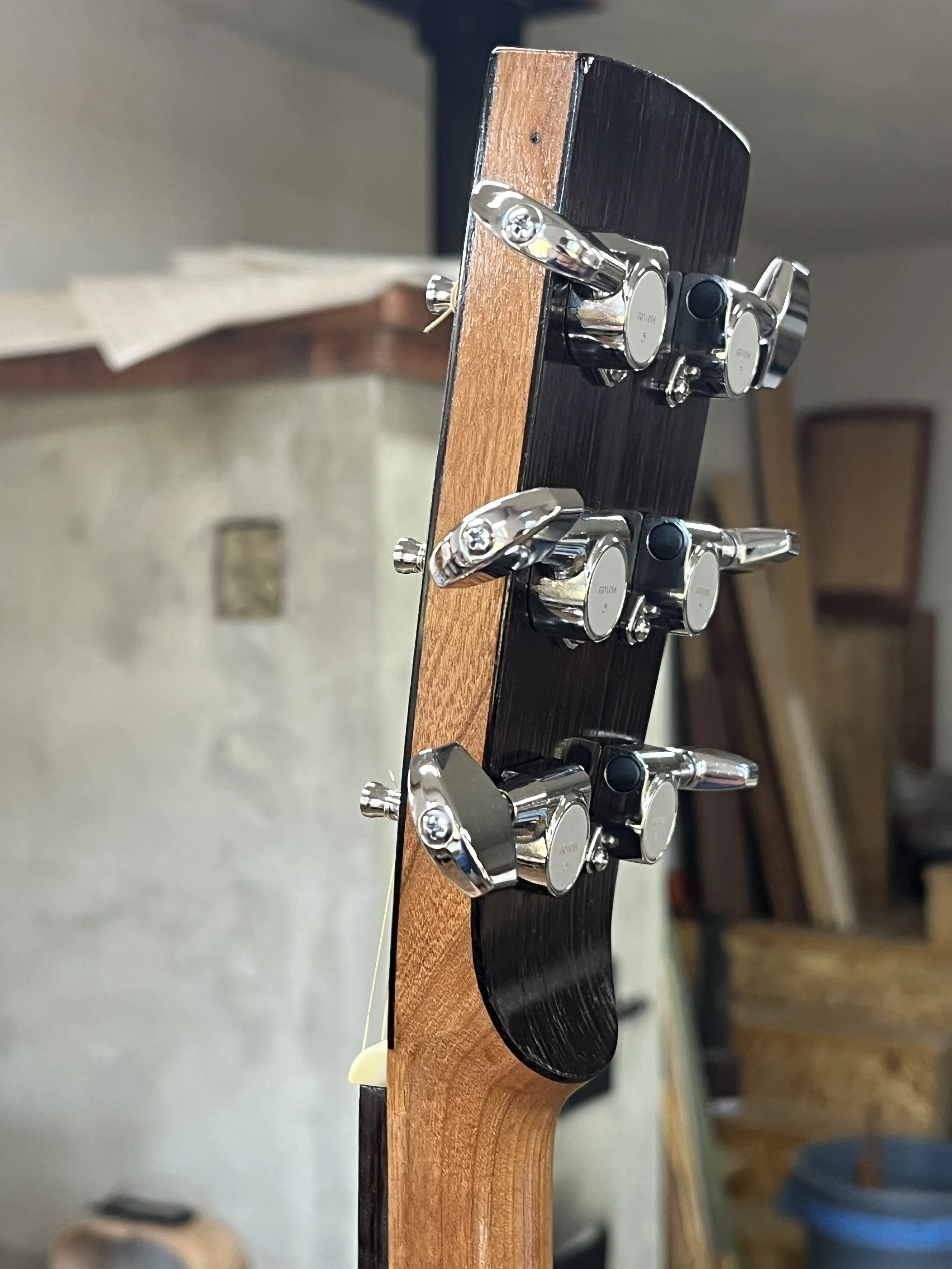
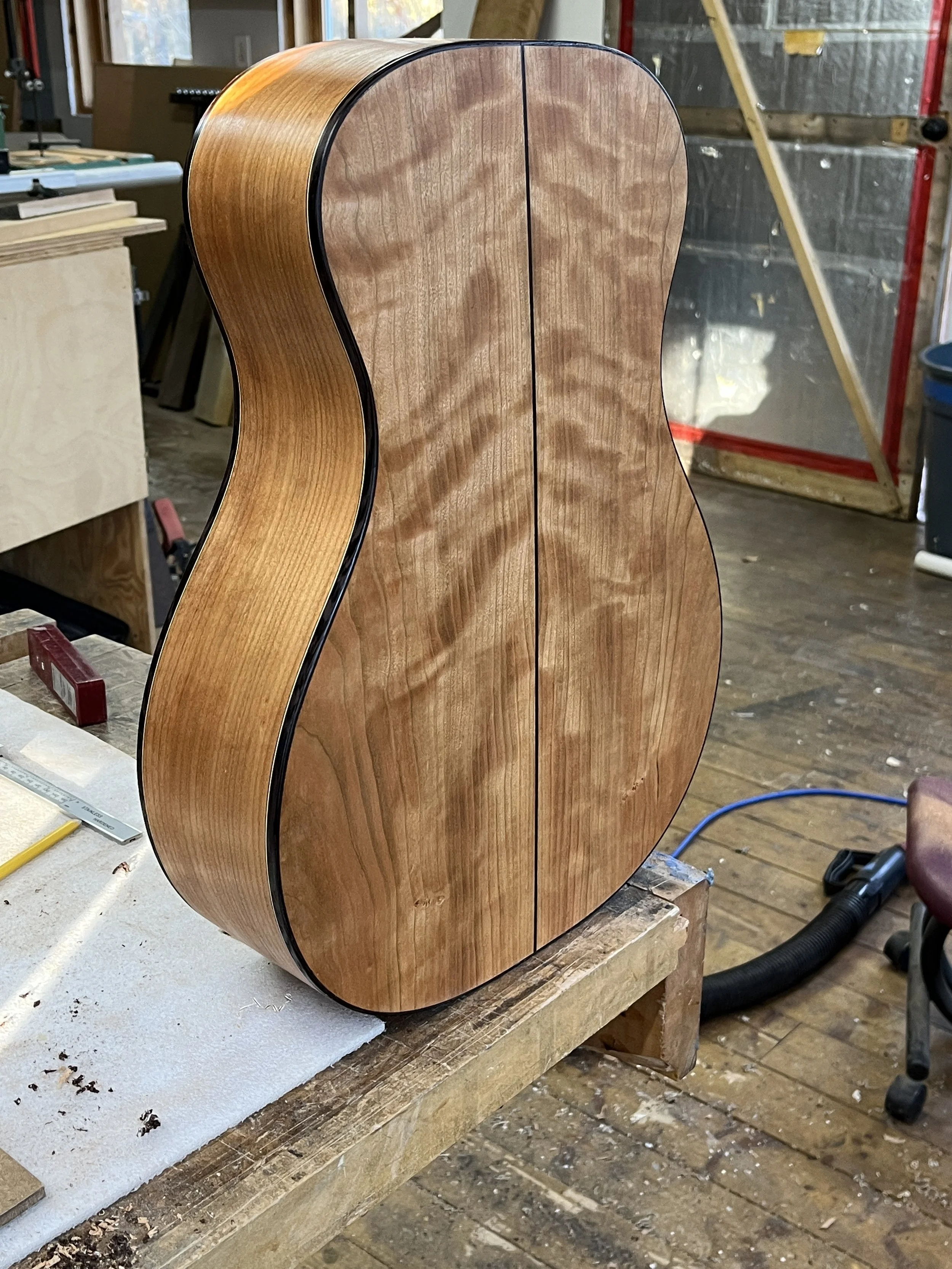
OM: The orchestra model. There are many variations of this size guitar (15” lower bout) and the nomenclature varies by manufacturer. This is the most popular size guitar, and thought by many luthiers to sit in the “sweet spot” of the size continuum. It offers good volume, tonal balance, richness and depth of tone and is available in many configurations.
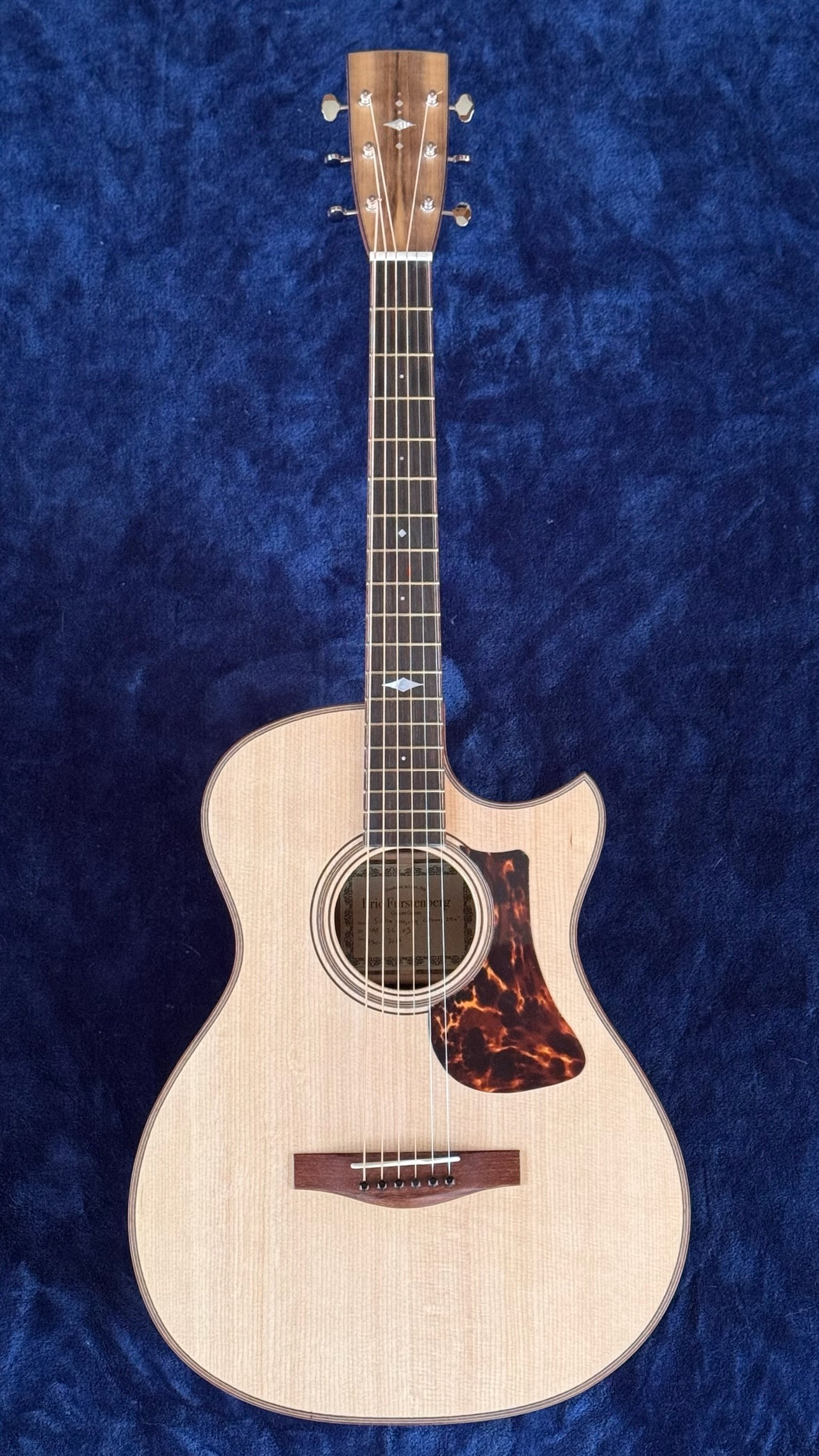
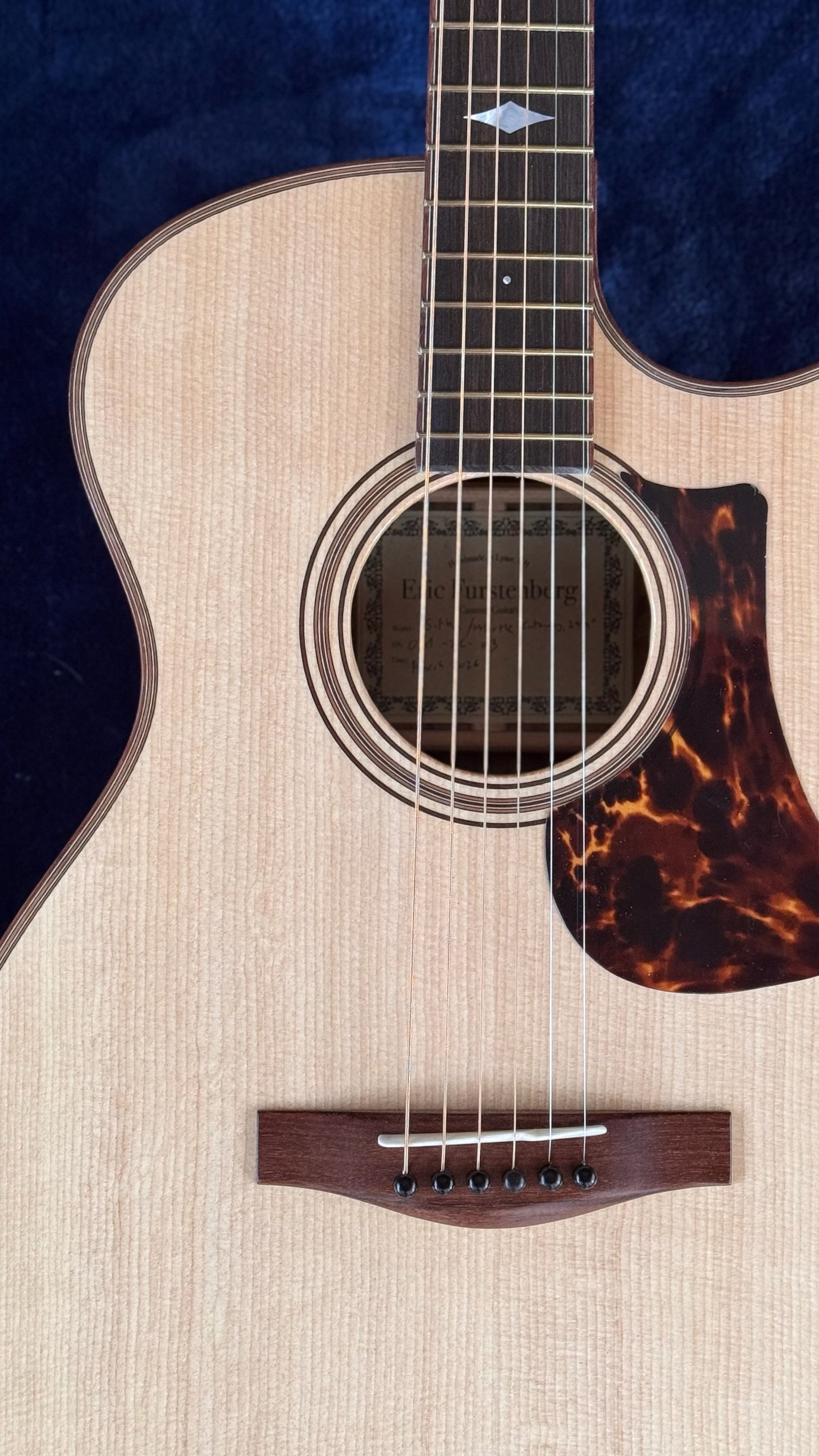
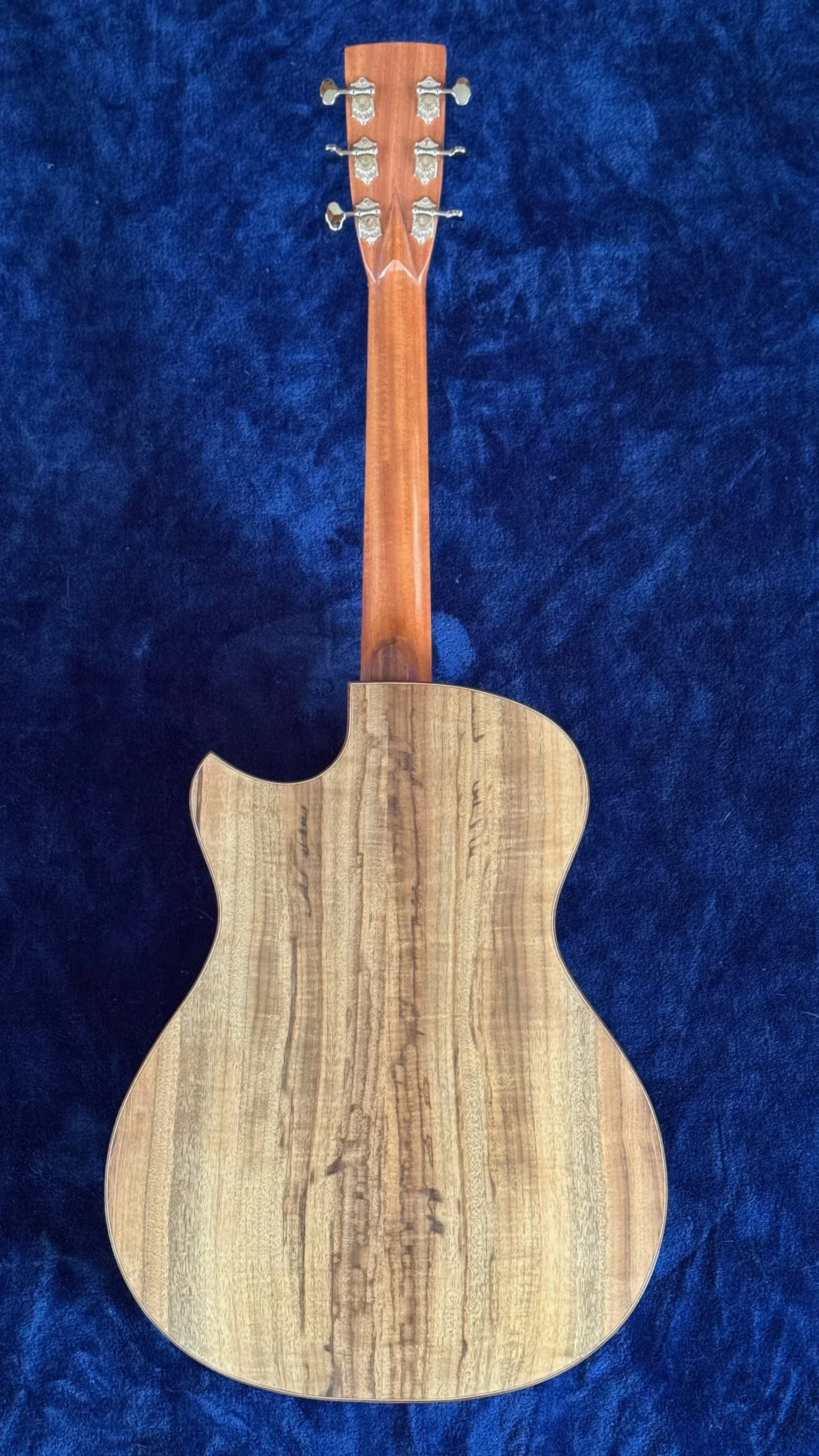
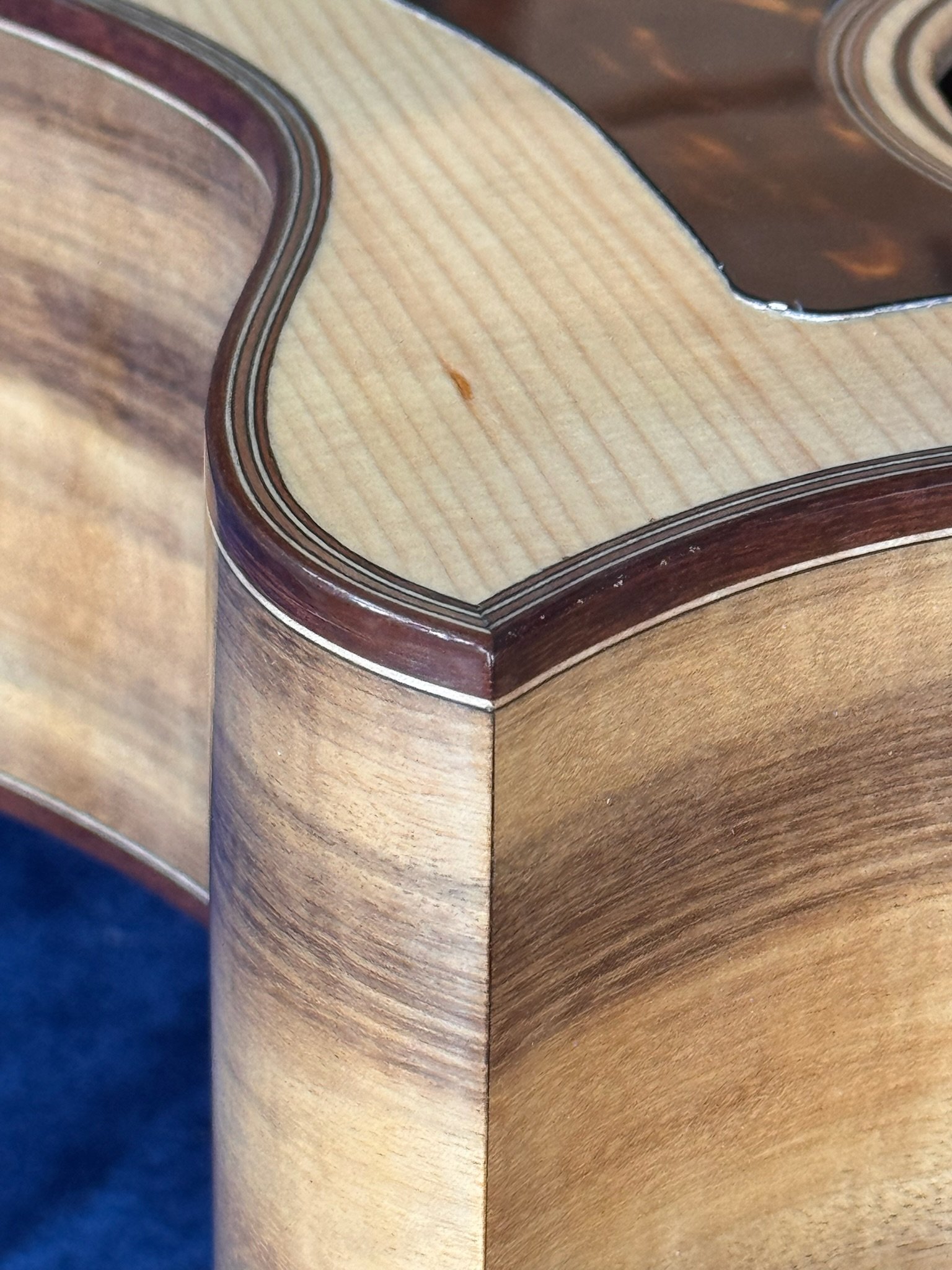
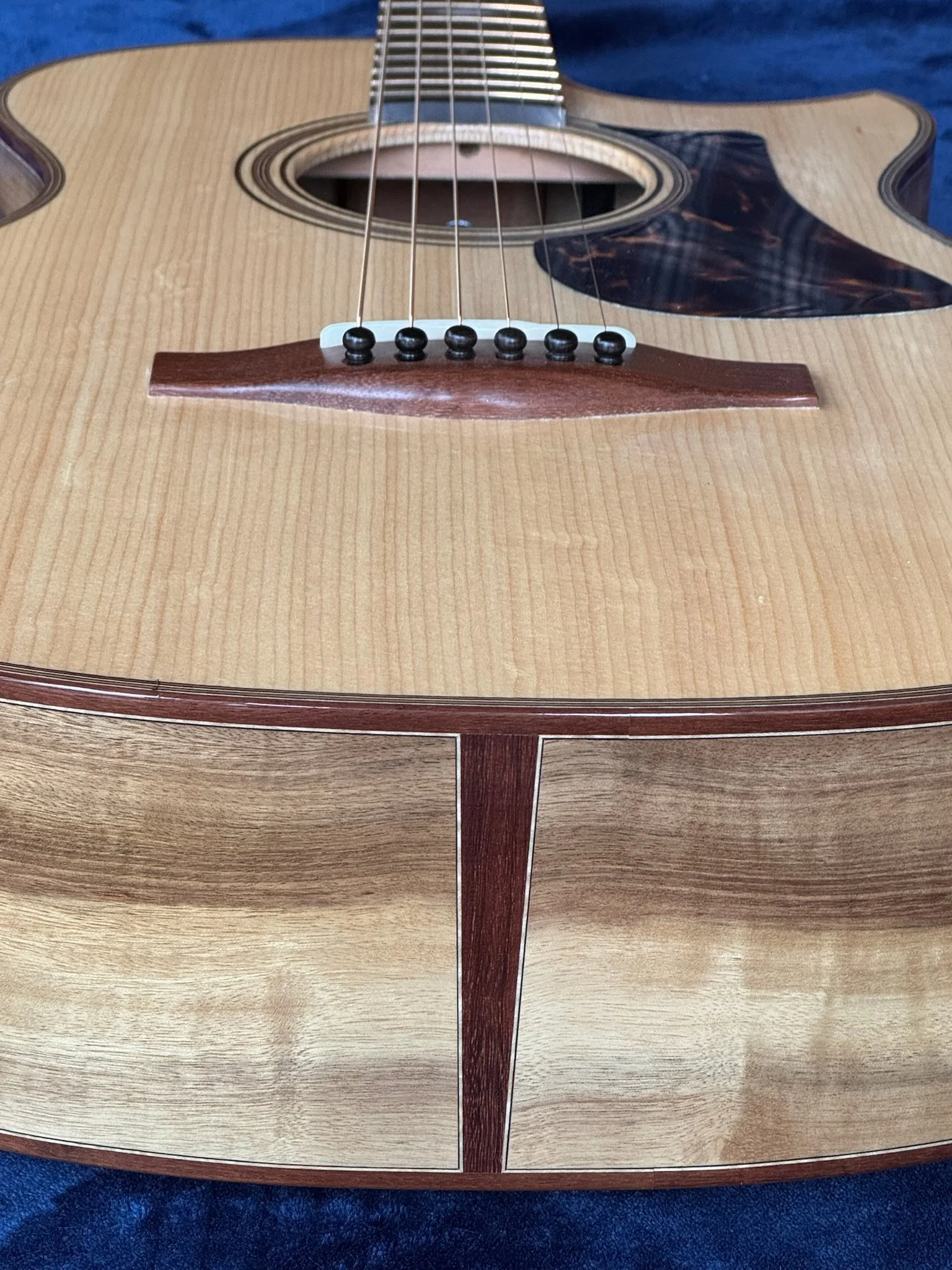
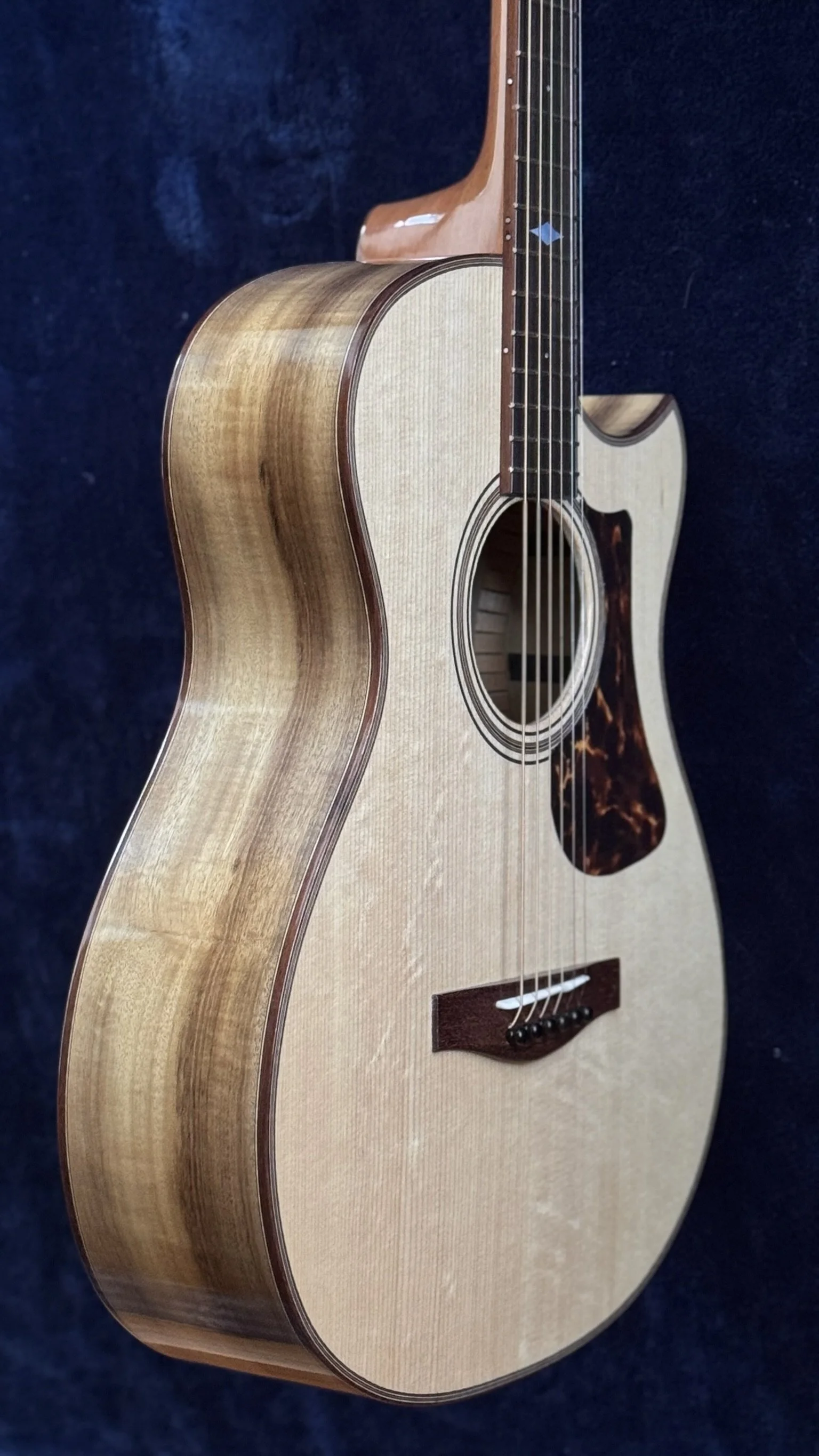
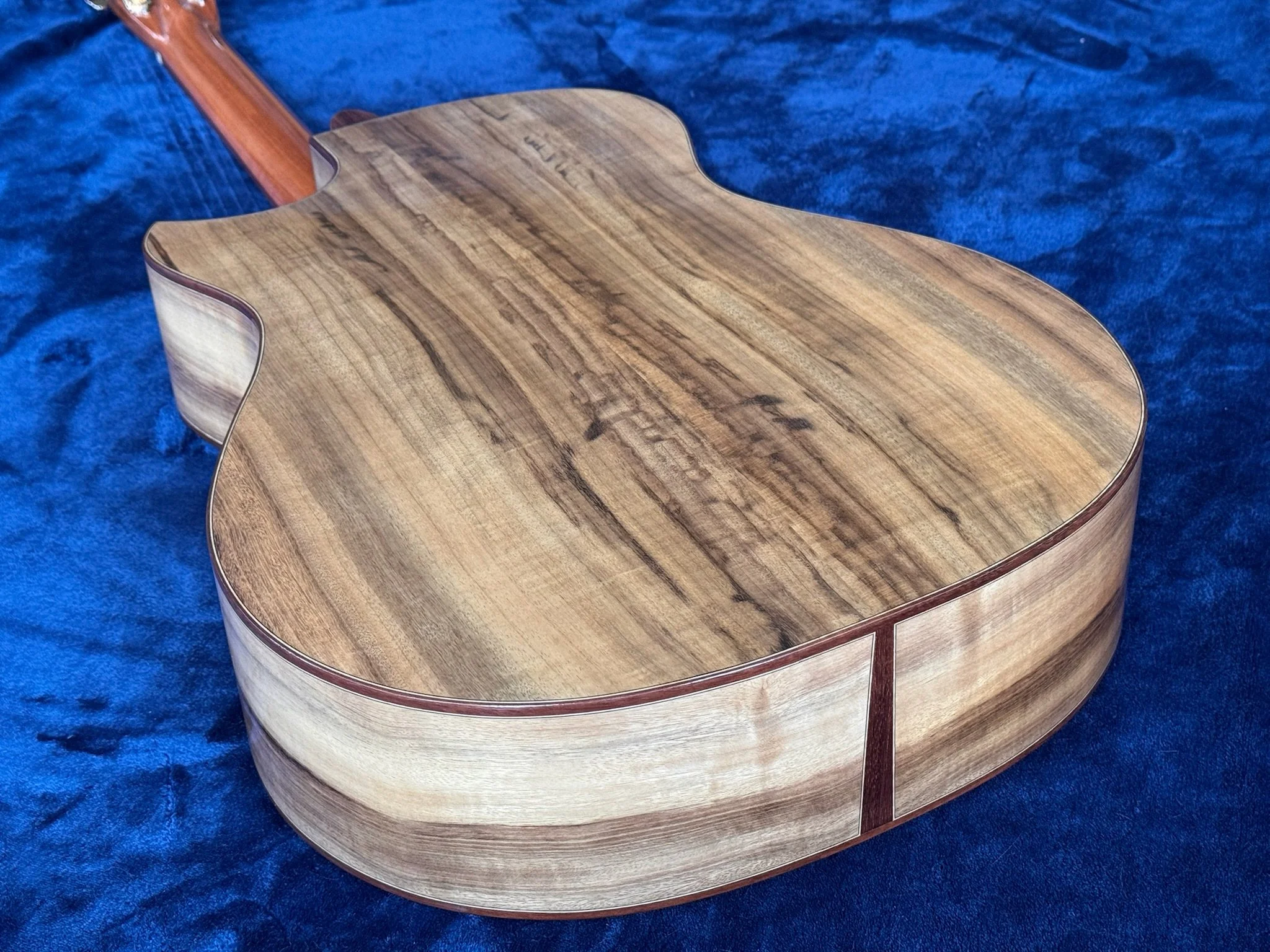
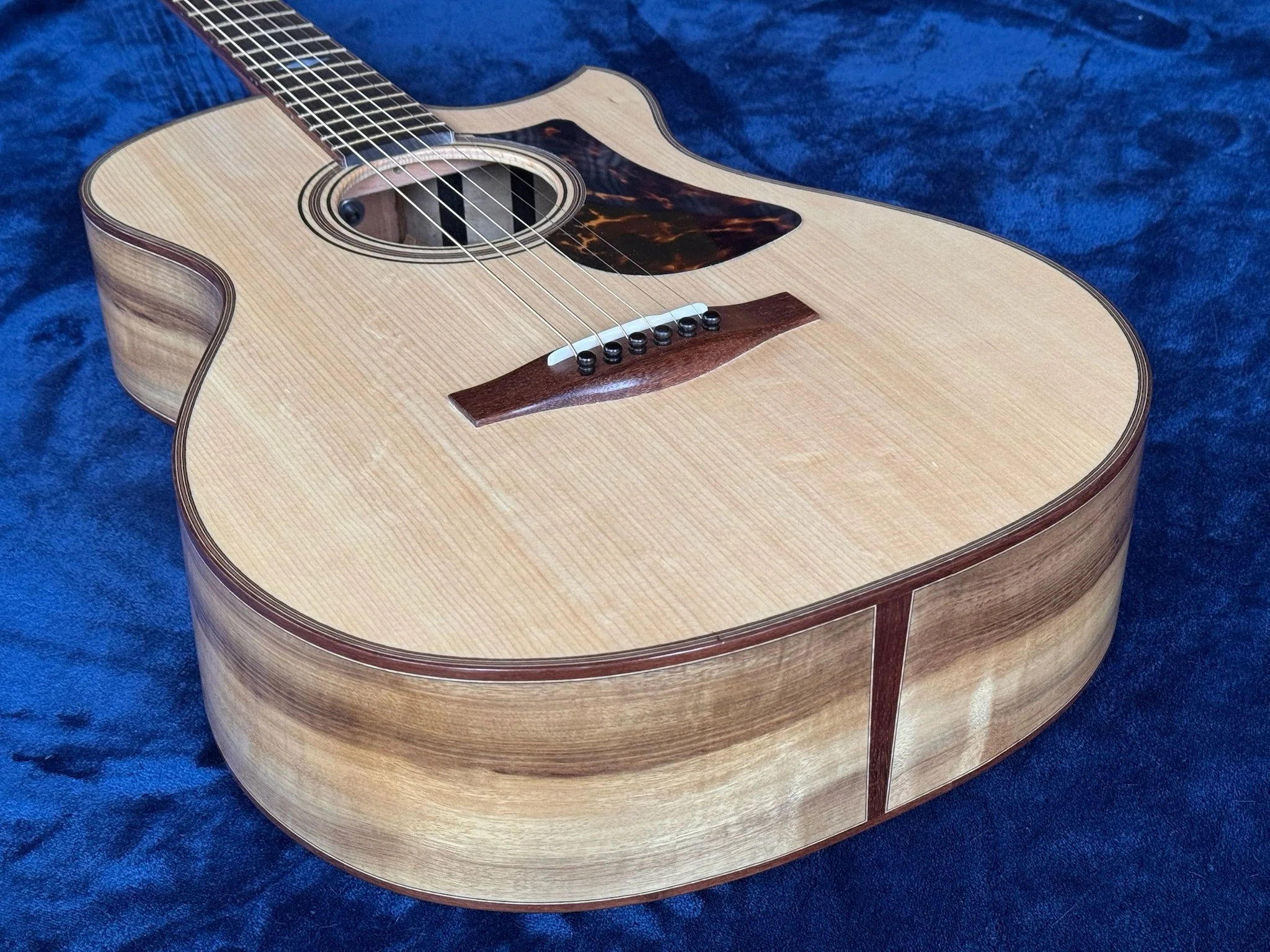
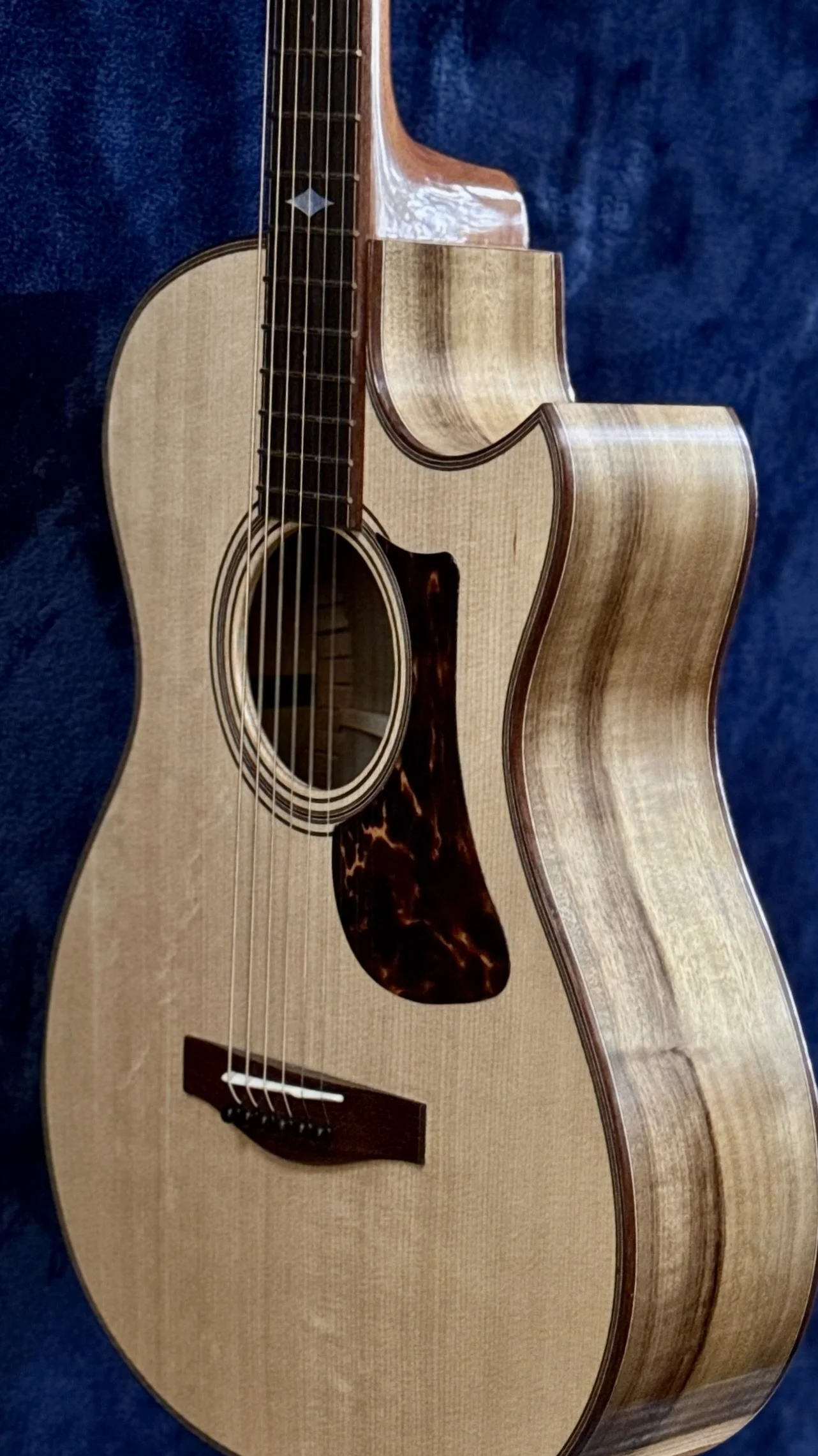
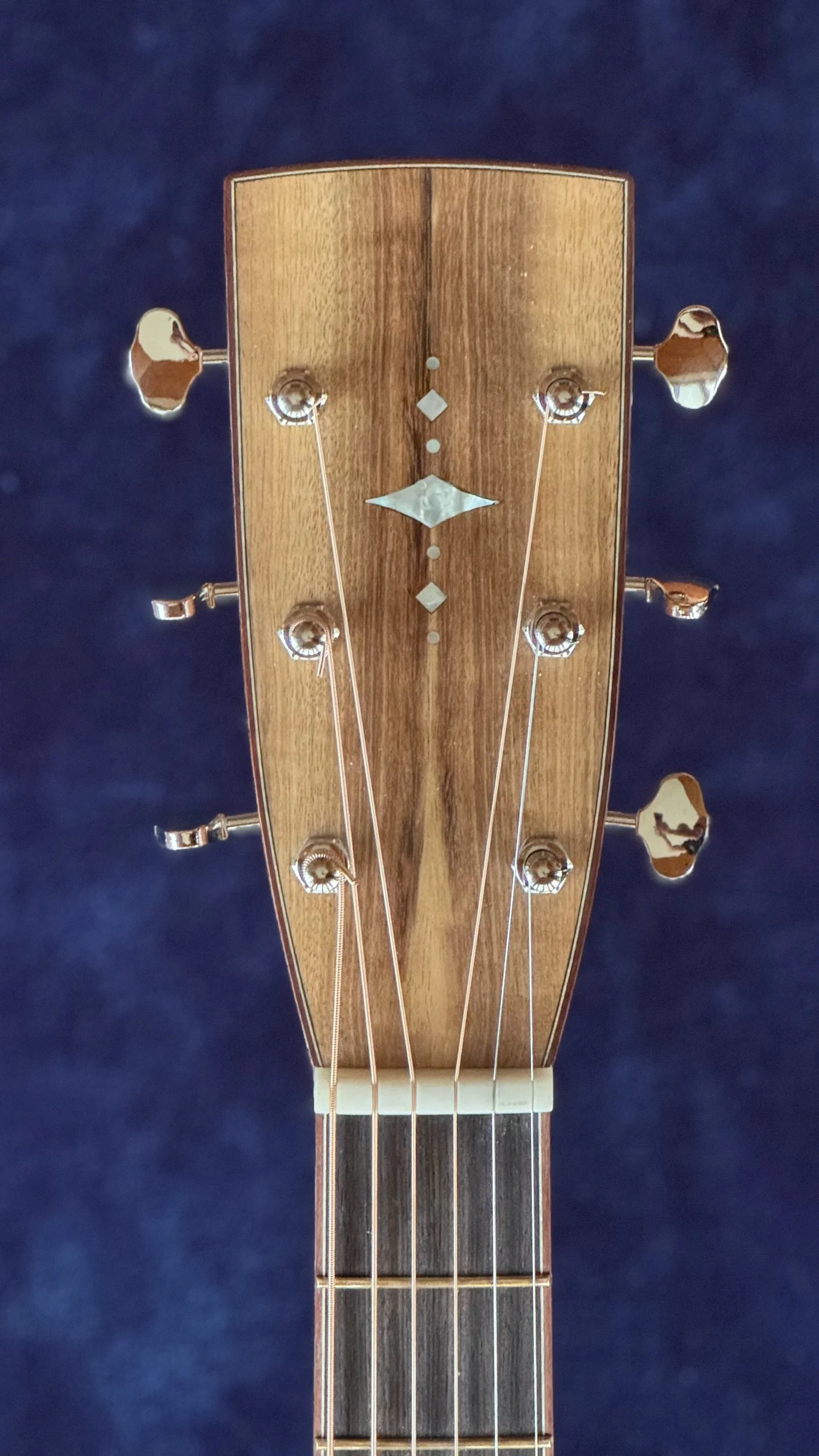
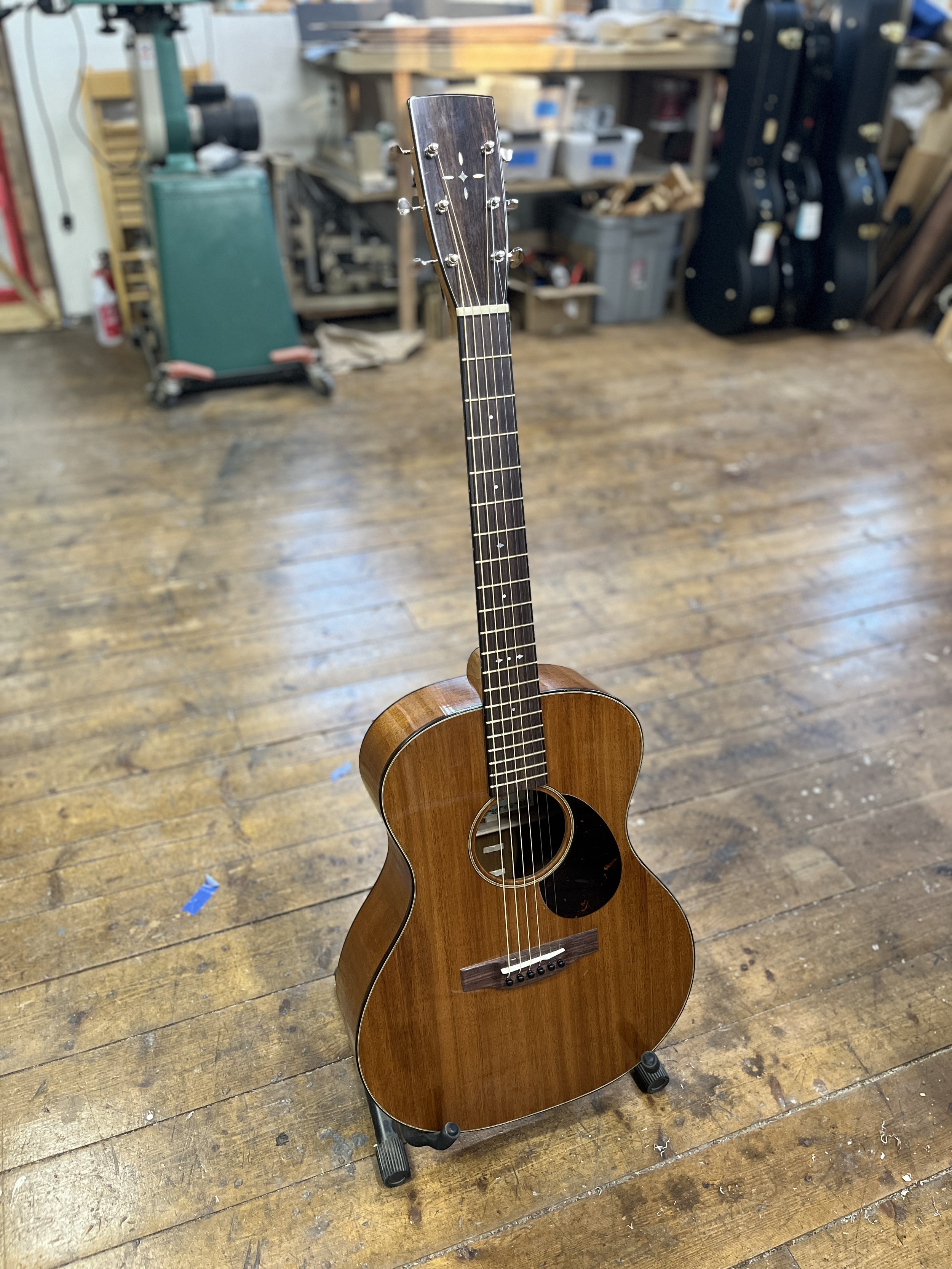
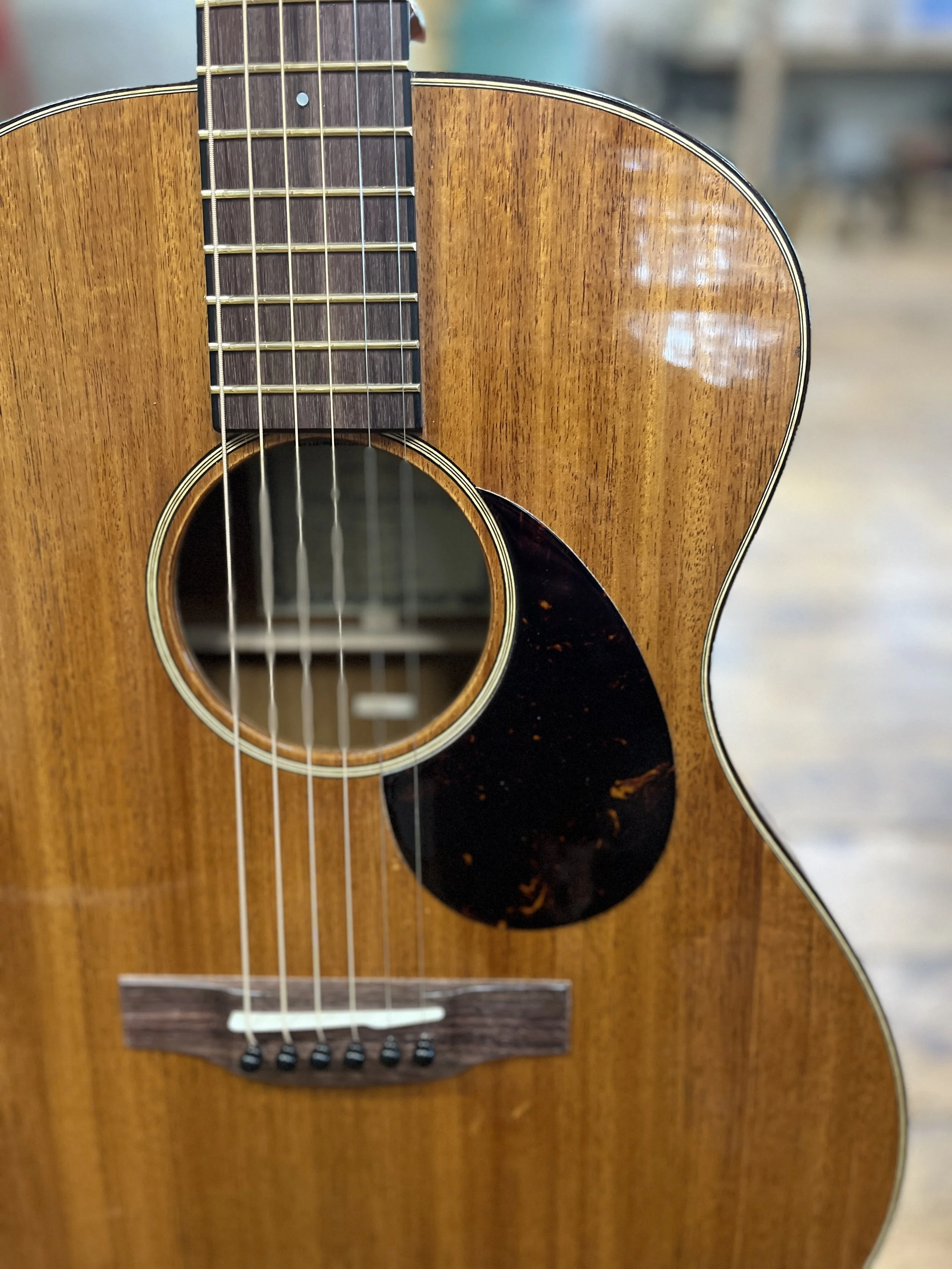
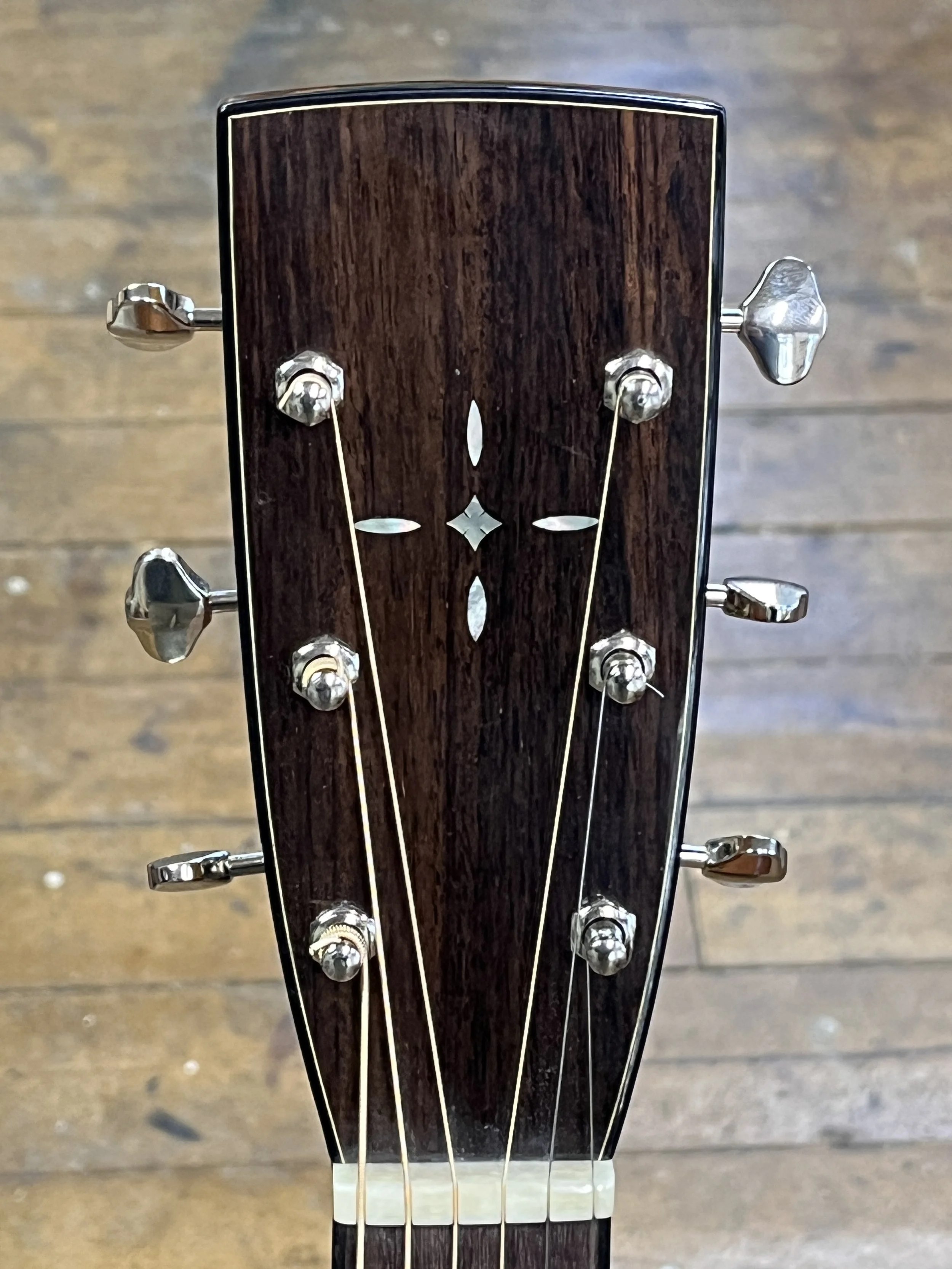
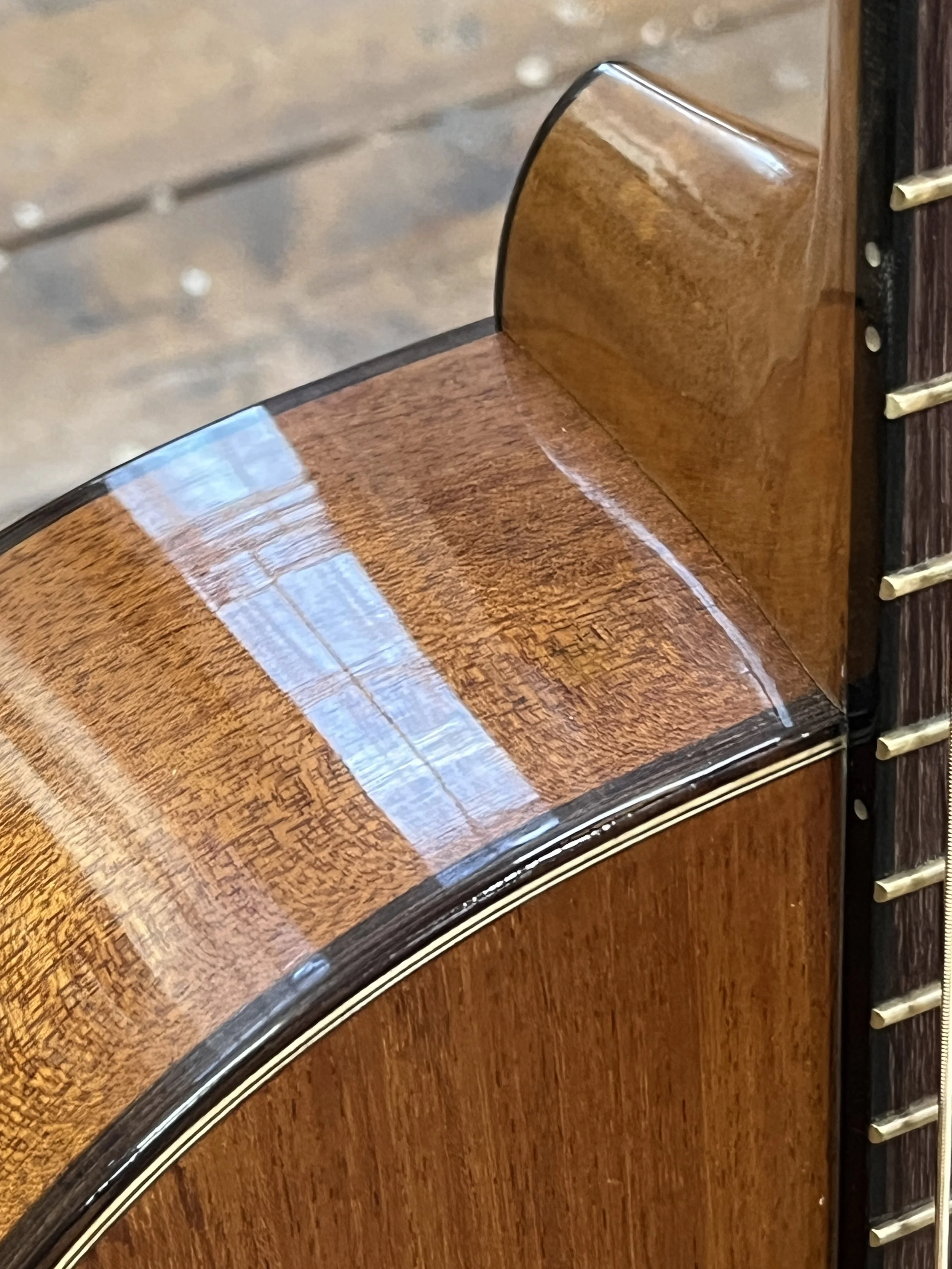
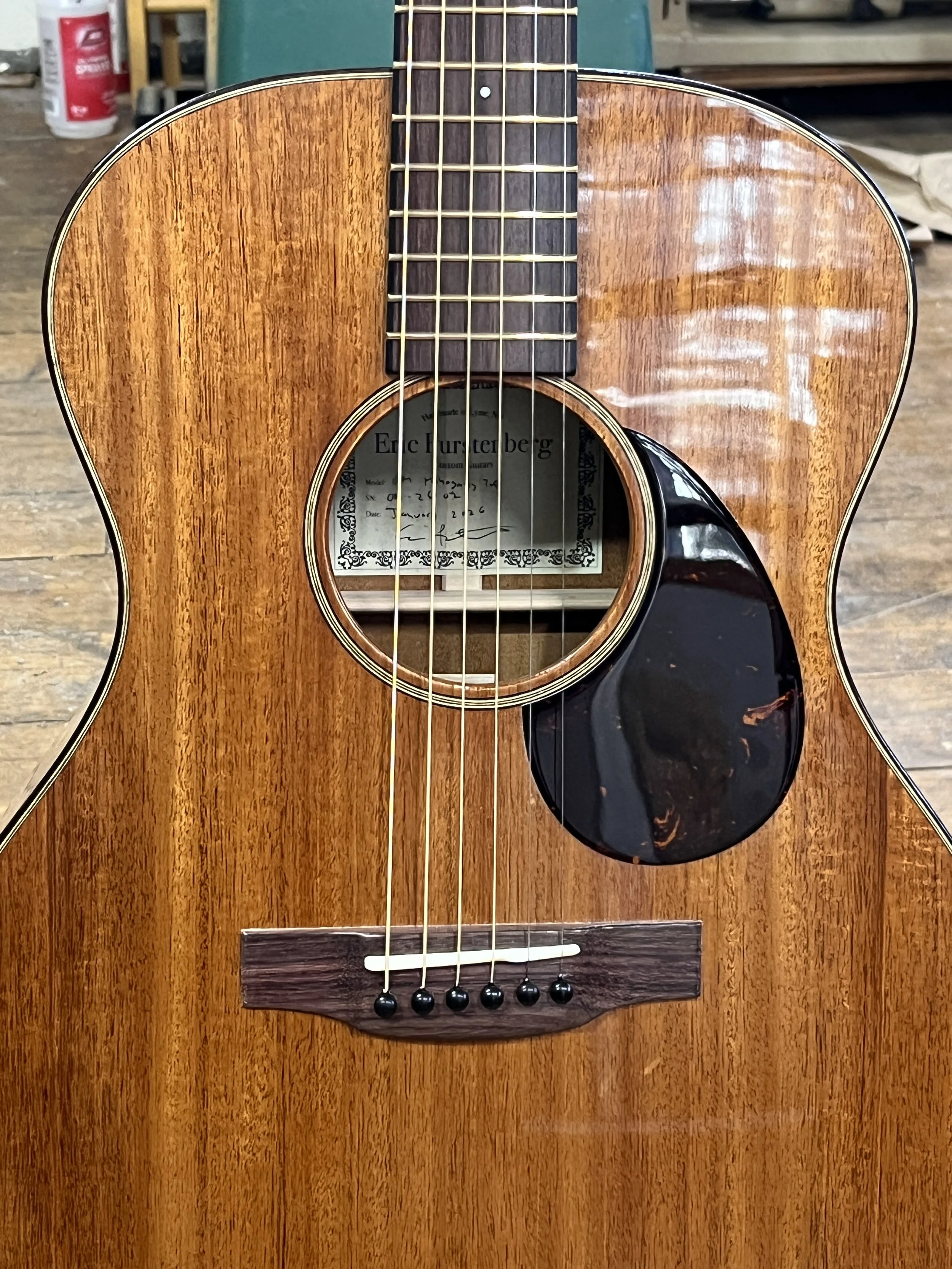
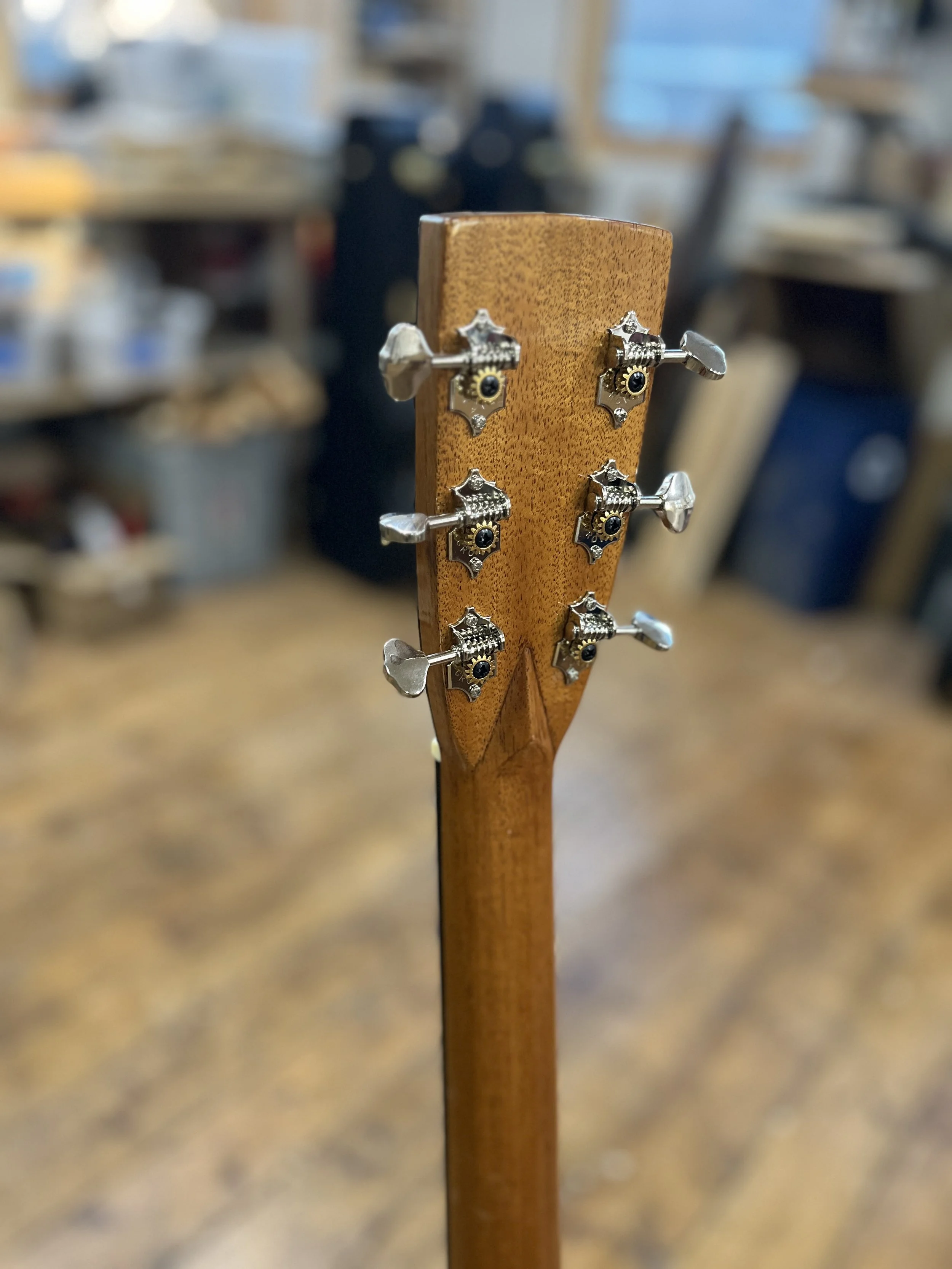
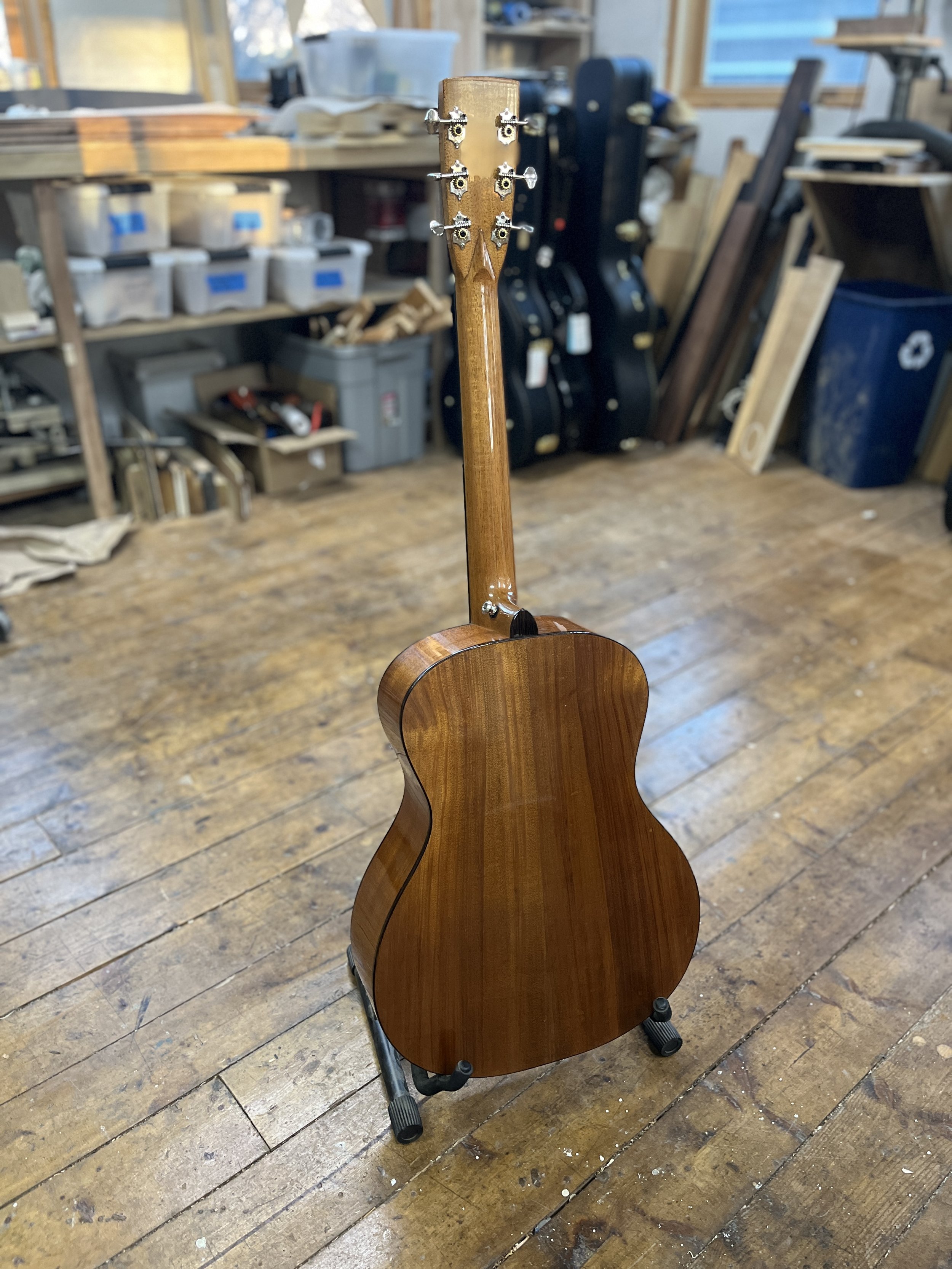
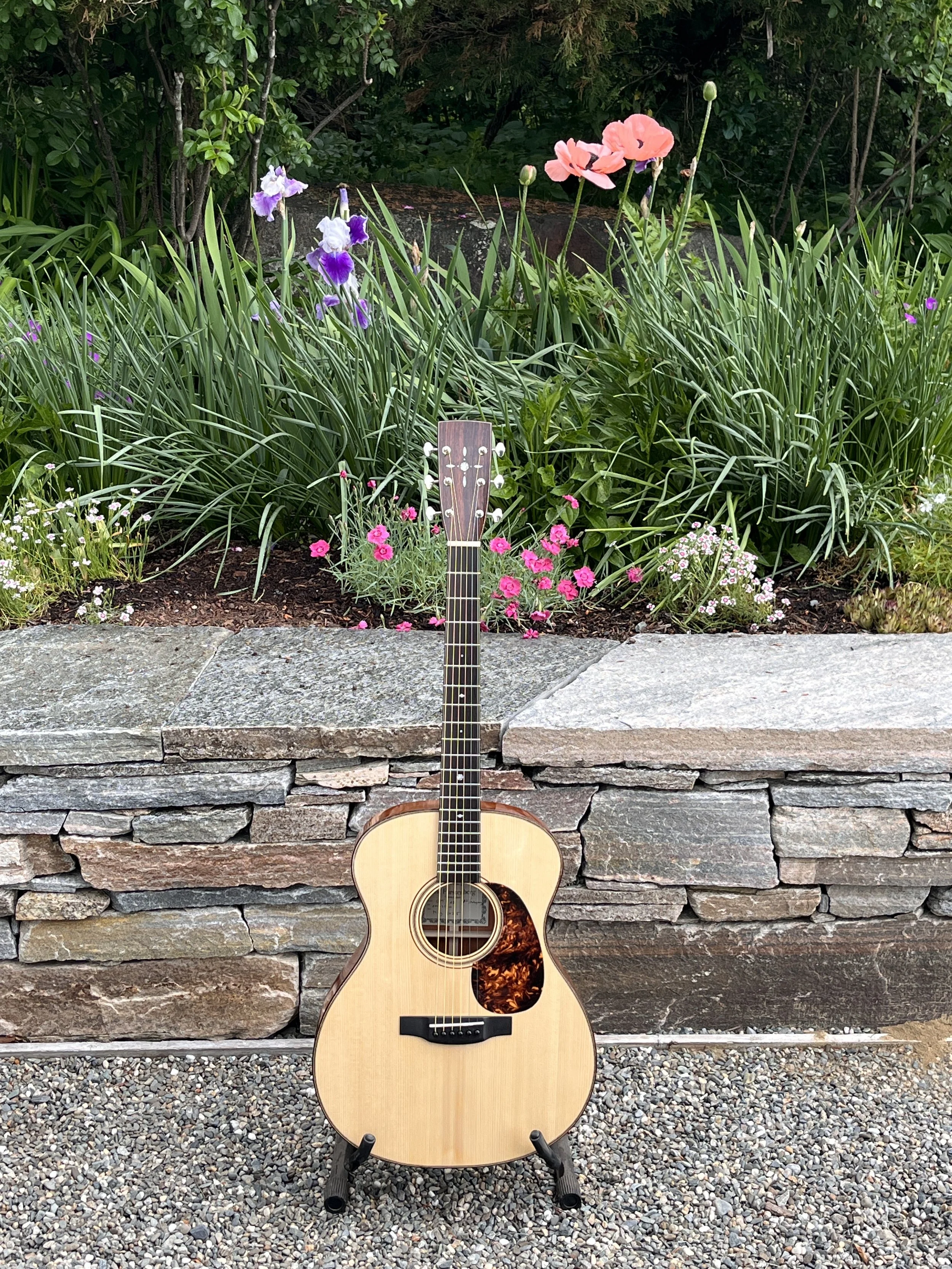
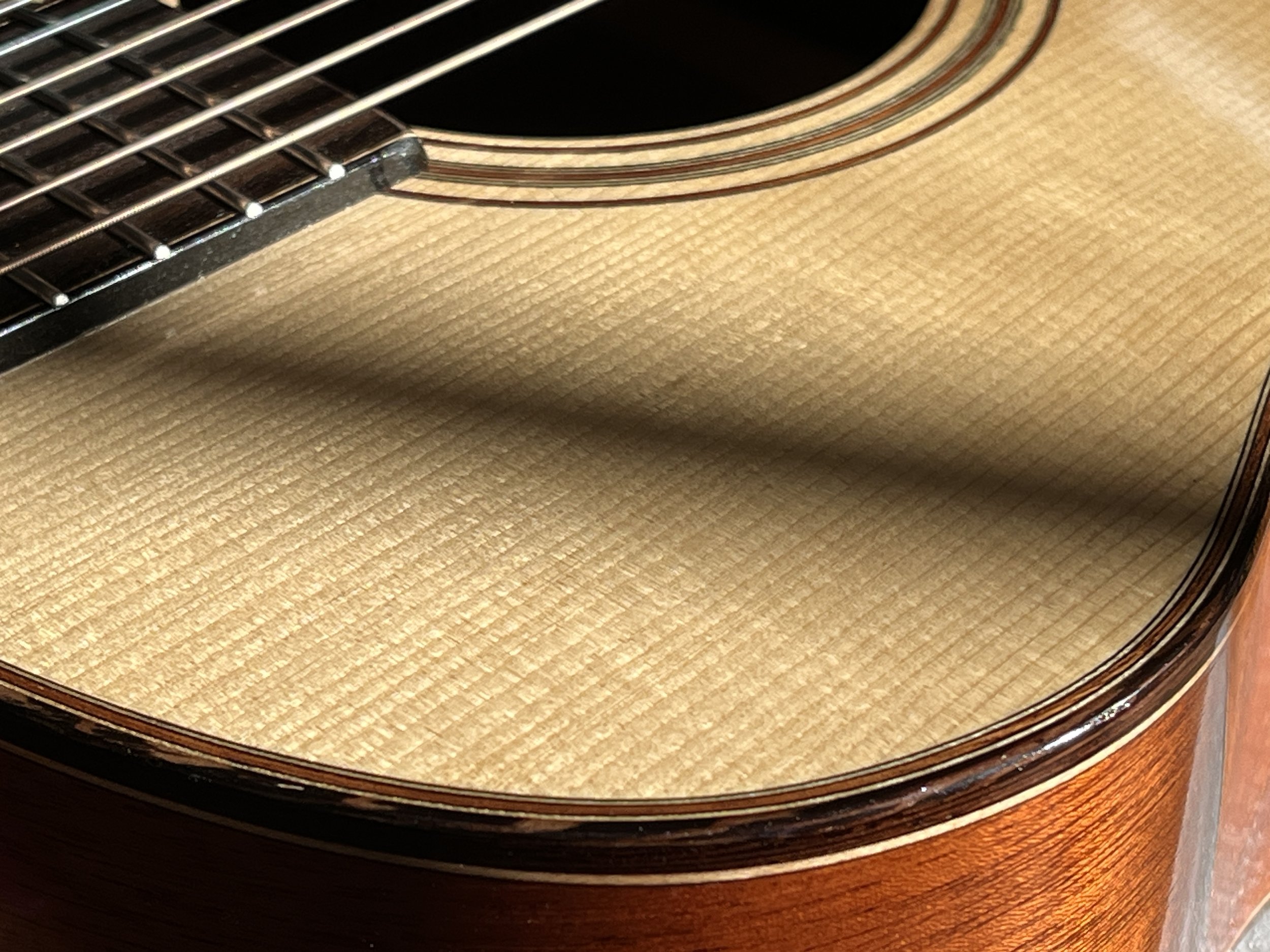
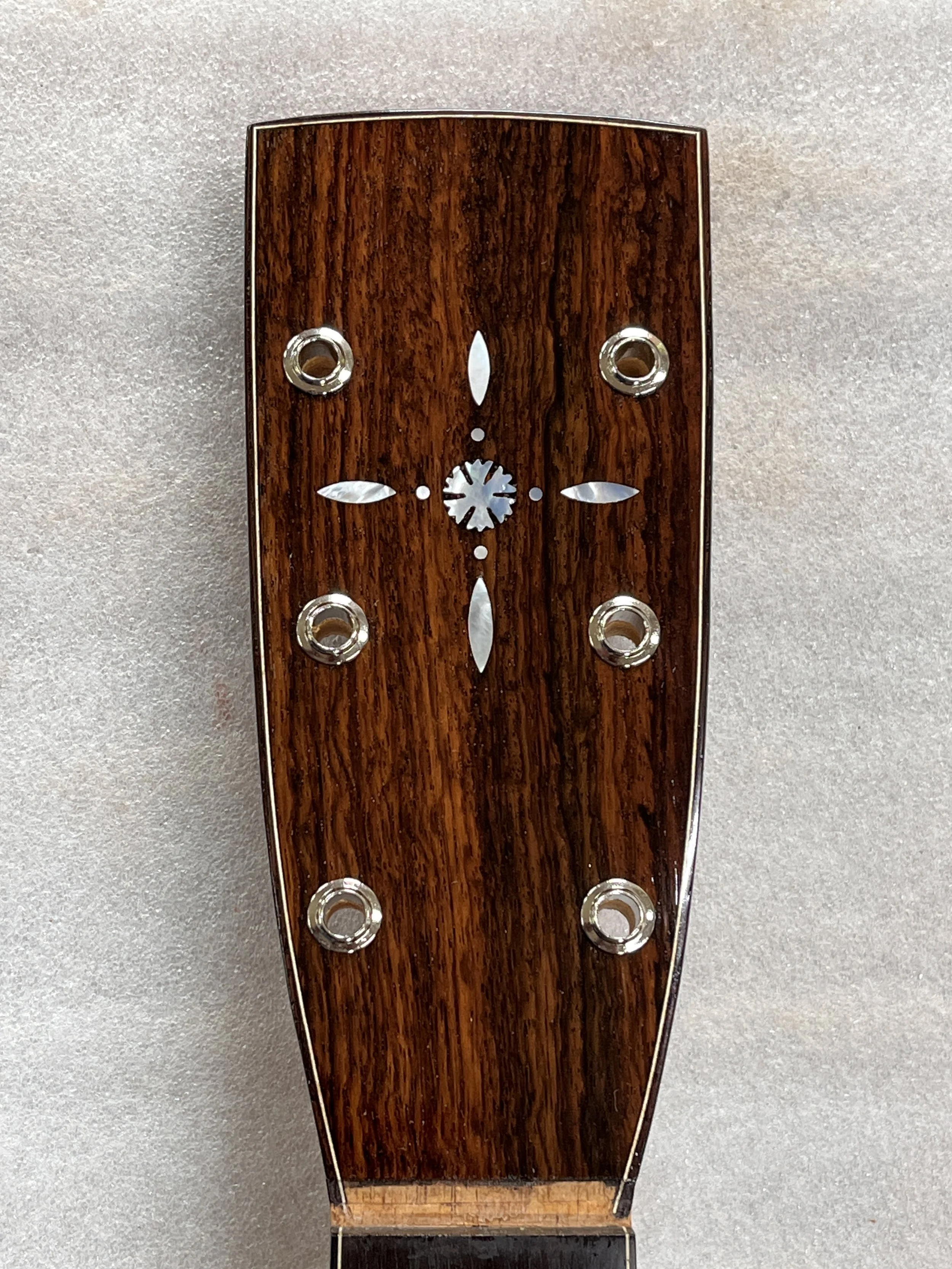
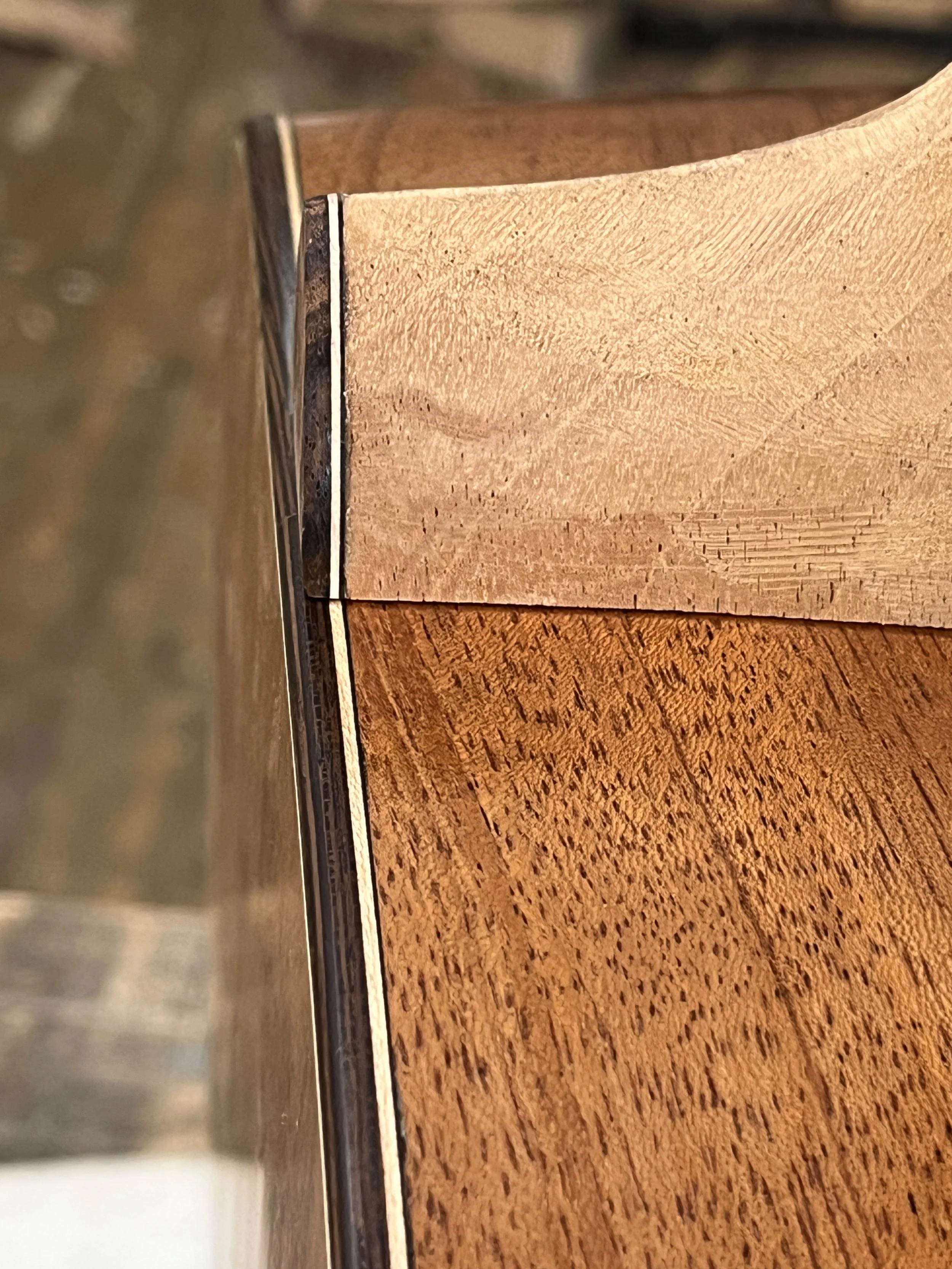
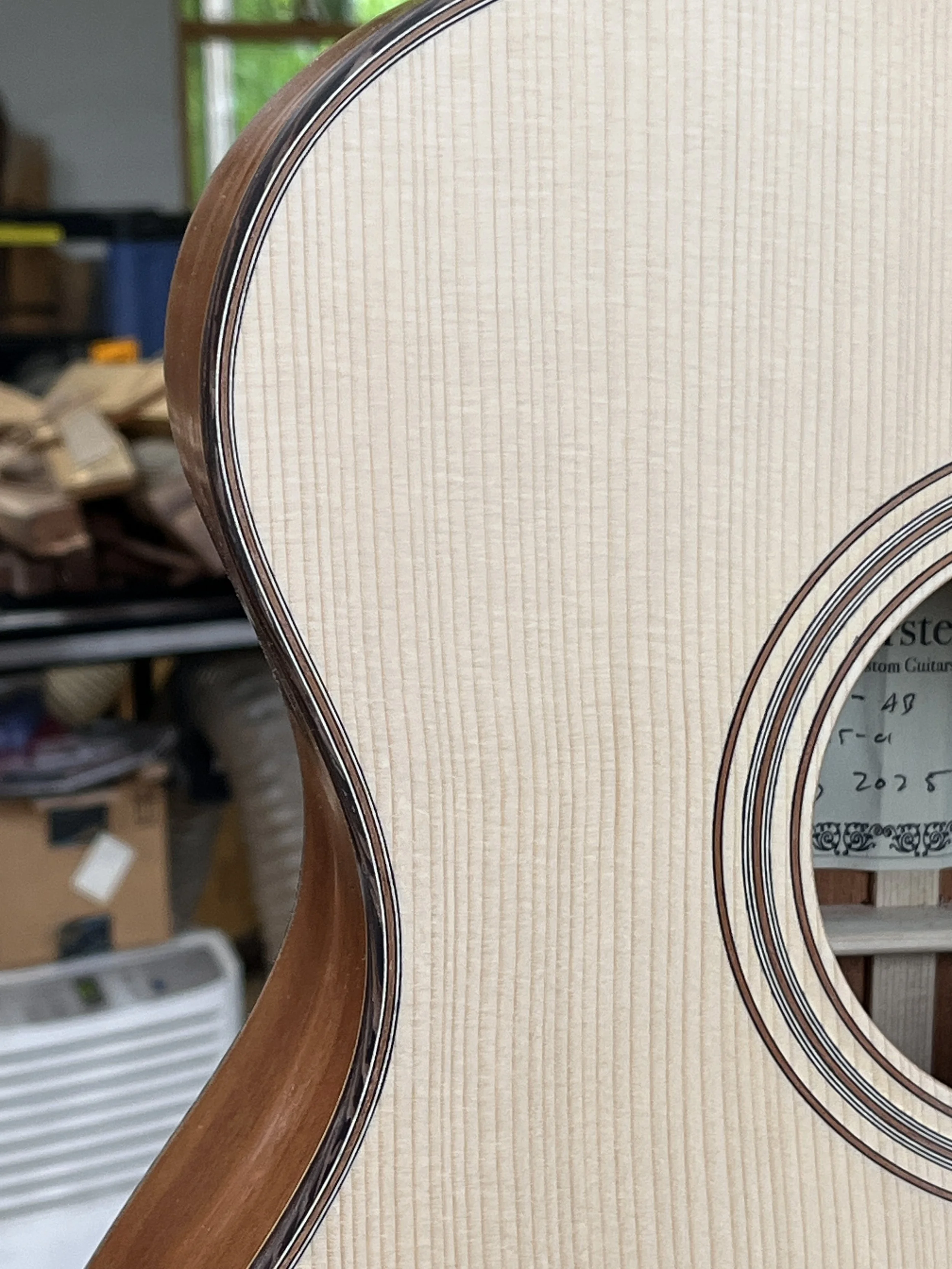
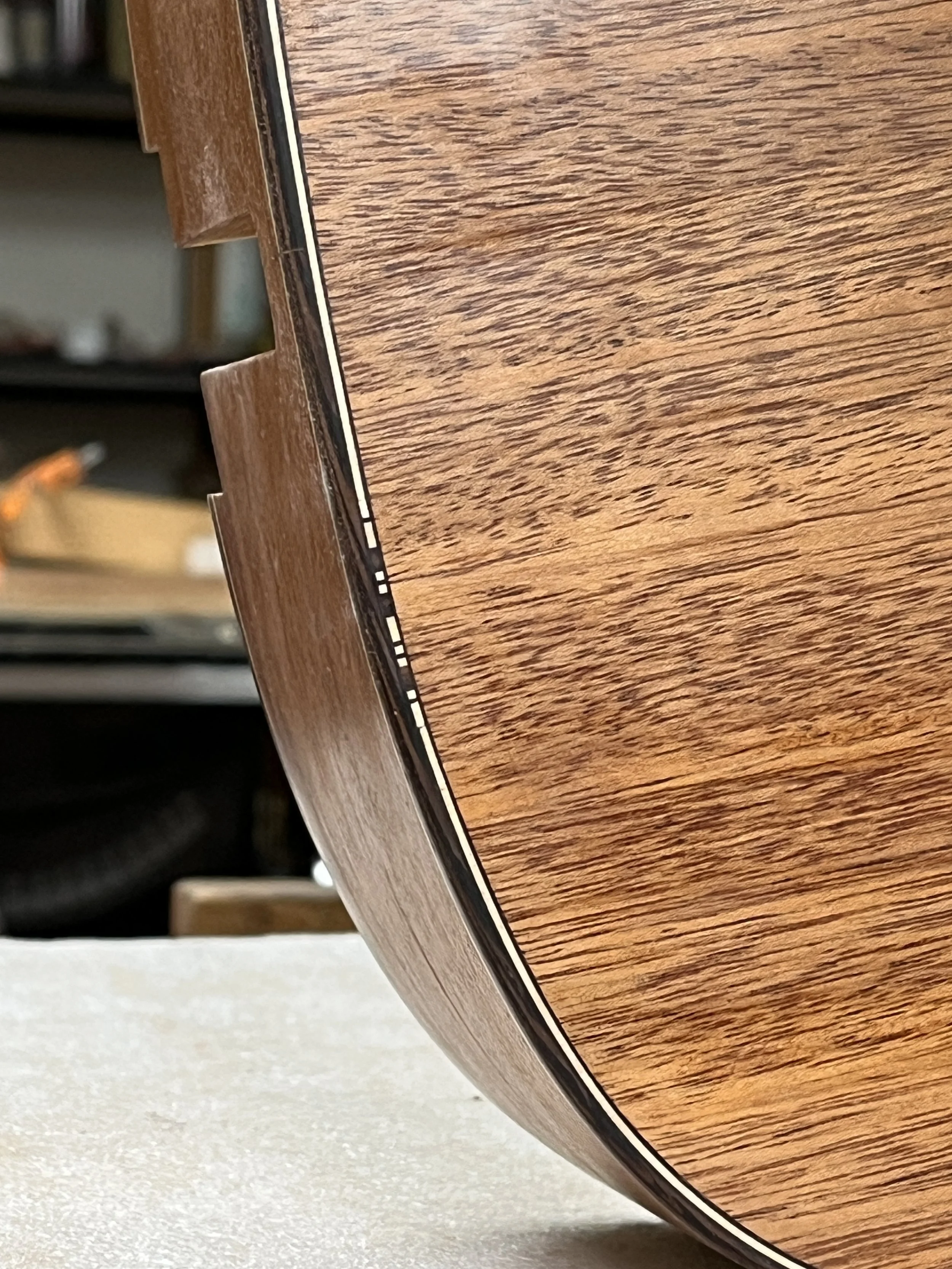
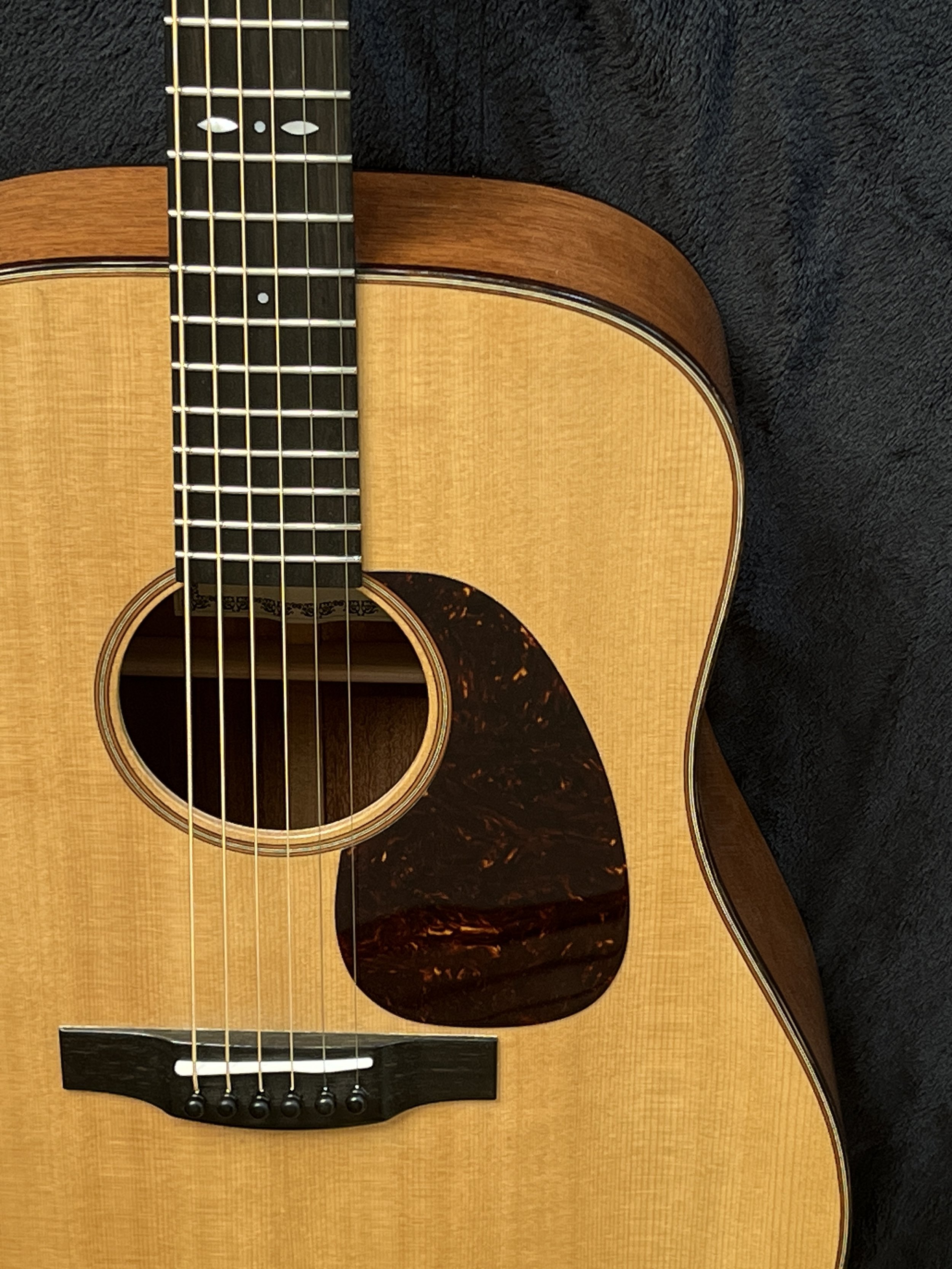
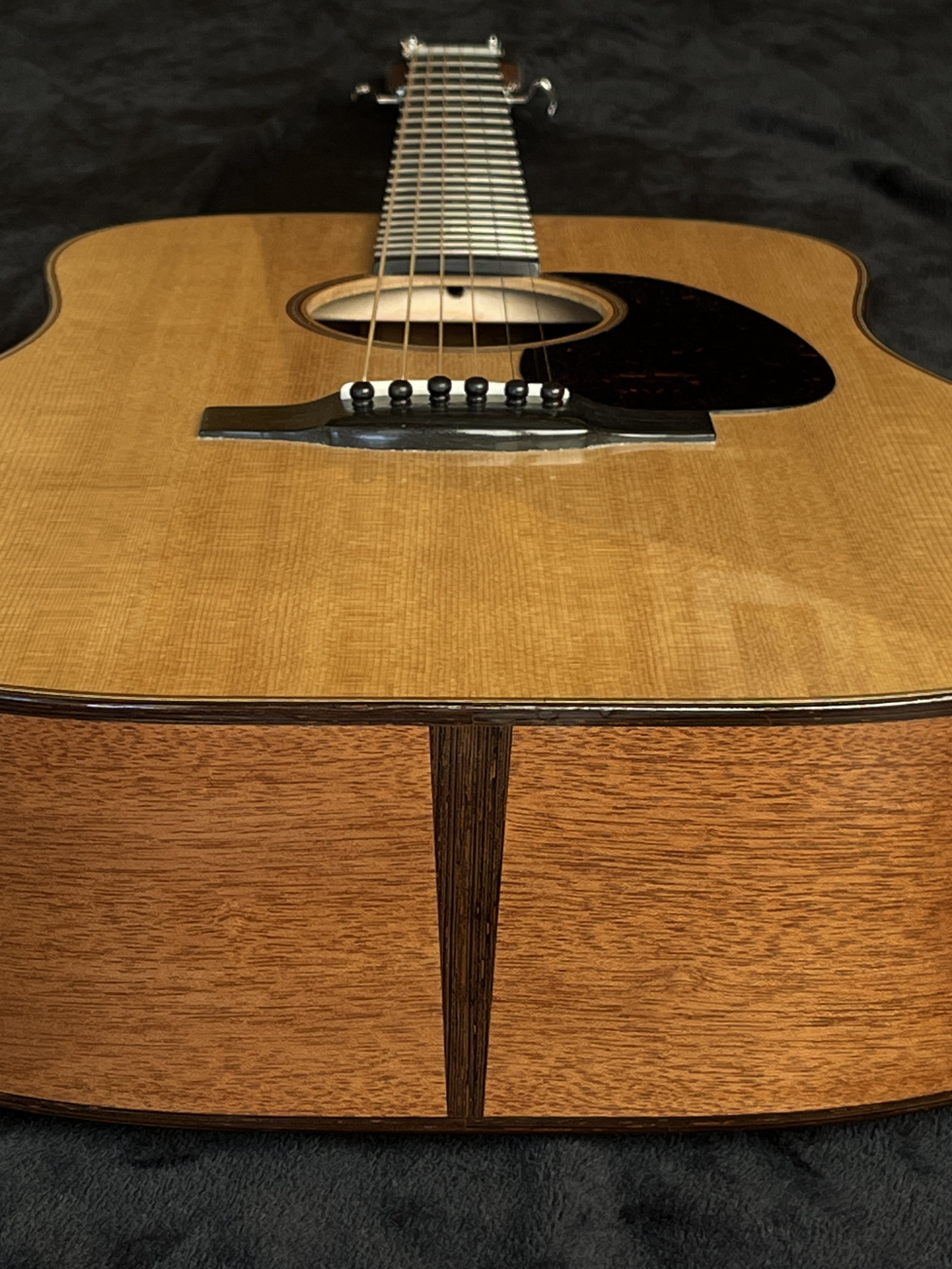
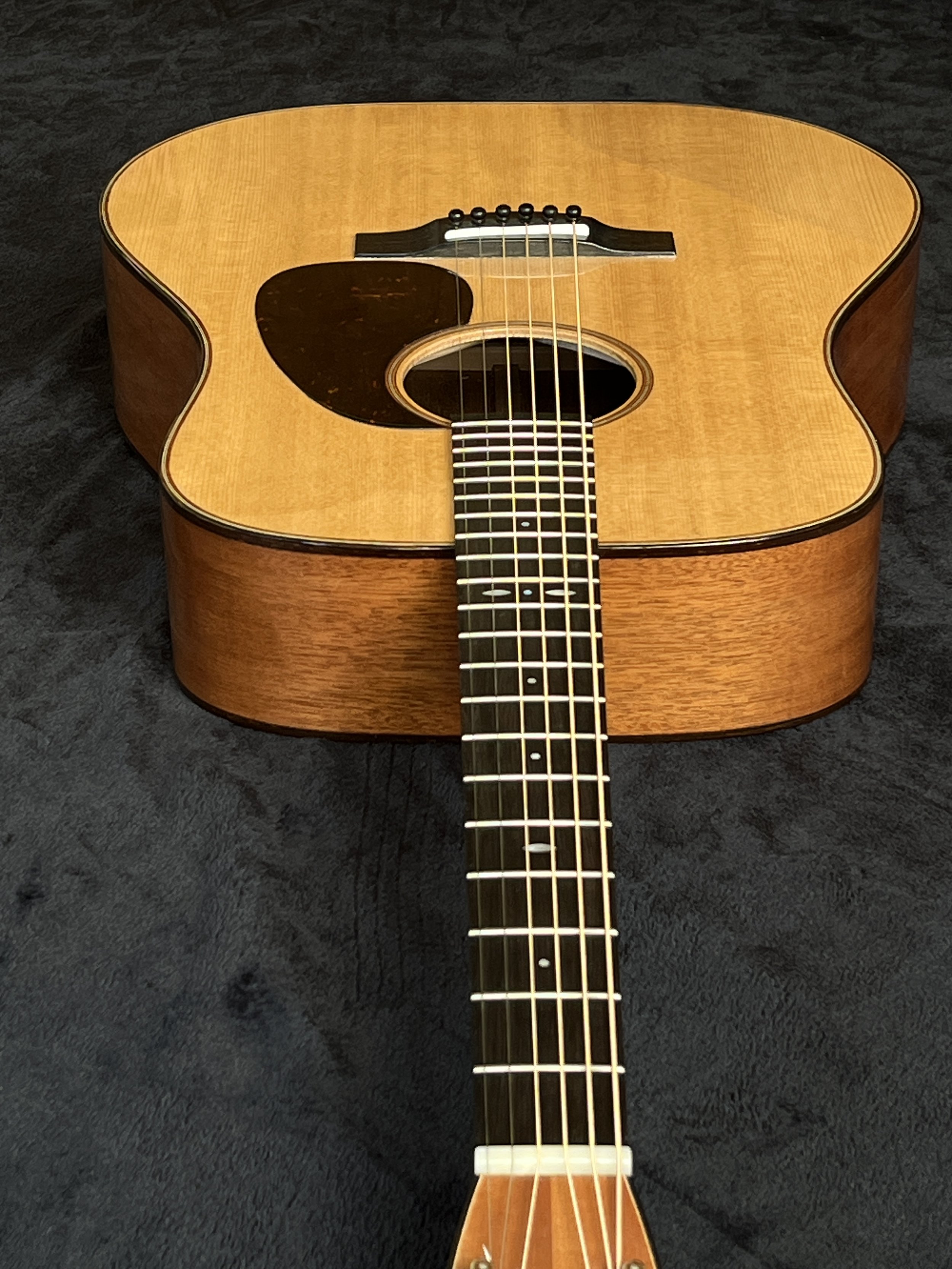
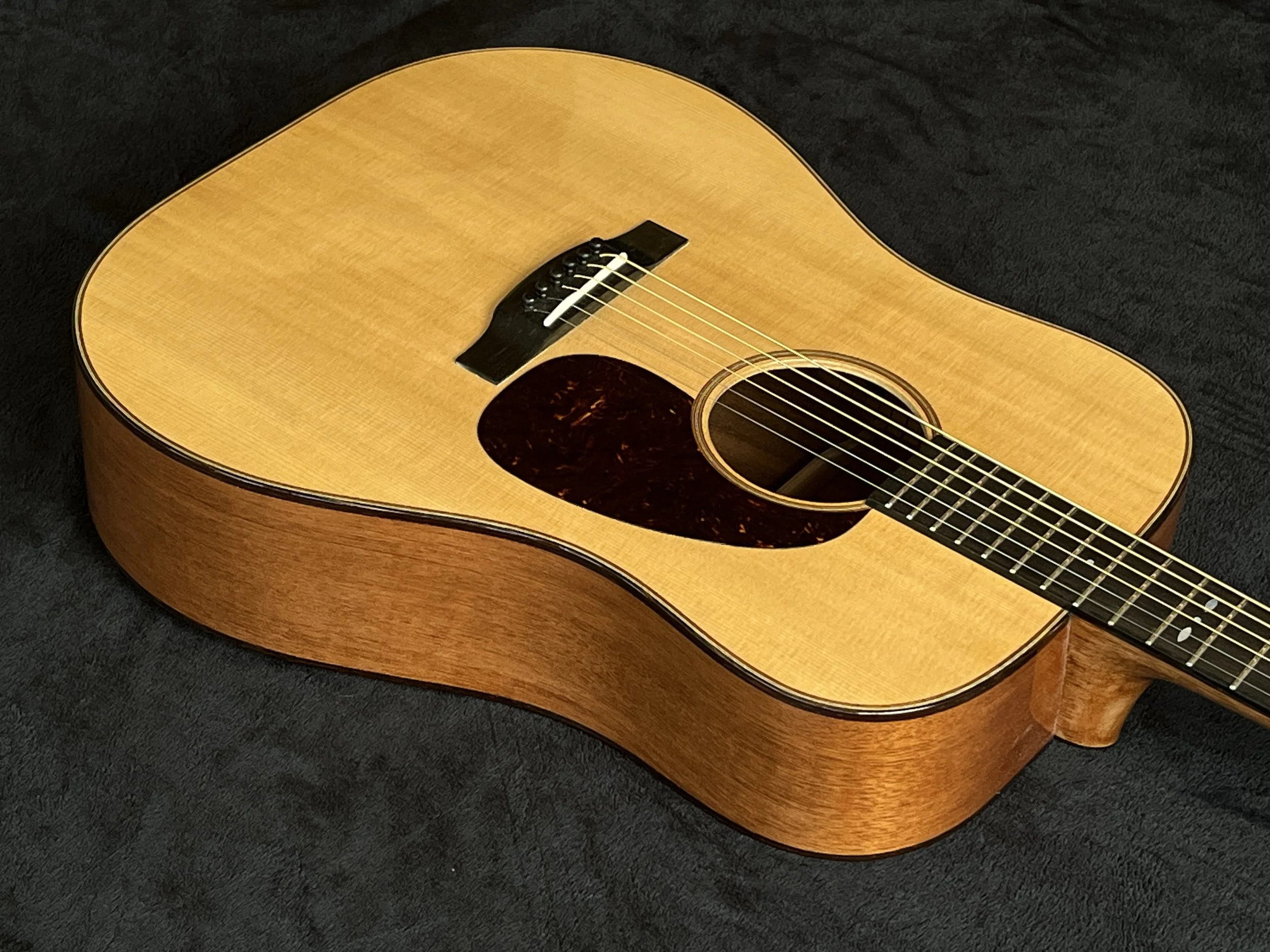
7/8 Dreadnought: Dreadnought guitars are defined by their lack of waist between the upper and lower bout. This gives them more soundboard area and more internal volume, which gives them a fuller tone but sacrifices some of the clarity and note separation of smaller bodies and guitars with waists. This is a smaller version of the classic dread.
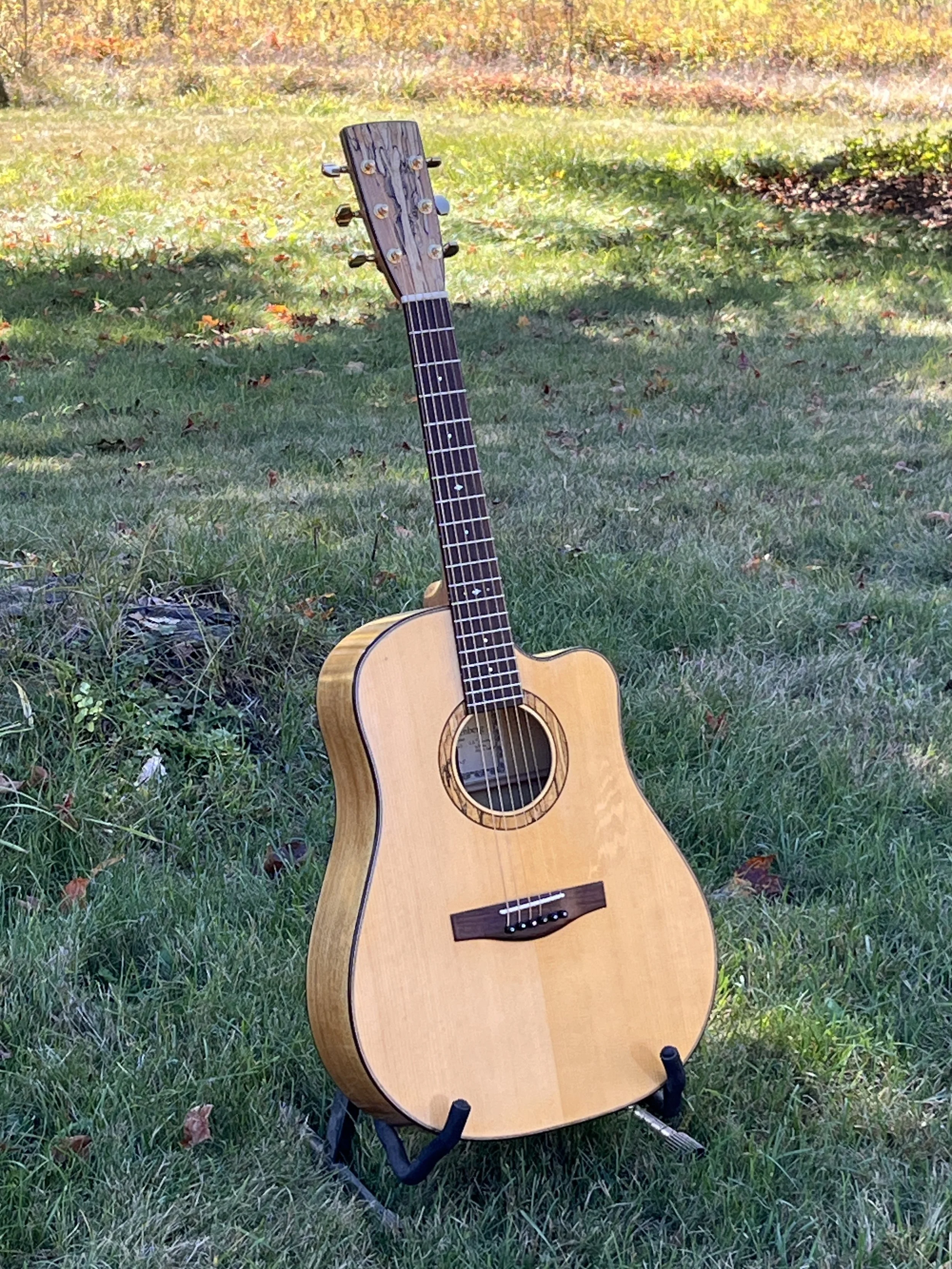
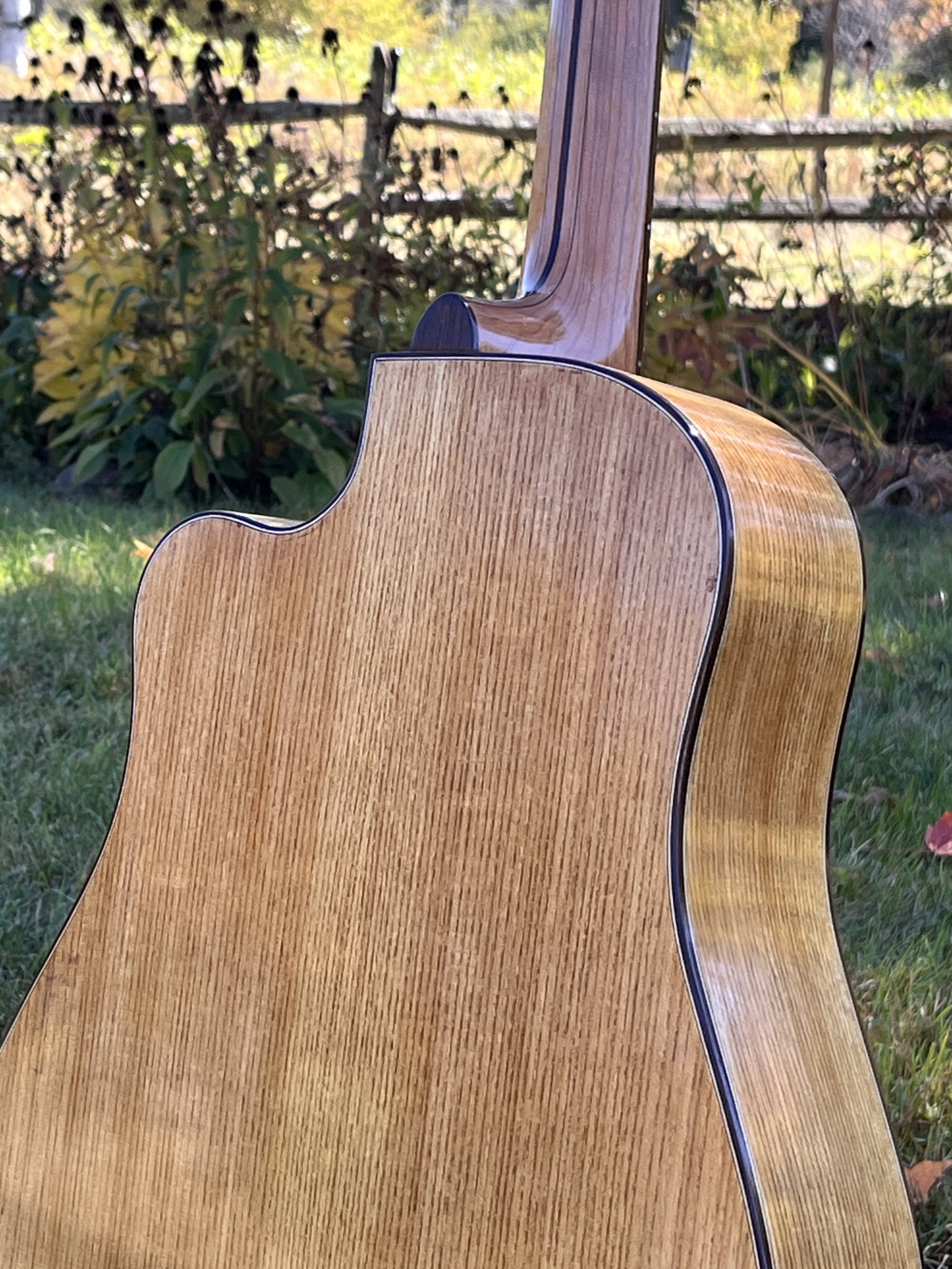
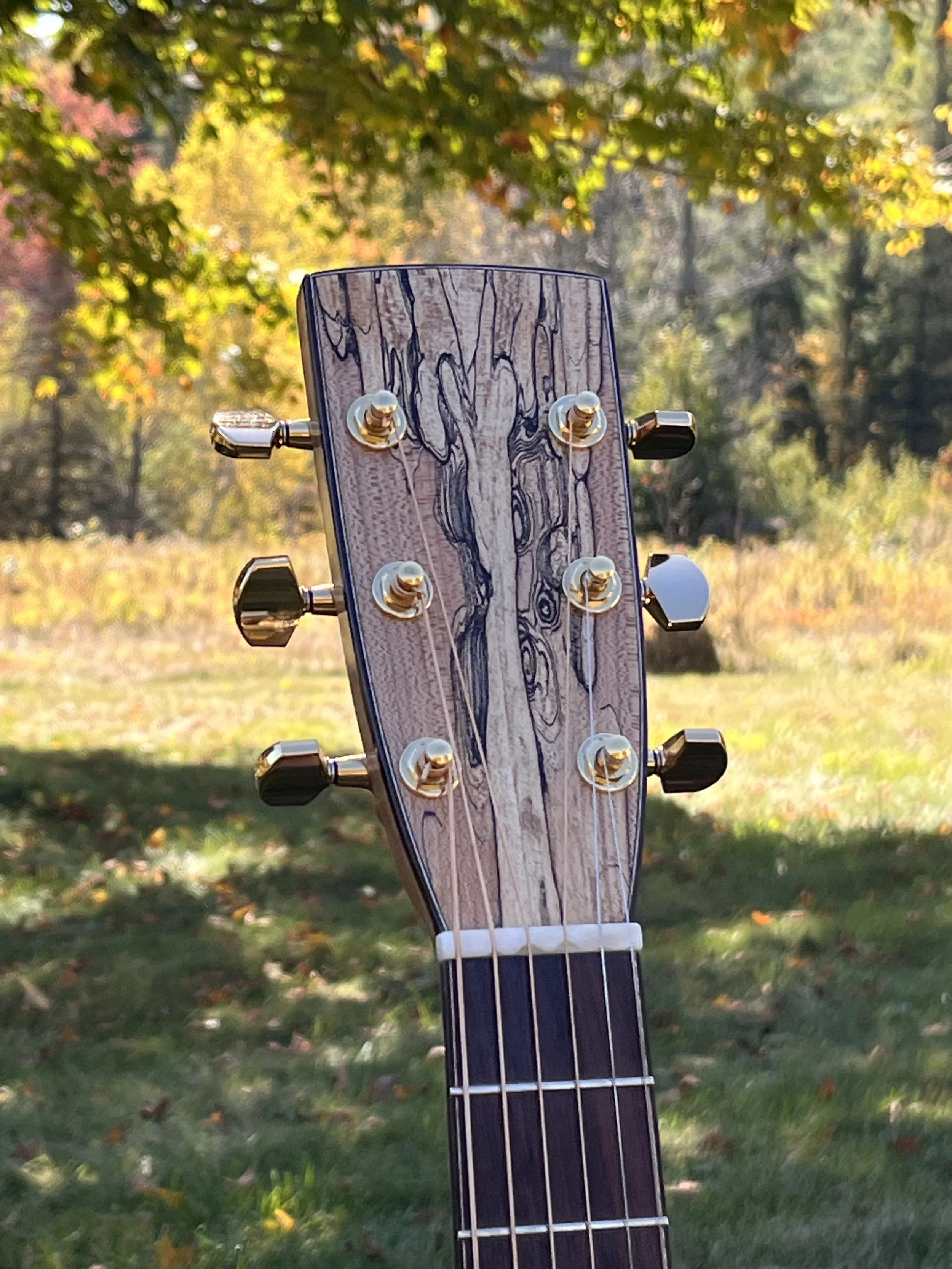
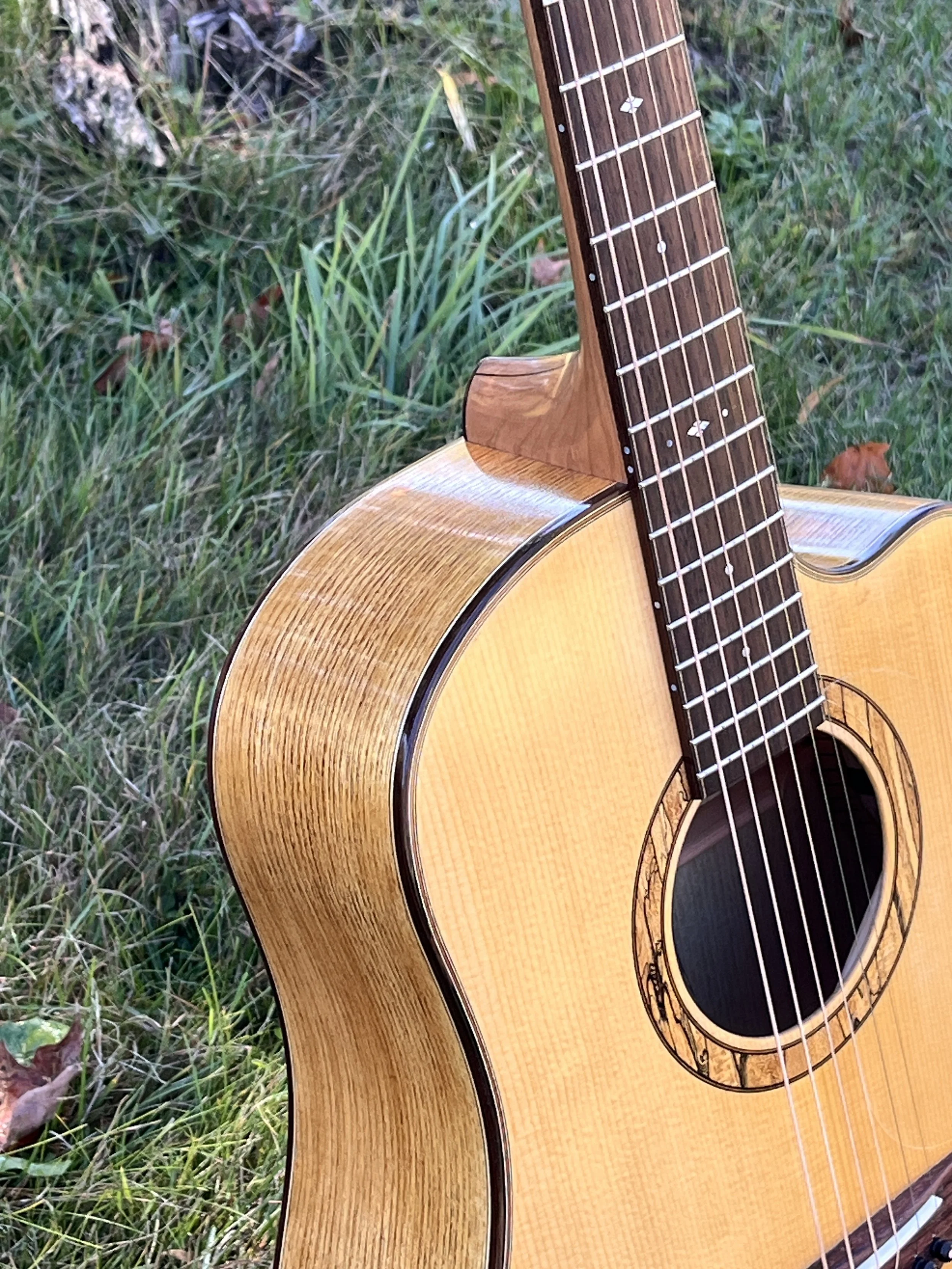
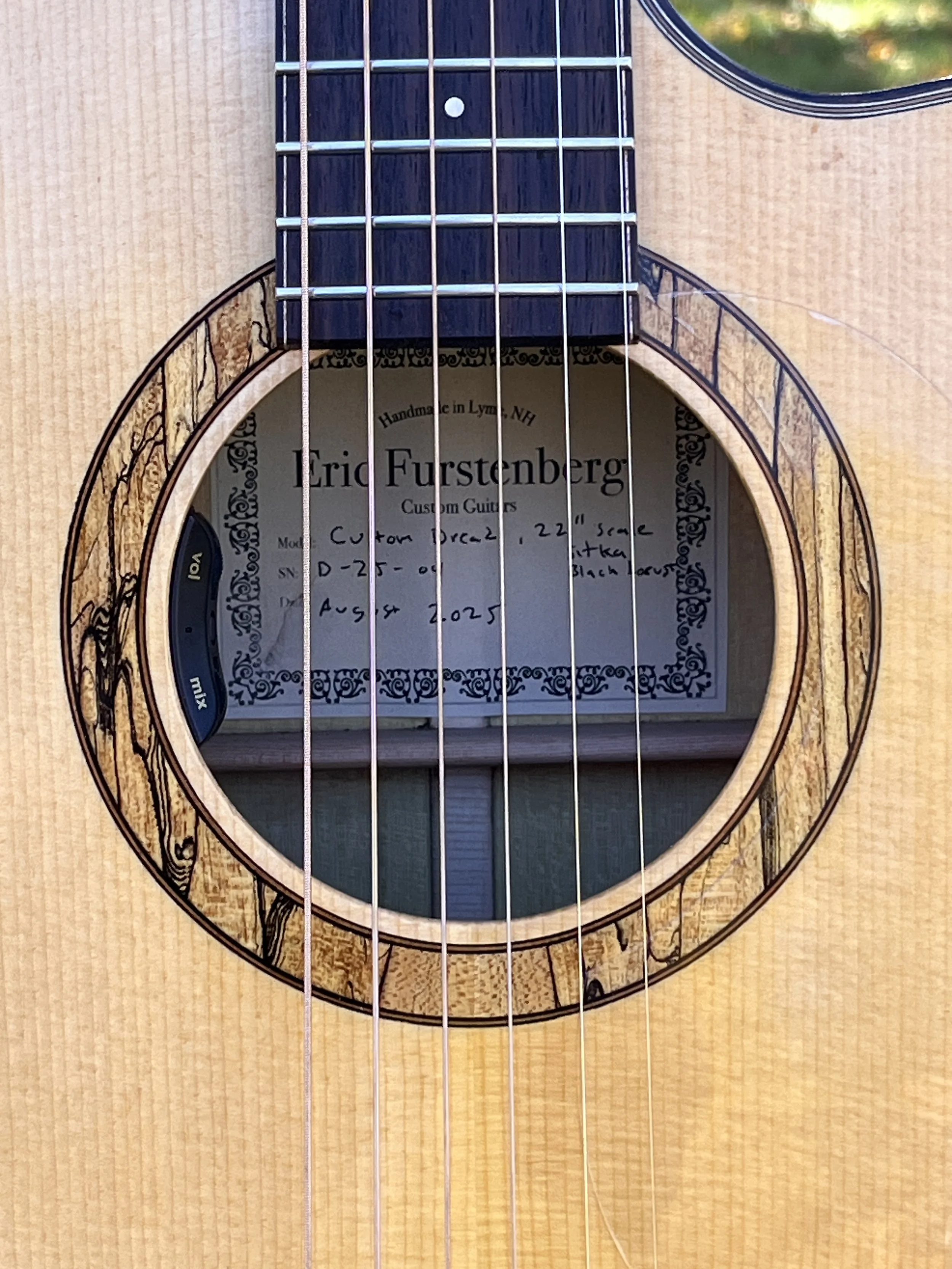
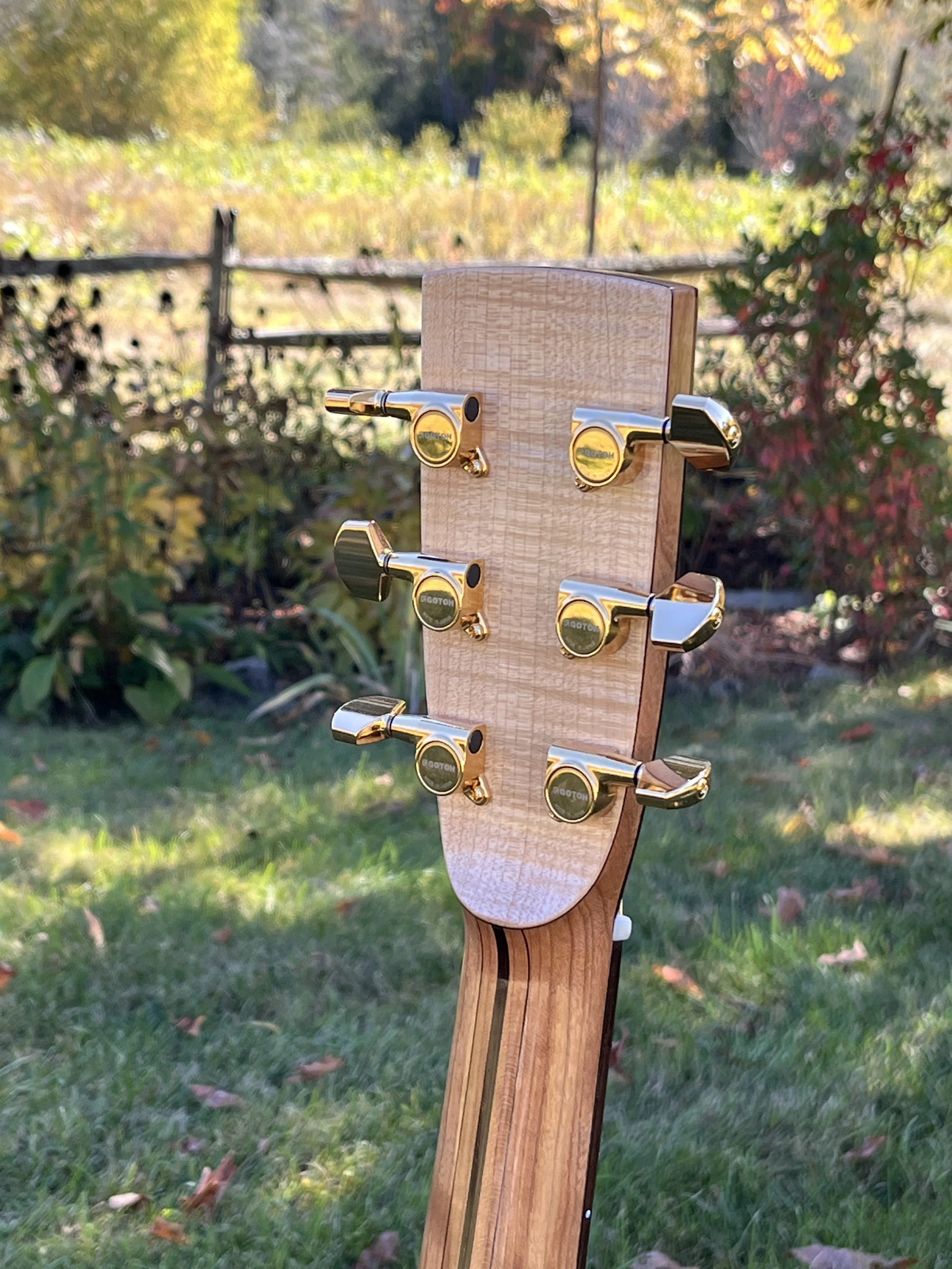
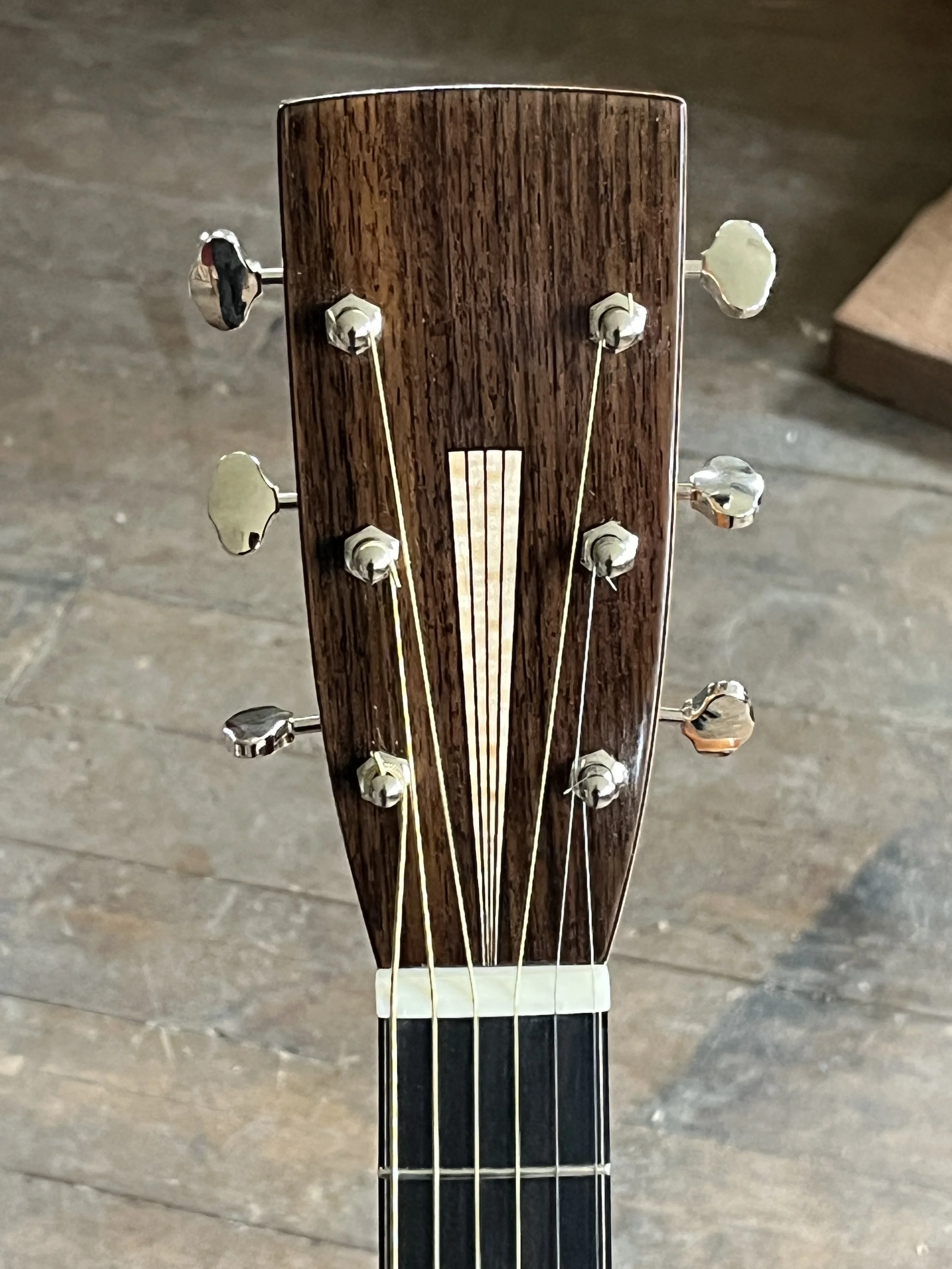
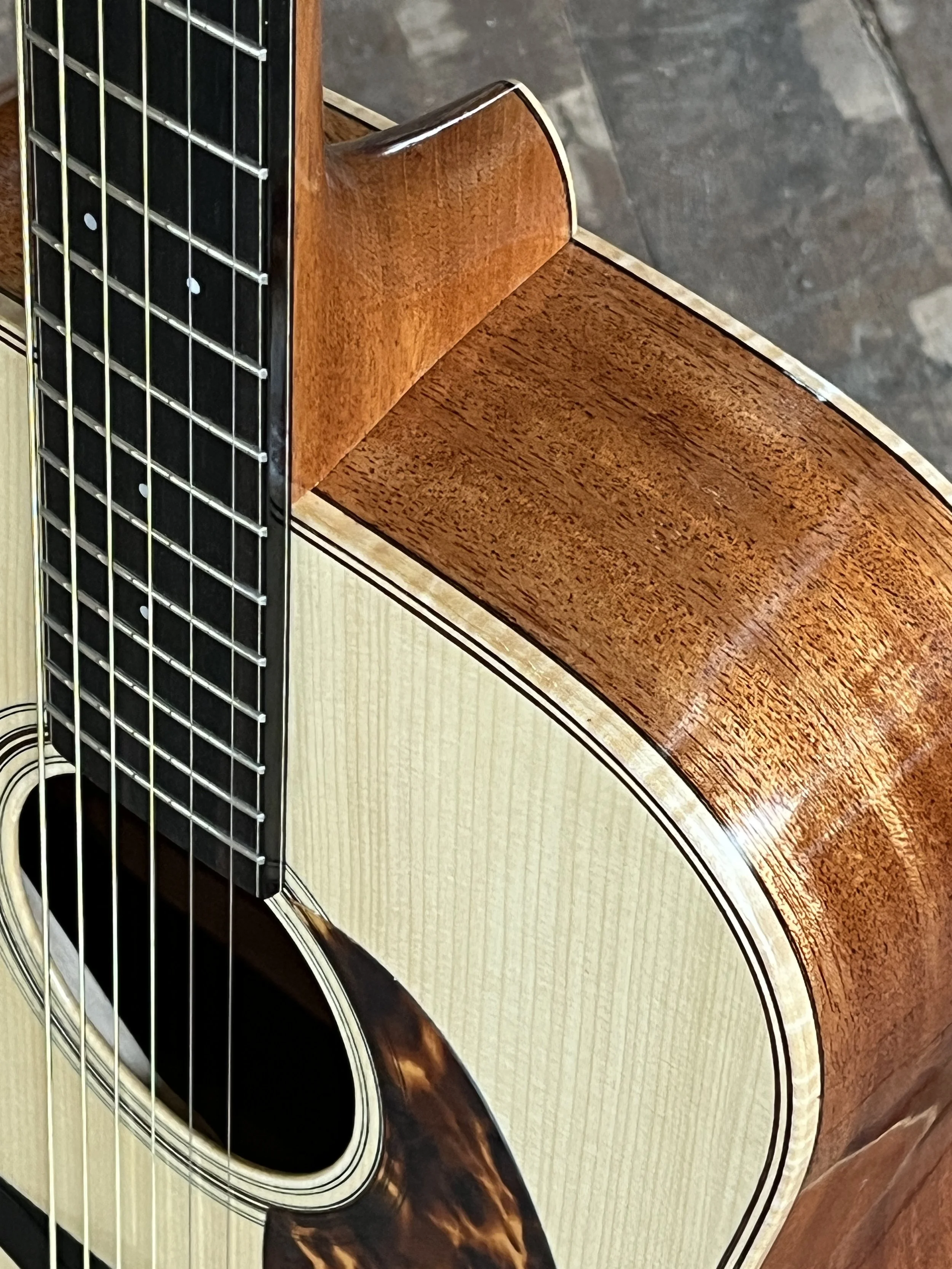
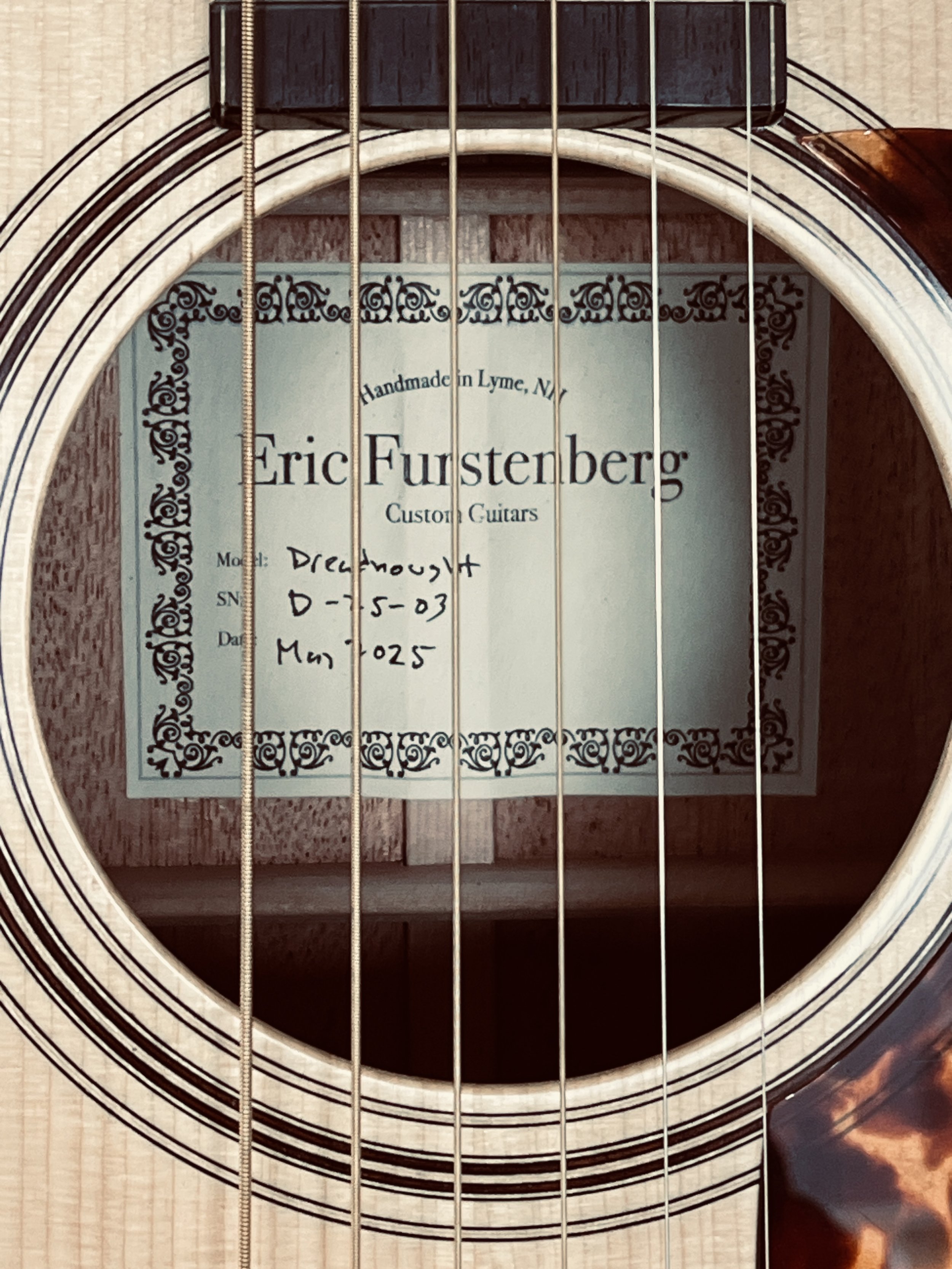
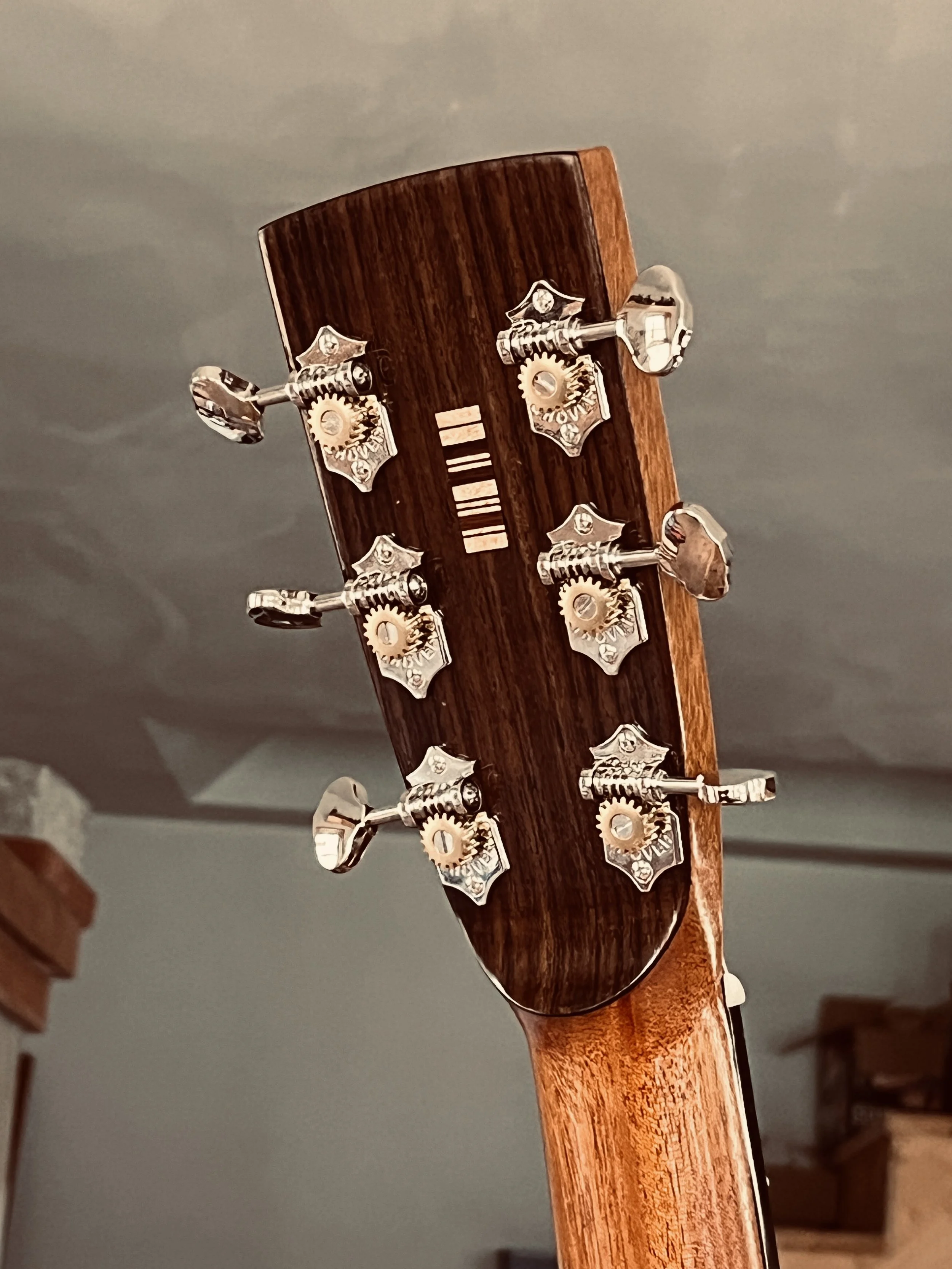
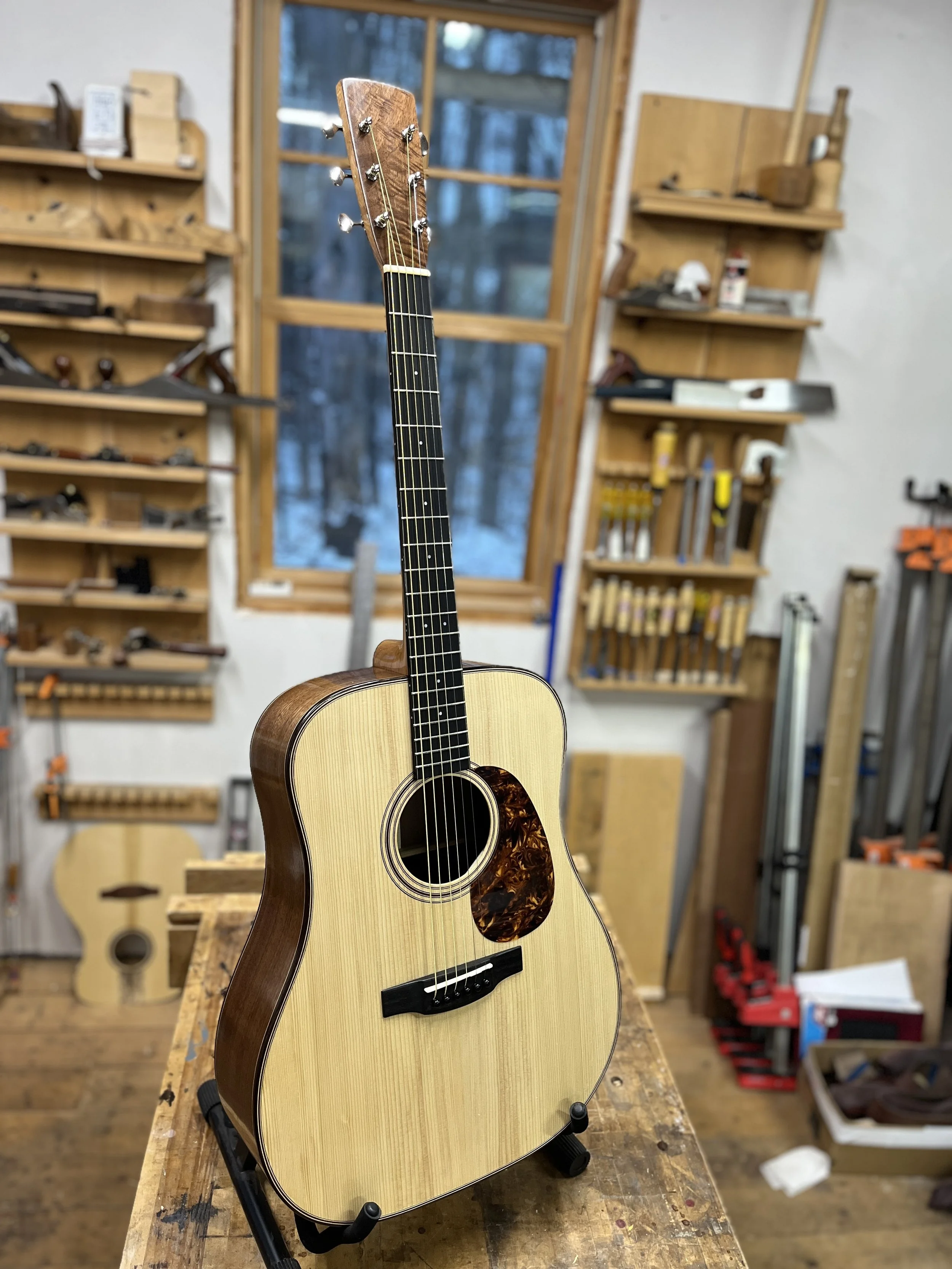
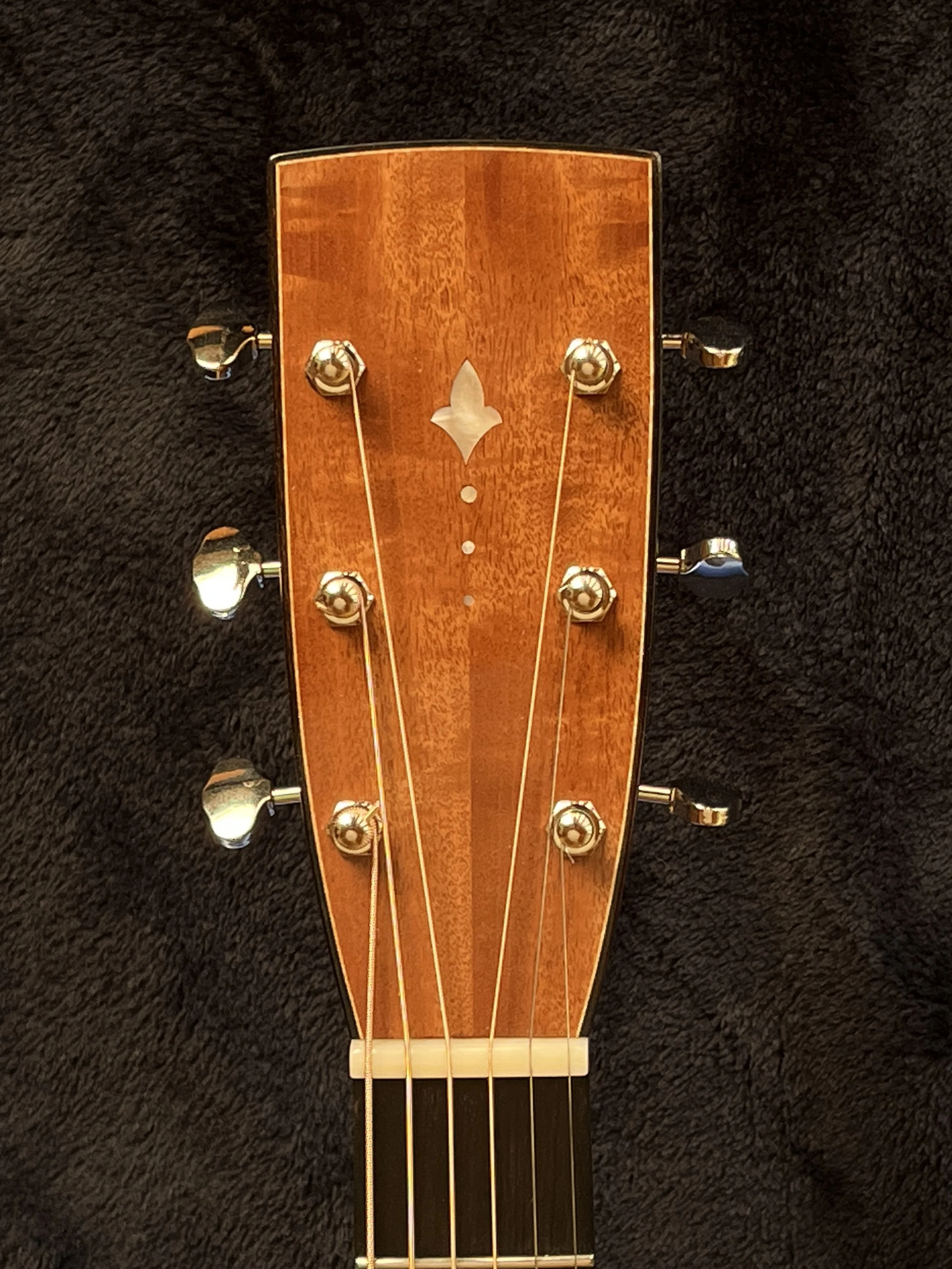
Dreadnought: The classic
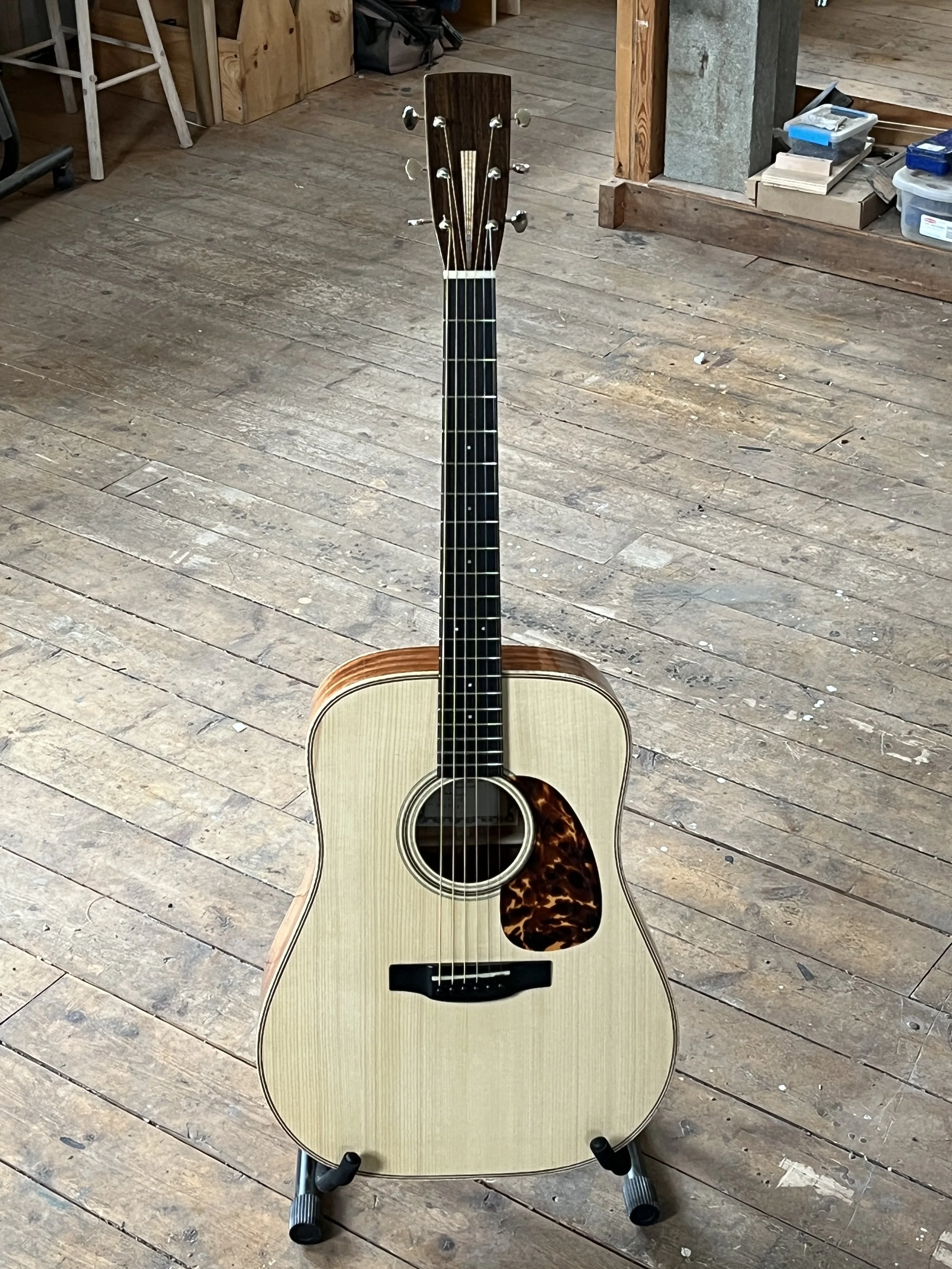
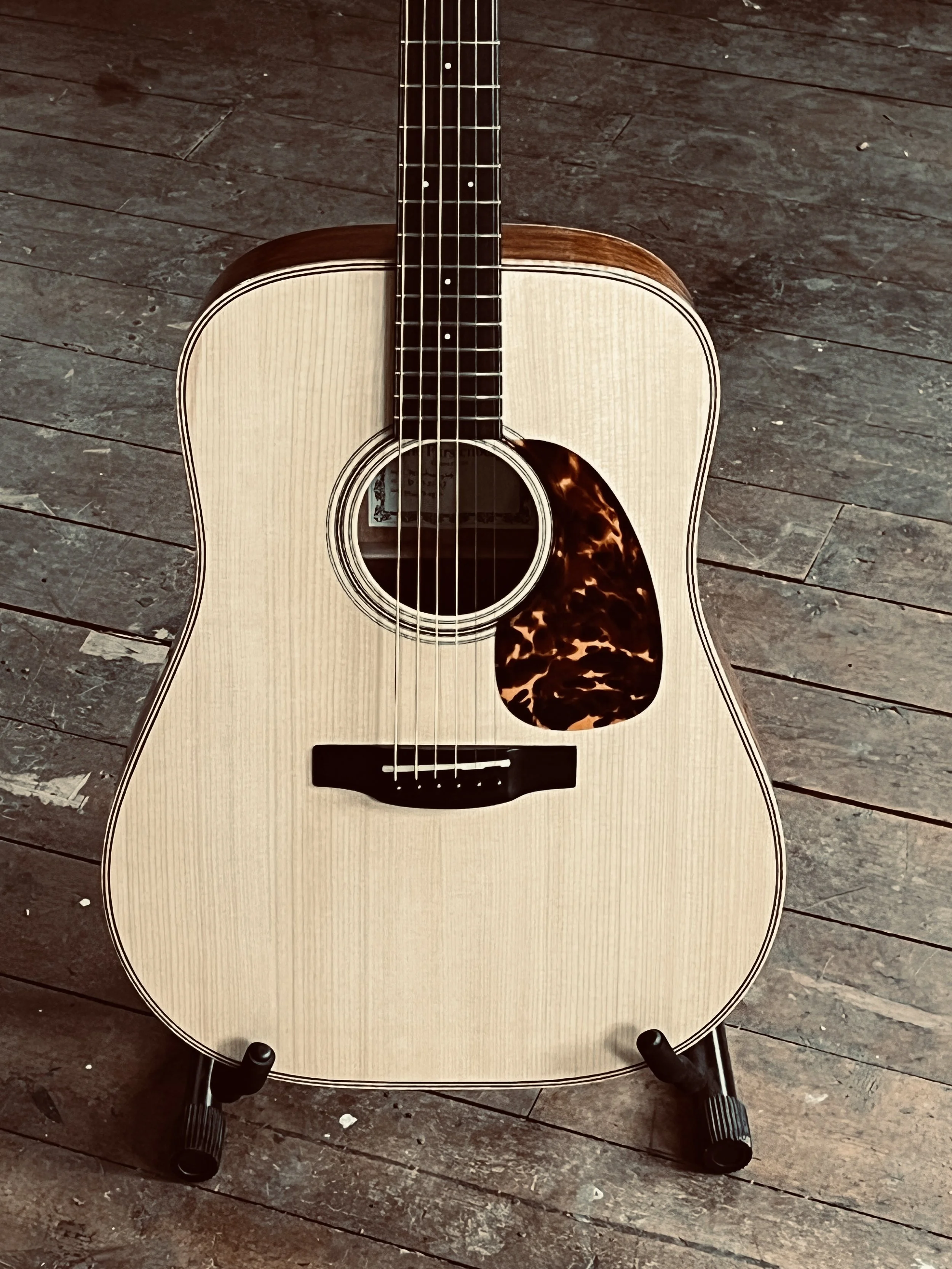
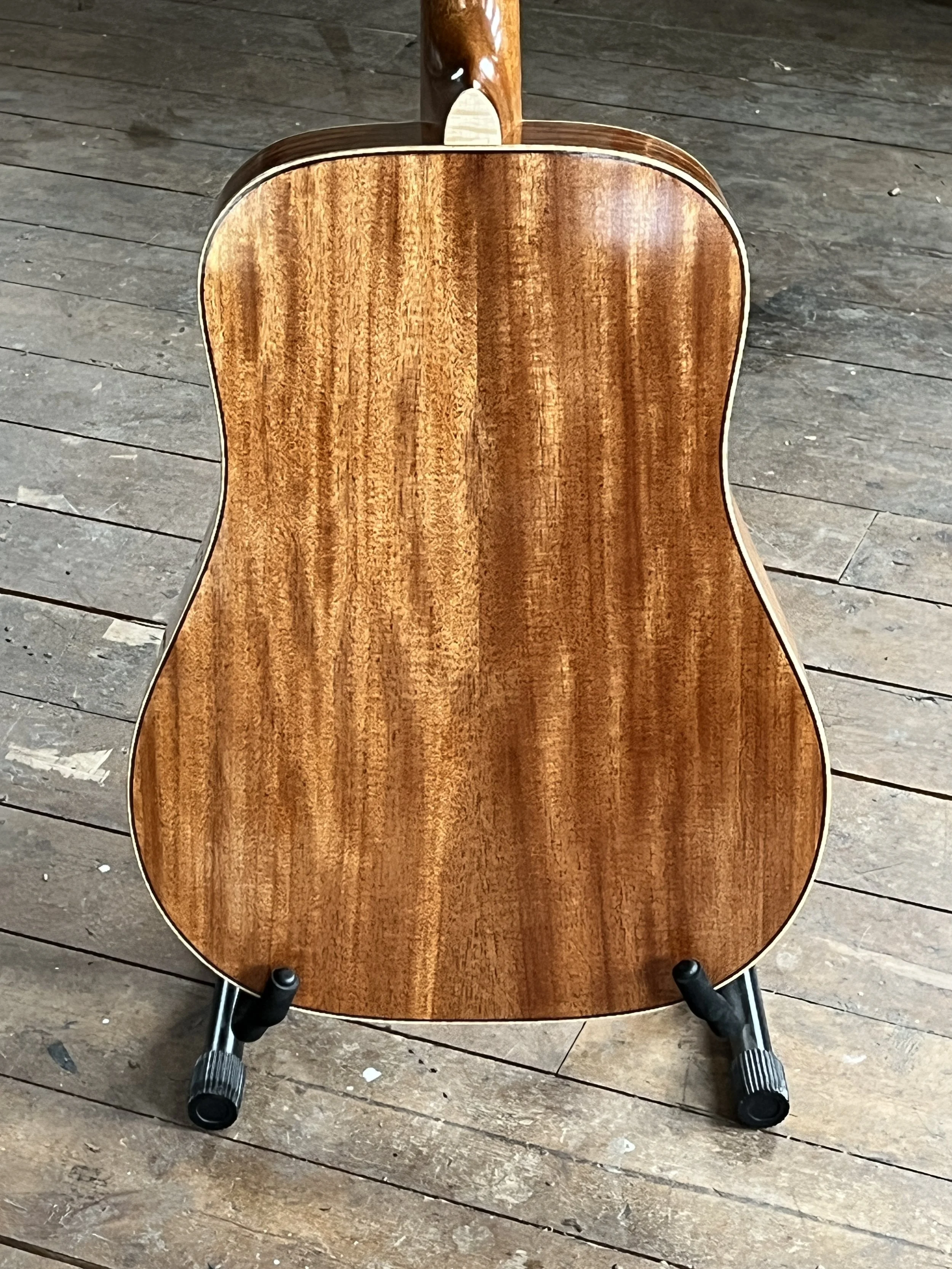
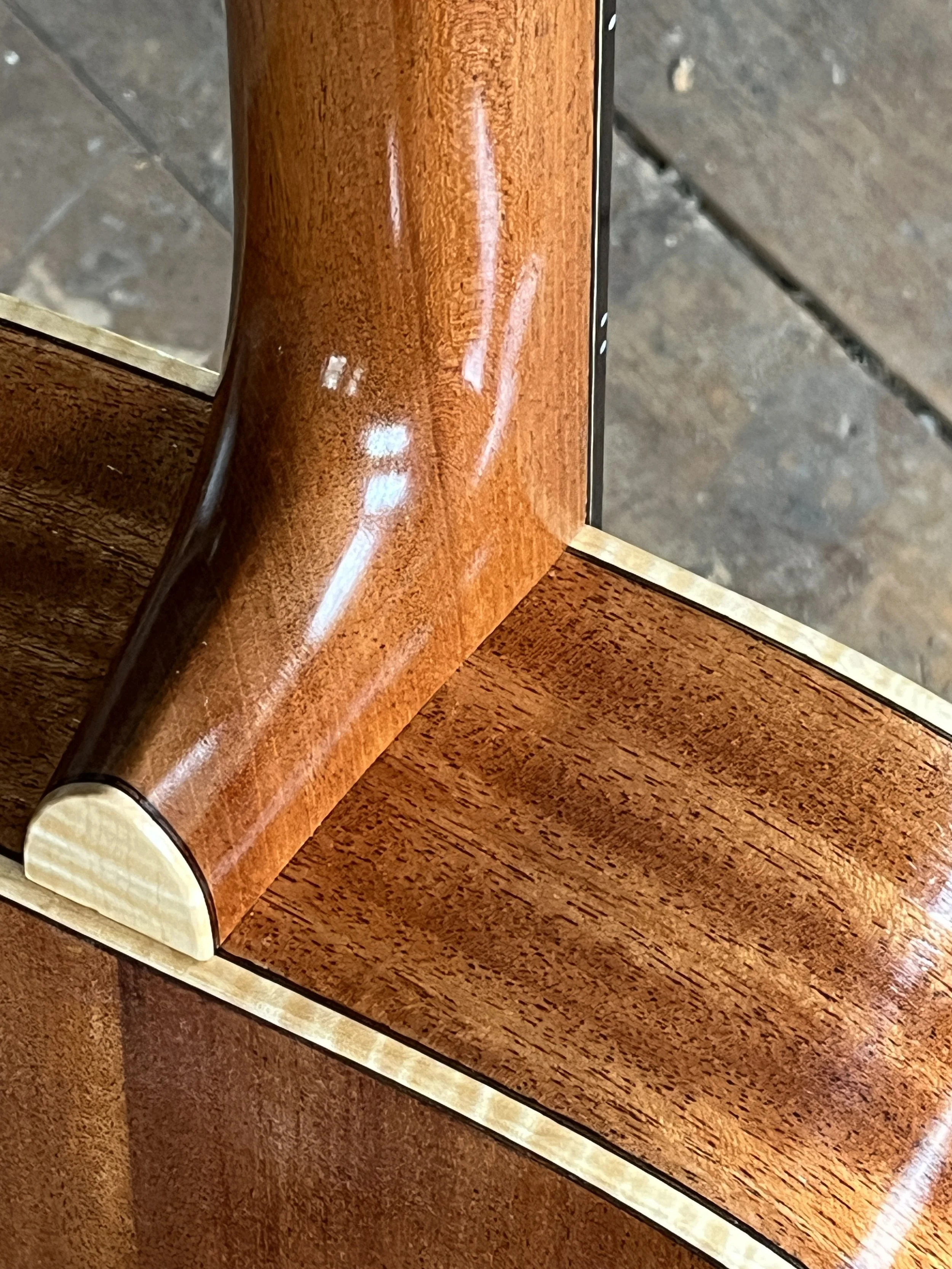
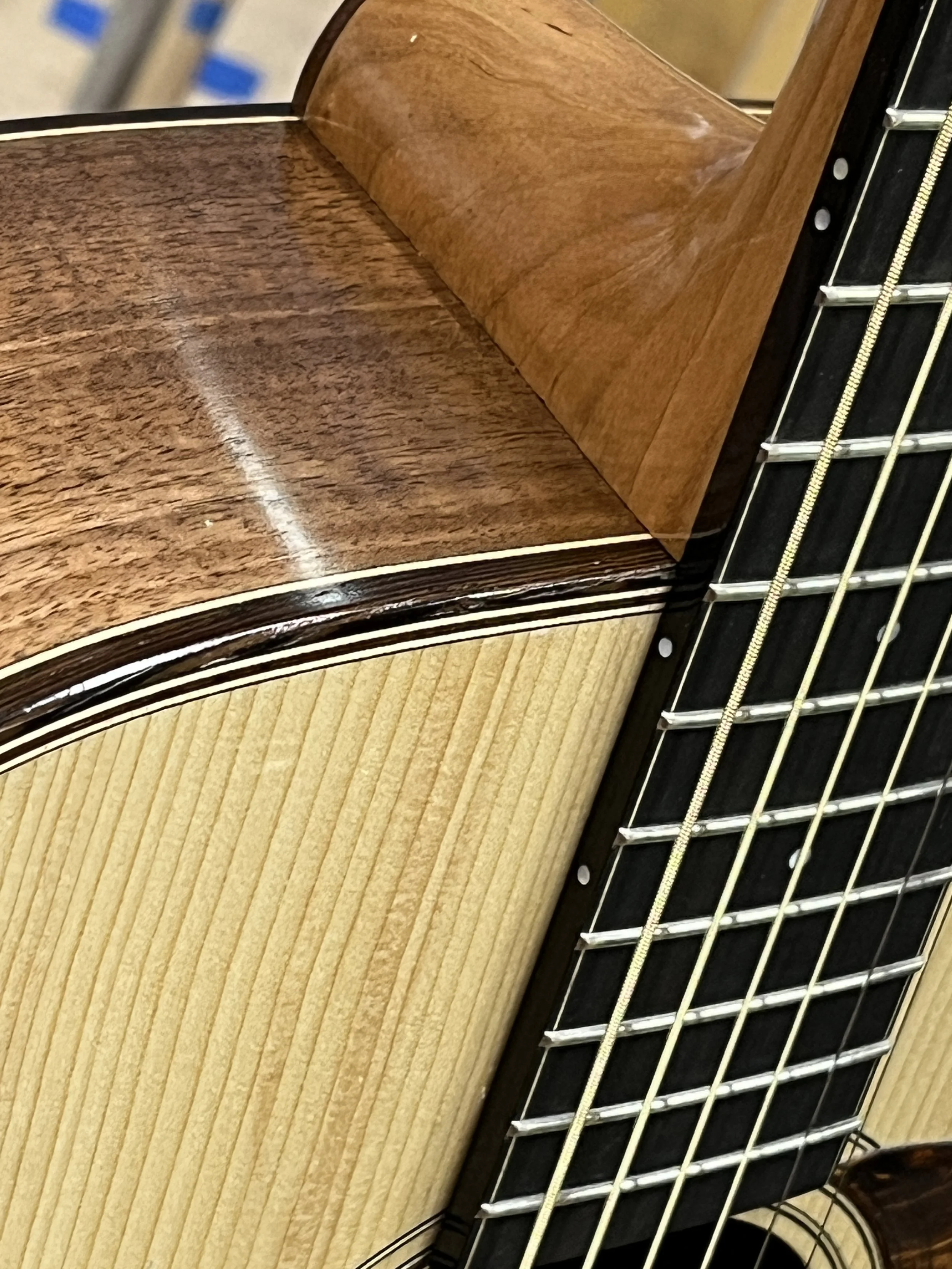
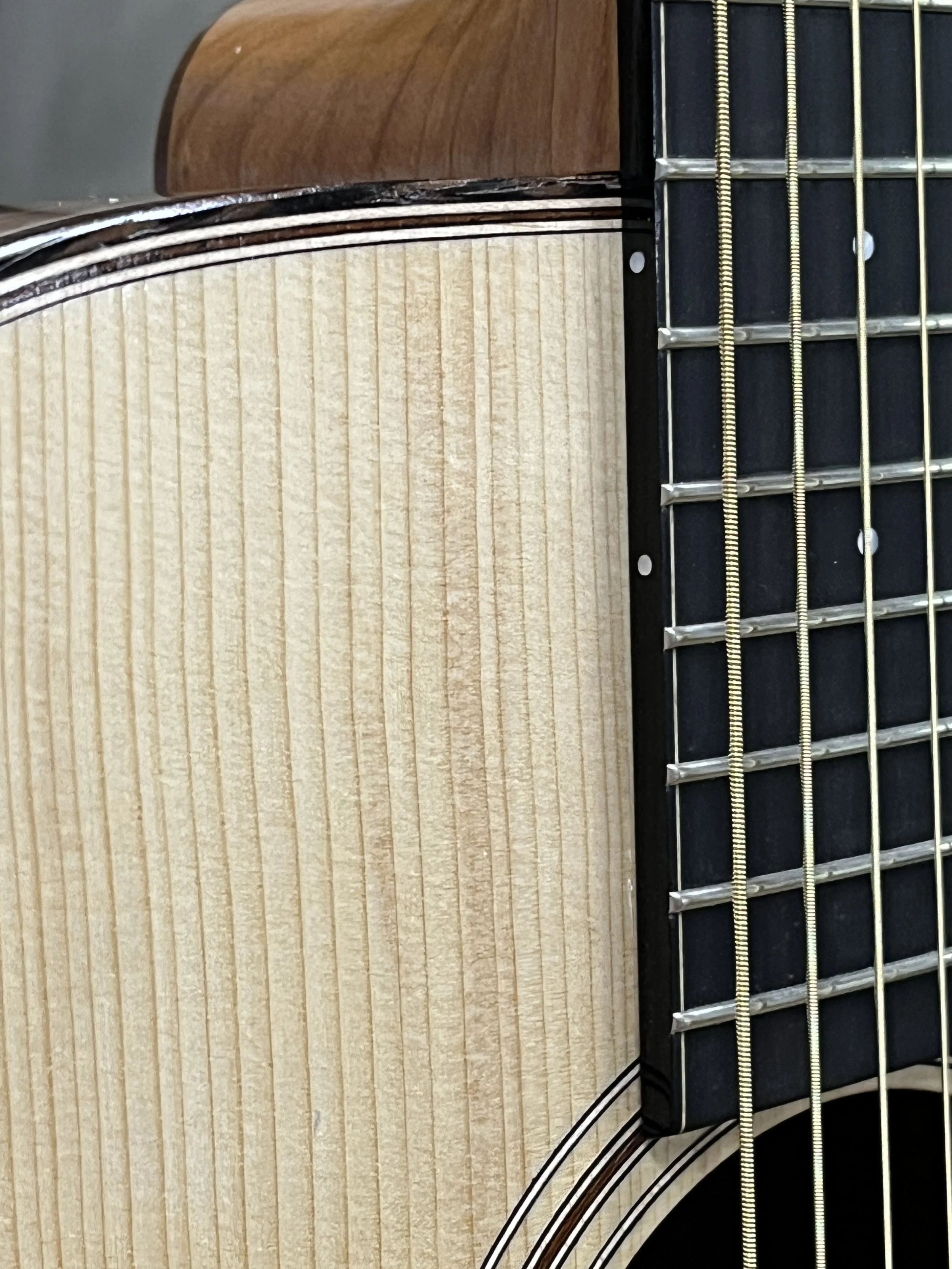
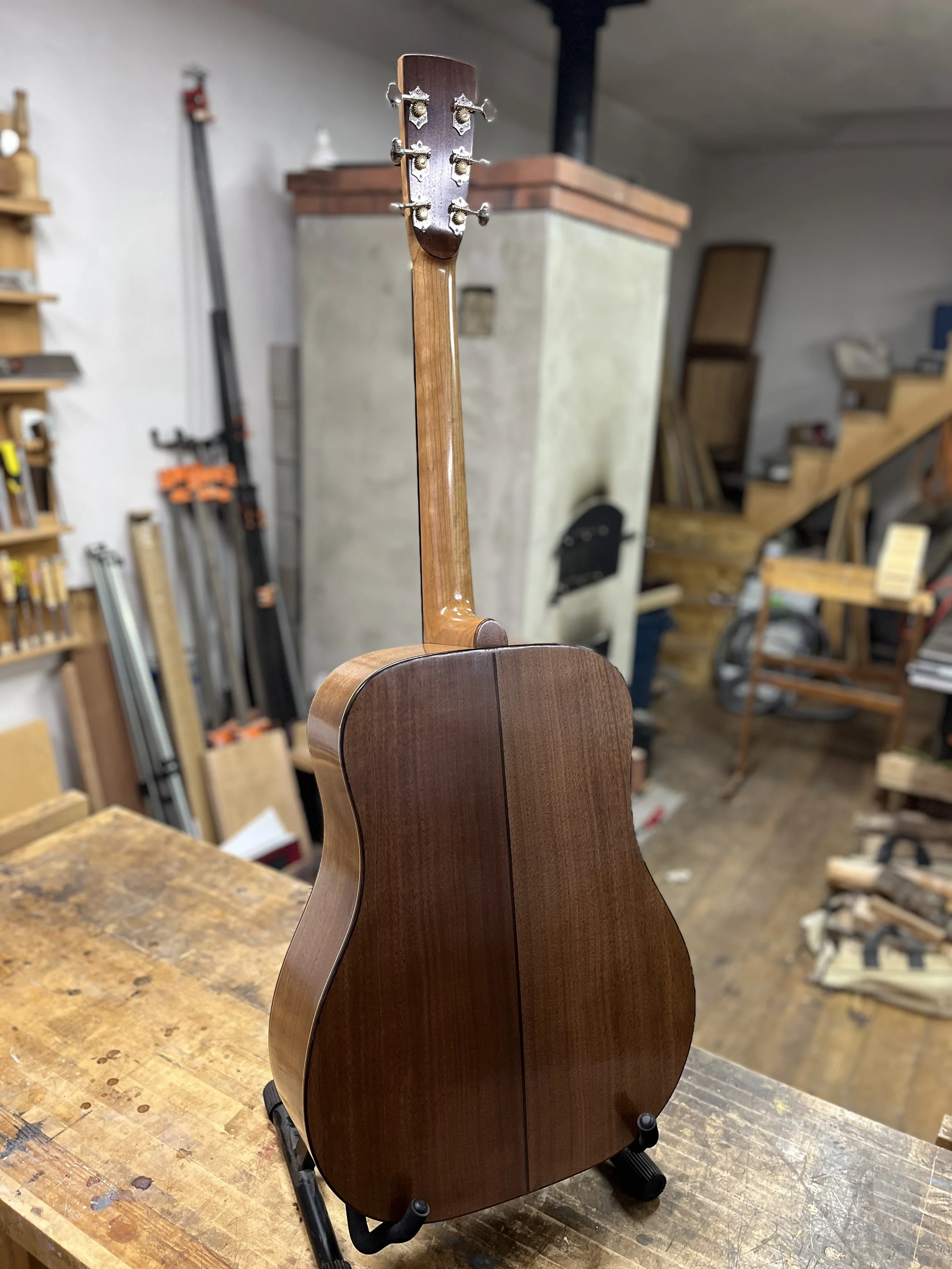
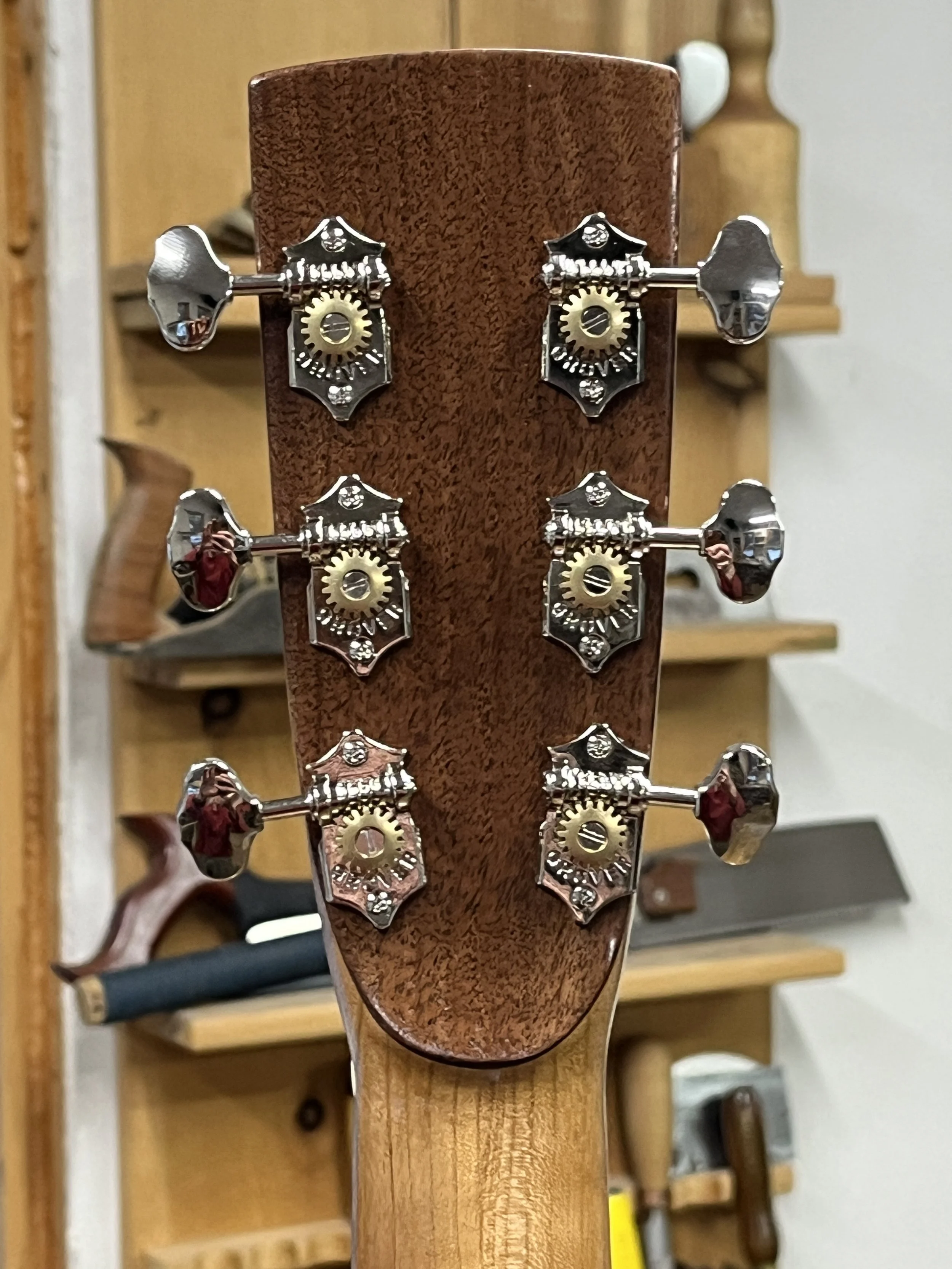
Small Jumbo: 16” lower bout. Slightly larger and deeper than the OM, this guitar offers richer tone and deeper bass.
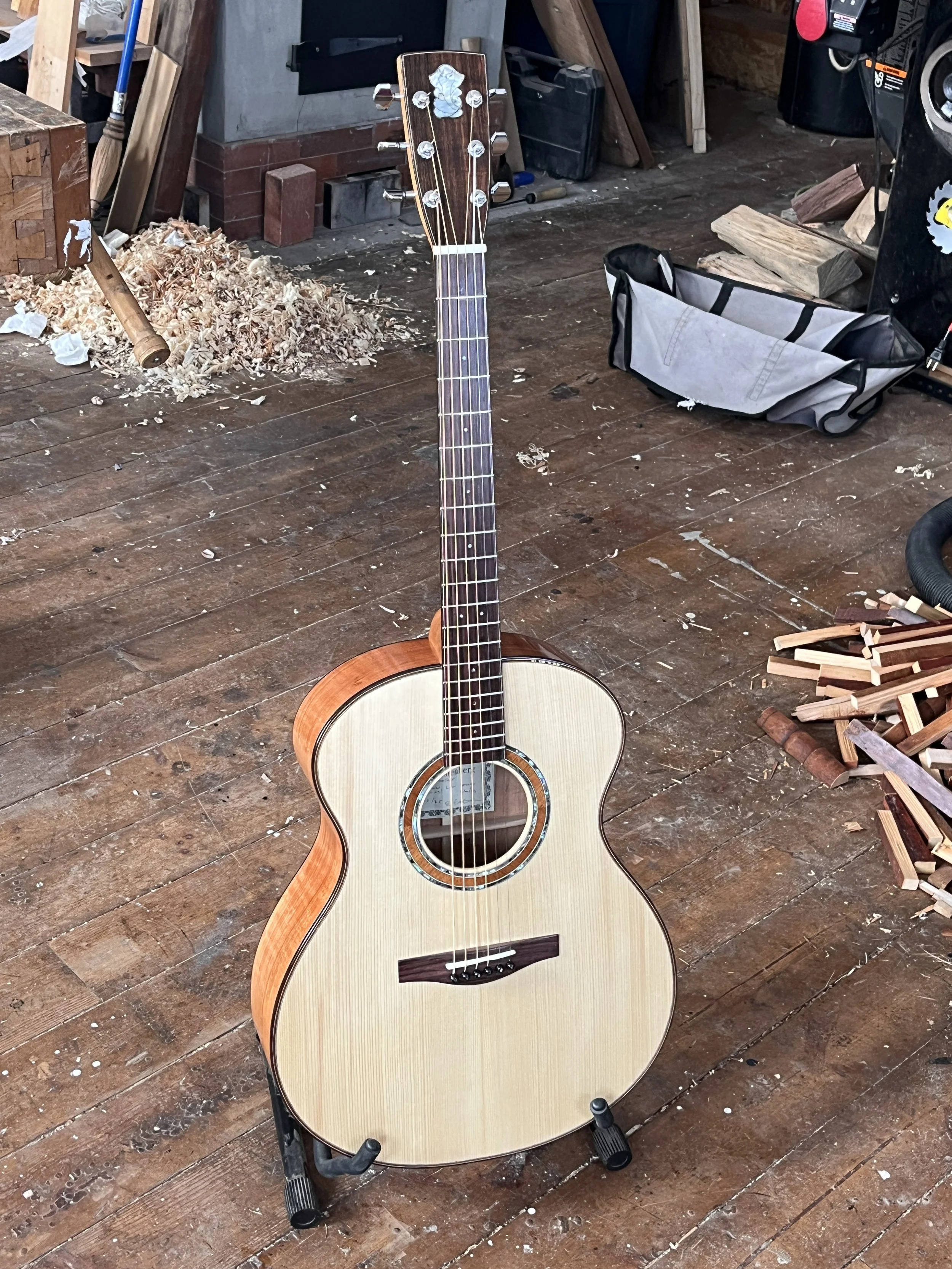
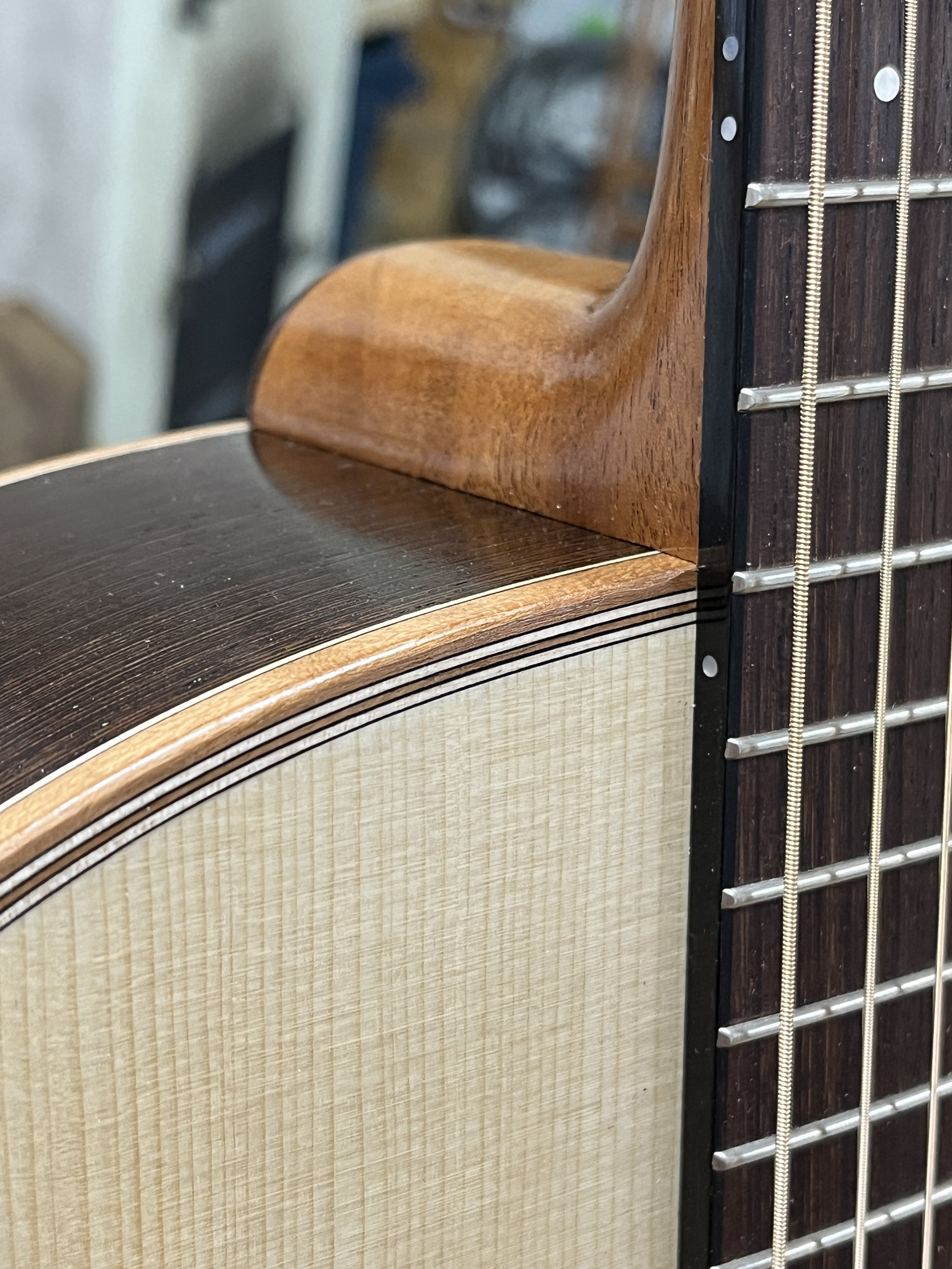
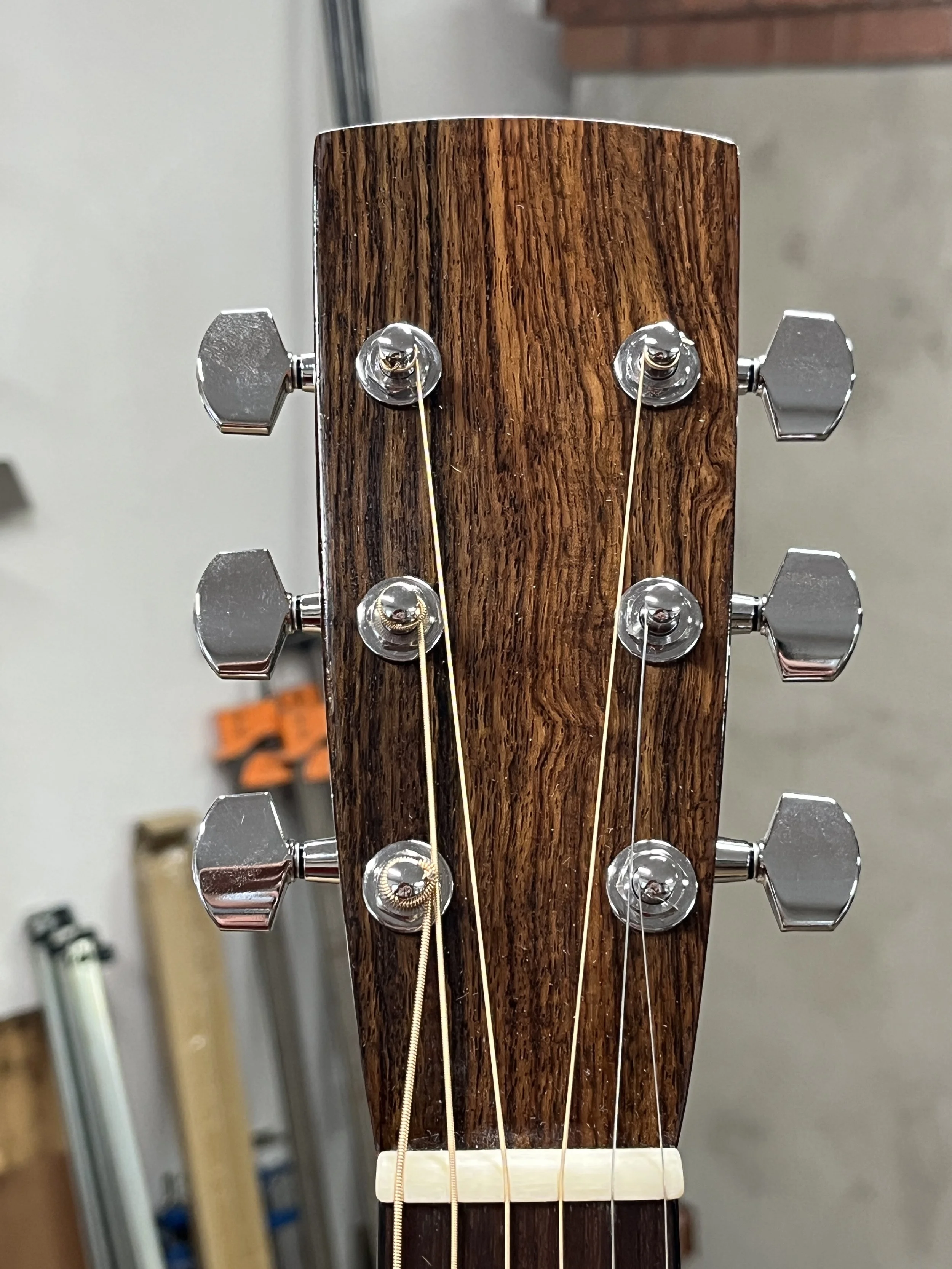
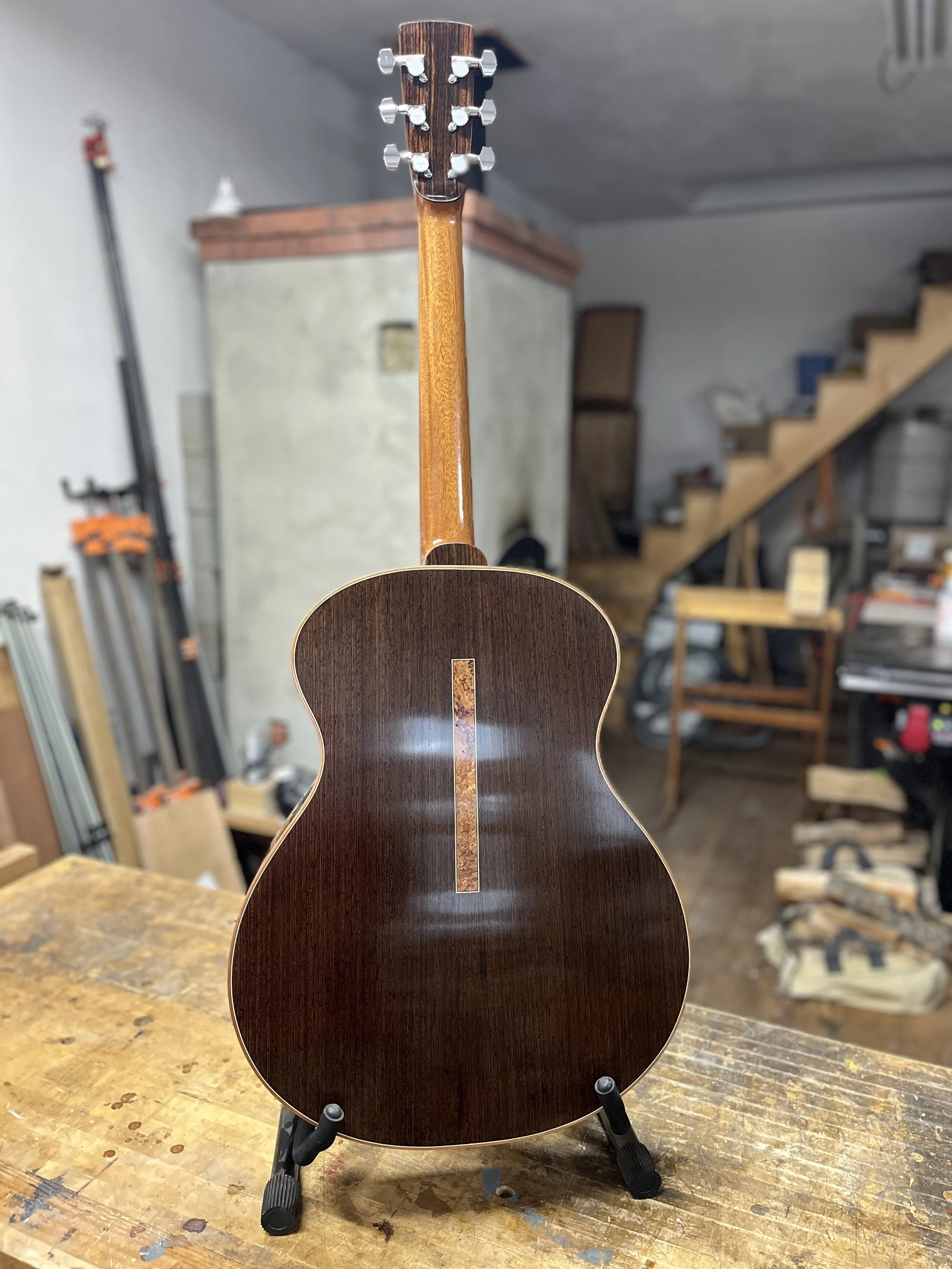
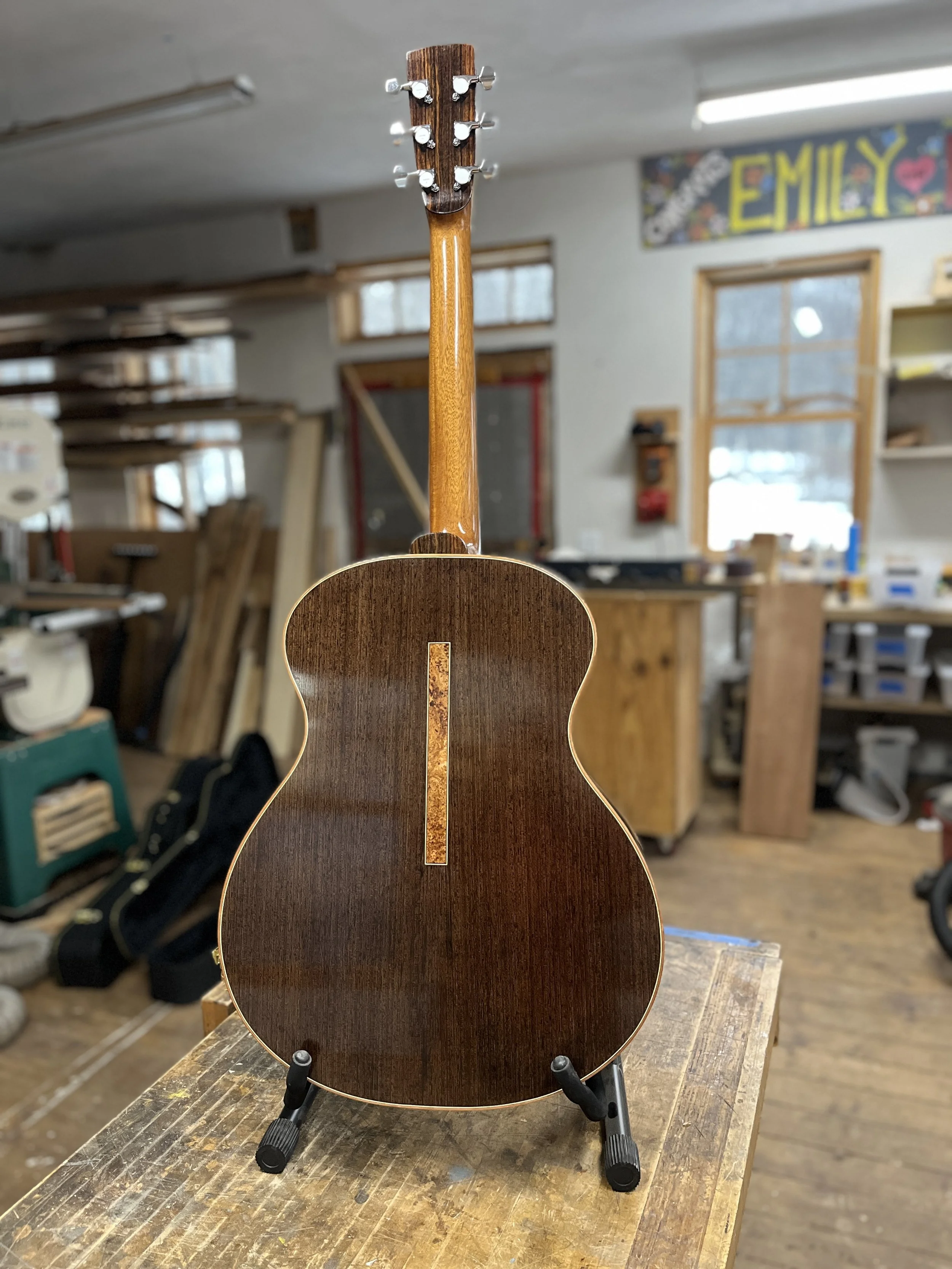
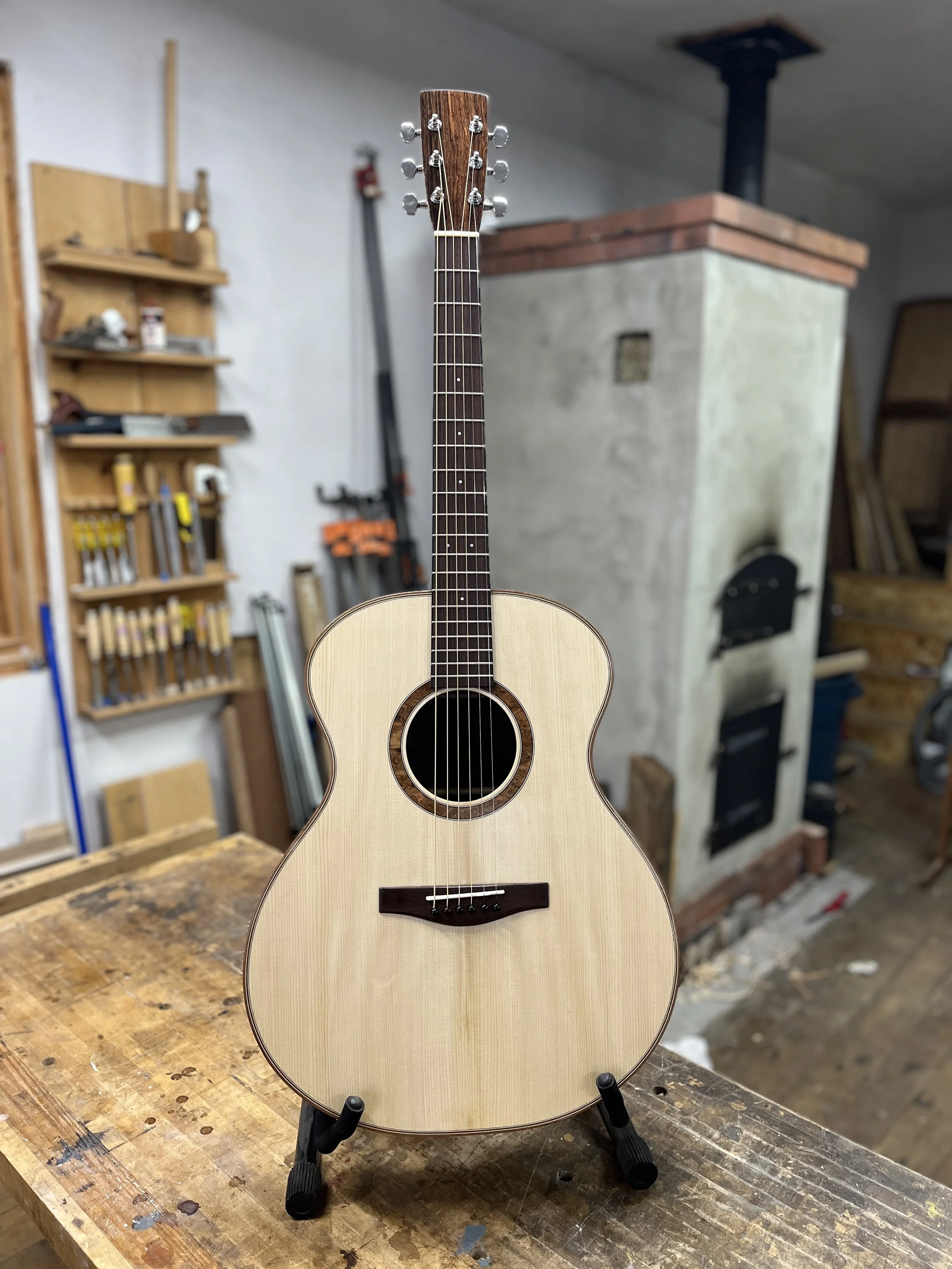
Super Dreadnought: With a slightly larger lower bout (16.25”), and a shallower body (4.5”), this guitar is less boomy than a typical dreadnought without sacrificing any power or fullness of tone.
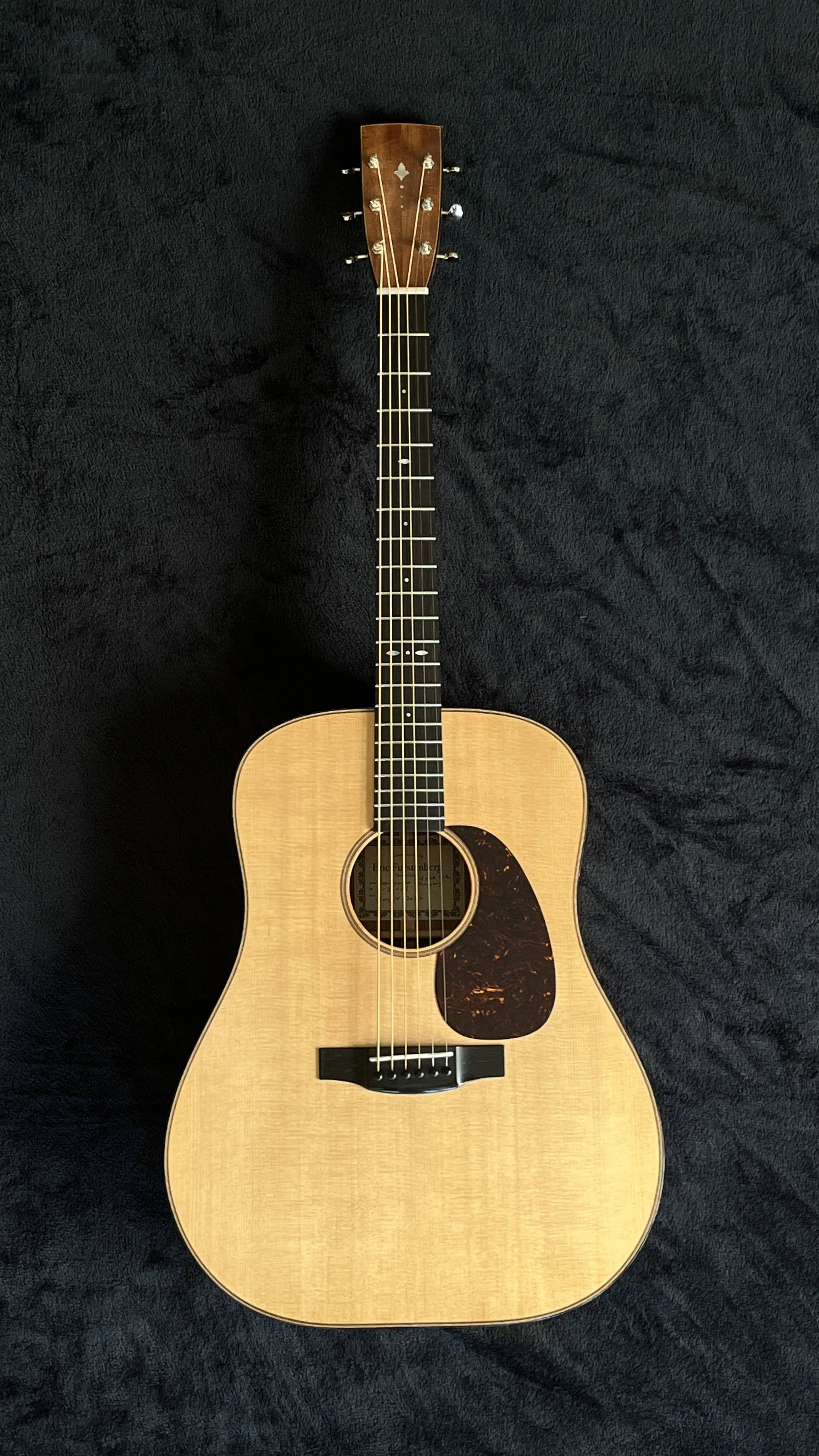
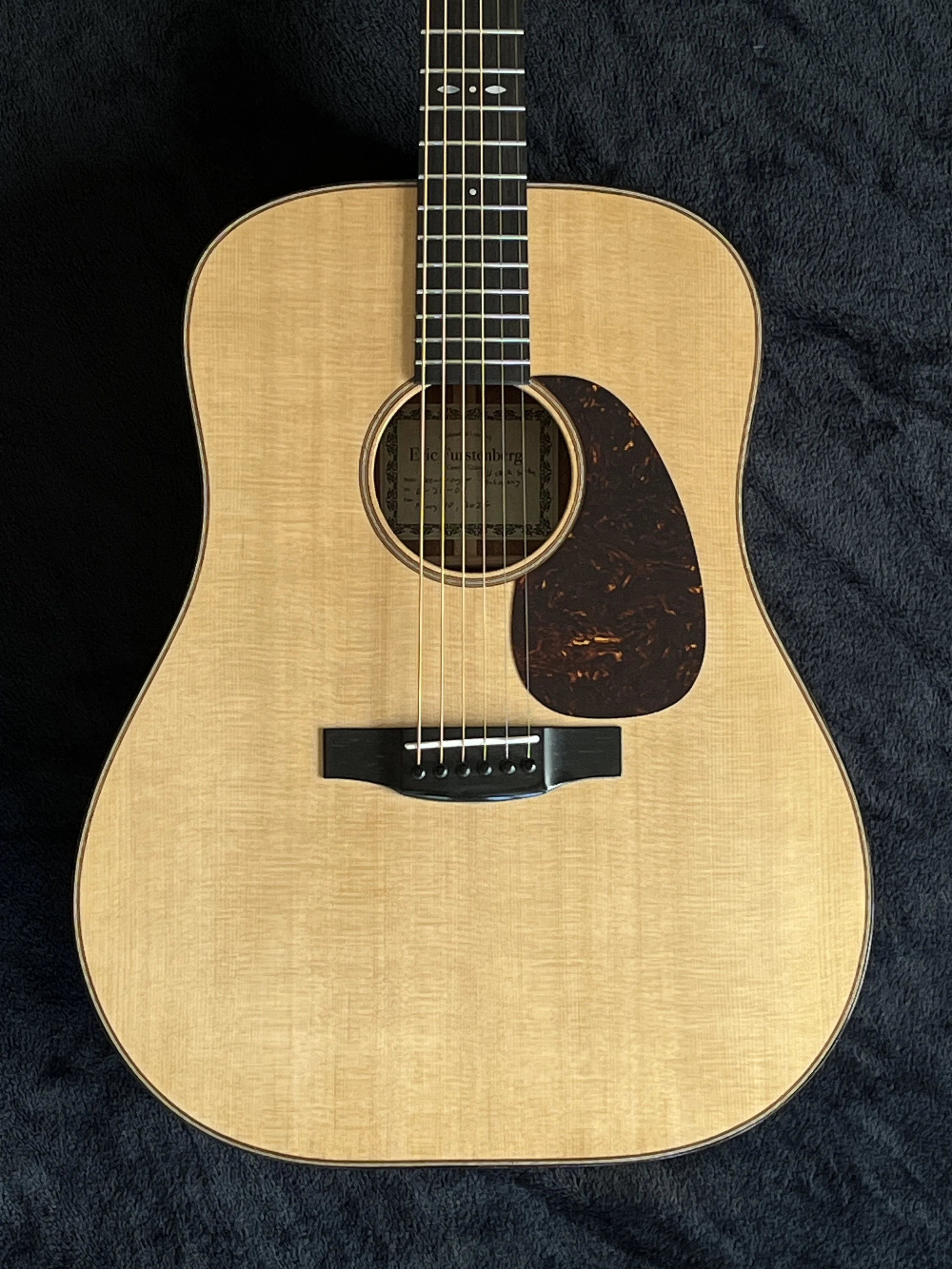
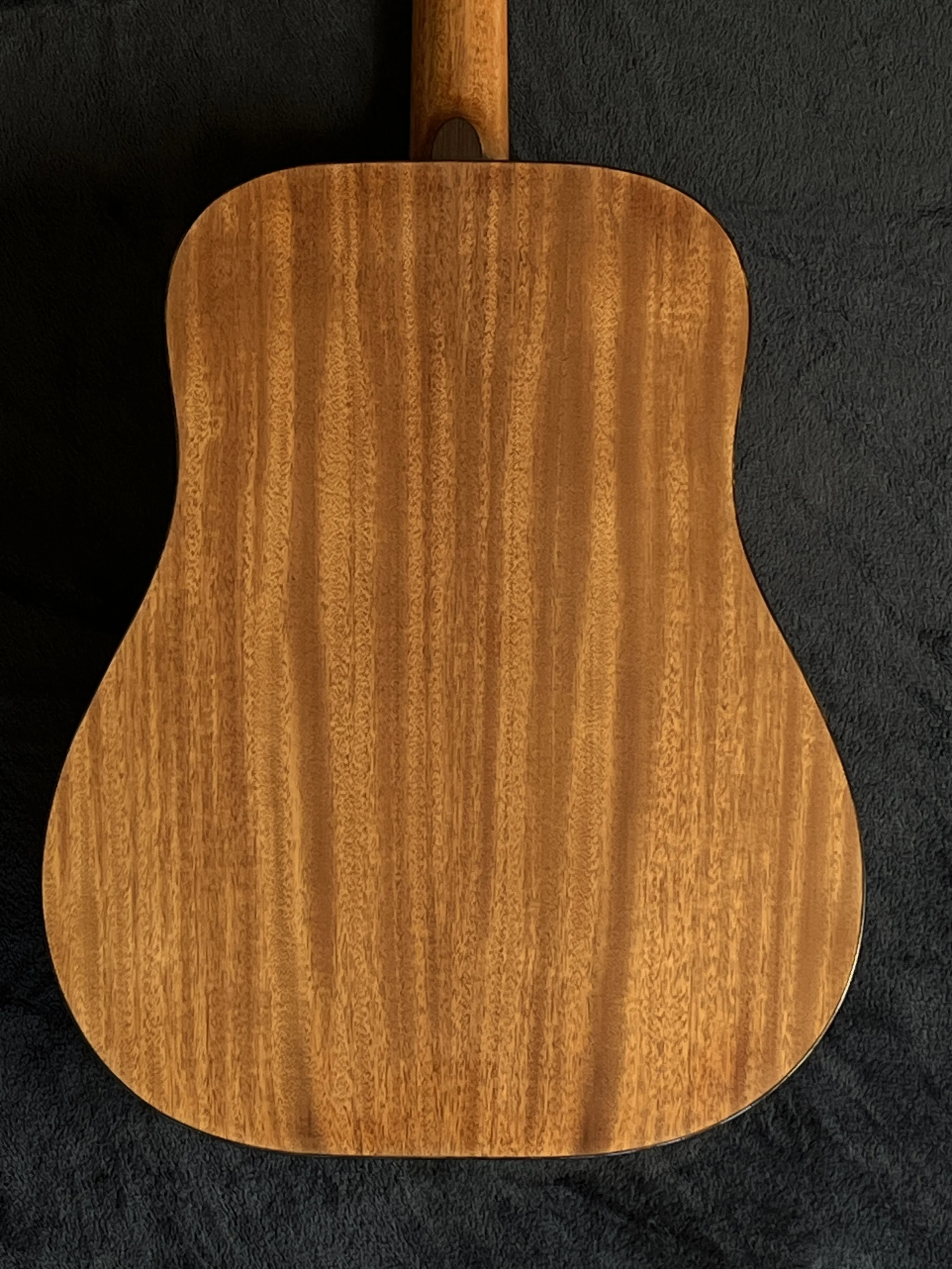
Jumbo, Super Jumbo: 17” lower bout. This is a big guitar with airy tone and booming power.